
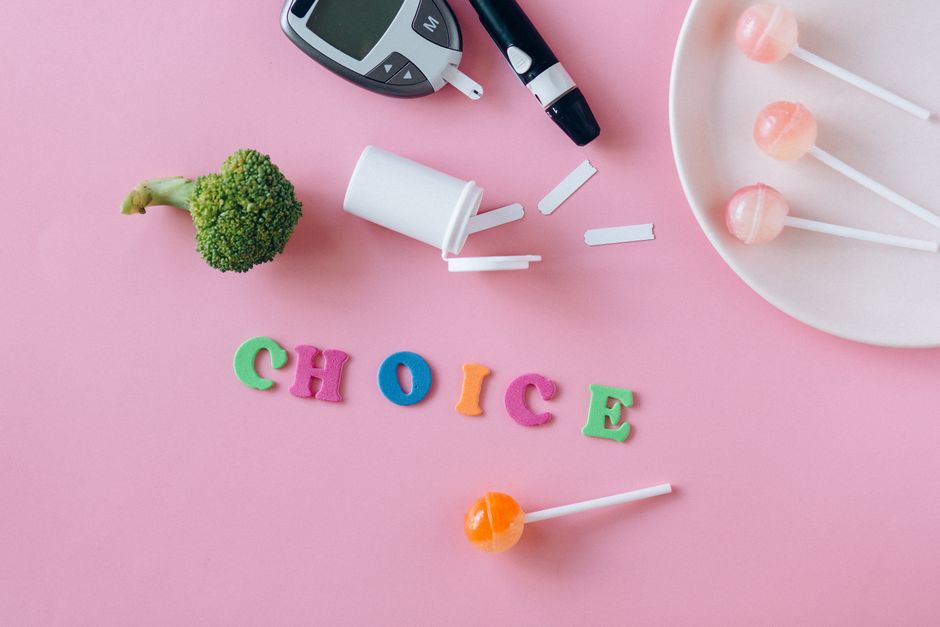
If you have diabetes and want something sweet, the short answer is that no sweet is completely free of effect on blood sugar. What matters most is the total carbohydrate in a portion, how fast that carbohydrate reaches your bloodstream, and what you eat alongside it. Small servings of certain sweets — dark chocolate, berries, Greek yogurt with fruit, nuts, or sweets made with sugar alcohols — tend to raise blood sugar more slowly than candy, regular soda, or frosted cake. Portion size and timing still decide the outcome.
Why Do Sweets Raise Blood Sugar at All?
Most sweets are built on sugar and refined starch. Your body breaks these down into glucose, which enters the bloodstream. In people without diabetes, the hormone insulin moves that glucose into cells, so levels stay in a narrow range.
In diabetes, that system works differently. In type 1 diabetes, the pancreas makes little or no insulin. In type 2 diabetes, the body may still make insulin but responds to it poorly, and insulin output can also fall over time. Either way, a fast flood of glucose from a sweet food can push blood sugar up quickly.
The speed of that rise depends on more than just how much sugar is in the food. It also depends on:
- How much fiber, fat, or protein is in the same bite
- Whether the food is liquid or solid (liquids usually hit faster)
- How much you eat at once
- Your own insulin response and medications
This is why two foods with identical sugar grams can affect two people differently — and even the same person differently on different days.
What Is the Glycemic Index and Does It Help?
The glycemic index (GI) ranks carbohydrate foods by how quickly they raise blood sugar compared with a reference food. Low-GI foods raise it slowly. High-GI foods raise it fast.
Some research suggests that choosing lower-GI foods may help with blood sugar control, but the evidence is mixed. A food’s GI also changes based on ripeness, cooking method, and what else you eat with it. GI does not account for portion size — a small amount of a high-GI food may affect you less than a large amount of a low-GI food.
A related measure, glycemic load (GL), combines GI with the actual carbohydrate in a serving. GL is generally more useful for real meals, but neither number is a perfect predictor of your own response.
For practical purposes, GI can be a rough guide. It is not a rulebook. Your own blood sugar readings after eating are more informative than any ranking.
What Sweets Can Diabetics Eat Without Spiking Blood Sugar?
No sweet is guaranteed not to spike blood sugar. But some options tend to have less impact when eaten in small portions. Here is how common choices compare.
| Sweet option | Why it may be gentler | What to watch |
|---|---|---|
| Fresh berries (raspberries, strawberries, blackberries) | High fiber, relatively low sugar per serving | Portion size; dried versions are very different |
| Dark chocolate (70% cacao or higher) | Lower sugar than milk chocolate; fat slows absorption | Still contains sugar and calories |
| Plain Greek yogurt with fruit | Protein and fat slow digestion | Flavored yogurts often have added sugar |
| Nuts with a few dark chocolate chips | Fat, protein, and fiber; very little sugar | Calorie-dense; easy to overeat |
| Sugar alcohols (erythritol, xylitol, maltitol) | Absorbed differently; lower blood sugar impact | Maltitol still raises glucose; excess can cause GI upset |
| Stevia, monk fruit, allulose | Little to no effect on blood glucose | Products may still contain other carbs |
A few notes on this table. Sugar alcohols are not all the same — erythritol has minimal effect on blood sugar, while maltitol has a meaningful one. If a product lists maltitol as the first sweetener, treat it more like regular sugar.
Non-nutritive sweeteners like stevia, monk fruit, and allulose do not raise blood glucose in most people. That does not automatically make the whole product low-carb. A “sugar-free” cookie may still be full of refined flour, which becomes glucose after you eat it.
Berries deserve a specific mention. Raspberries and blackberries are among the lowest-sugar fruits per cup. Strawberries are close behind. This is a case where the food’s fiber content genuinely slows the sugar’s arrival.


Are Sugar-Free Sweets Actually Safe for Blood Sugar?
Not always. “Sugar-free” on a label means the product contains less than a defined amount of sugar per serving — it does not mean carbohydrate-free or calorie-free.
Sugar-free candies and desserts often contain sugar alcohols. These are absorbed more slowly and with less blood sugar impact than regular sugar, but the effect varies by type. Erythritol and xylitol have low impact. Maltitol and sorbitol have more. Eating a lot of any of them can cause bloating, gas, or diarrhea.
Some sugar-free baked goods replace sugar with sugar alcohols but still use white flour. That flour breaks down into glucose, so the product can still raise blood sugar. Read the total carbohydrate line, not just the sugar line.
Some clinicians recommend counting sugar alcohols at roughly half the carbohydrate value of regular sugar, but this is a rule of thumb rather than an established standard. Your own readings are the better guide.
Does Timing and Pairing Matter More Than the Sweet Itself?
Often, yes. The same dessert can affect you differently depending on when and how you eat it.
Eating sweets as part of a meal — rather than alone — tends to blunt the rise. Protein, fat, and fiber slow stomach emptying, so glucose enters the bloodstream more gradually. A small piece of dark chocolate after a meal with protein and vegetables usually has less impact than the same piece eaten on an empty stomach.
Portion is the other big lever. A few squares of dark chocolate and a full bar are not the same event. Measuring out a serving before you start eating is a simple way to keep portions honest.
Physical activity after eating can also help your muscles take up glucose. A short walk is a common and reasonable suggestion, though the size of the effect varies between people.
What About Fruit, Honey, and Natural Sugars?
Honey, agave, maple syrup, and coconut sugar are all still sugar. They may carry trace minerals, but their effect on blood glucose is broadly similar to table sugar. They are not a free pass.
Whole fruit is different. The fiber and water in fresh fruit slow the sugar’s absorption, and fruit brings vitamins and other compounds that a candy bar does not. Most people with diabetes can include fruit as part of a balanced eating pattern, though portions still matter. Fruit juice and dried fruit are more concentrated and tend to raise blood sugar faster than the whole fruit.
If you use honey or another natural sweetener, treat it as you would sugar — small amounts, counted in your overall carbohydrate intake.
How Do You Know What Works for You?
Individual responses vary more than any chart can capture. The most reliable way to know how a specific sweet affects you is to check your blood sugar before eating and again at intervals afterward.
Many people check at one and two hours after eating, though the timing that matters most depends on your situation and what your care team recommends. Keeping a simple log of food, portion, and readings can reveal patterns that no general list can.
Work with your doctor or a registered dietitian to set targets and adjust as you go. Sweets are not off-limits for most people with diabetes. They are simply one part of a bigger picture that includes medication, activity, and overall eating patterns.
Frequently Asked Questions
Can diabetics eat chocolate without spiking blood sugar?
Small amounts of dark chocolate with 70% cacao or higher tend to have less impact than milk chocolate because it has less sugar and more fat. Portion size still determines the effect, so a few squares is very different from a whole bar.
Are sugar-free candies safe for diabetics?
They are generally lower in blood sugar impact than regular candy, but the effect depends on which sugar alcohol they contain. Maltitol and sorbitol raise blood sugar more than erythritol or xylitol, and large amounts of any sugar alcohol can cause digestive upset.
What is the best sweet for a diabetic to eat?
There is no single best sweet, but options like fresh berries, plain Greek yogurt with fruit, or a small portion of dark chocolate tend to have a gentler effect. The right choice depends on your portion, what you eat with it, and your own blood sugar response.
Do natural sweeteners like honey raise blood sugar?
Yes. Honey, agave, maple syrup, and coconut sugar affect blood glucose in a way similar to regular sugar. They should be counted as part of your carbohydrate intake, not treated as free foods.
