
Air is mostly nitrogen, not oxygen. The gas you are breathing right now is about 78 percent nitrogen and about 21 percent oxygen, with the remaining 1 percent made up of argon, carbon dioxide, and tiny amounts of other gases. That 21 percent figure holds steady almost everywhere on Earth’s surface, and it is the number that matters for how your body gets the oxygen it needs.
That composition is remarkably stable. Whether you are at sea level in Florida or on a mountain in Colorado, the percentage of oxygen in the air is essentially the same. What changes with altitude is not the percentage but the pressure.
What Percent Oxygen Do We Breathe?
Dry air at sea level contains approximately 20.9 percent oxygen. Most references round this to 21 percent. Nitrogen makes up about 78 percent, argon about 0.9 percent, and carbon dioxide about 0.04 percent.
Those numbers describe dry air. Real air usually carries water vapor, which can nudge the percentages slightly, but the change is small and does not affect how much oxygen you take in.
Here is a point that trips people up. The percentage of oxygen stays constant as you climb a mountain. At 10,000 feet, the air still contains about 21 percent oxygen. What drops is the barometric pressure — the weight of the atmosphere pushing those gas molecules together. Lower pressure means fewer oxygen molecules in every breath you take, even though the percentage is unchanged.
Why Does the Percentage of Oxygen Stay the Same Everywhere?
The atmosphere mixes constantly. Winds, weather systems, and the natural motion of gases keep the lower atmosphere well blended. That is why the oxygen percentage is nearly identical in a city, a desert, or over the ocean.
This mixing happens on a large scale and over long periods. Local conditions can cause small, temporary shifts, but nothing that changes the air you breathe in any meaningful way. For practical purposes, 21 percent is the number everywhere people live and work at ground level.
Even indoor air, which can carry higher carbon dioxide in a closed room, still holds roughly the same oxygen percentage. Carbon dioxide can build up in poorly ventilated spaces, but oxygen does not drop enough to matter under normal conditions.
Does Altitude Change the Oxygen Percentage?
No. Altitude changes the pressure, not the percentage. This distinction explains why mountain sickness happens even though the air still contains 21 percent oxygen.
At higher elevations, each breath delivers fewer oxygen molecules because the air is less compressed. Your body responds in several ways. Breathing rate increases. Heart rate rises. Over days to weeks, the body produces more red blood cells to carry oxygen more efficiently. These are well-documented adaptations.
For some people, the adjustment is not fast enough. This can lead to altitude sickness, with symptoms like headache, nausea, and shortness of breath. The risk depends on how high you go, how fast you ascend, and your individual response. Some people are affected at moderate elevations while others tolerate higher ones without trouble.
This is why climbers on the highest peaks often use supplemental oxygen. At the summit of Everest, the pressure is so low that the effective oxygen available is roughly a third of what it is at sea level, even though the percentage is still about 21 percent.




How Does Your Body Use the Oxygen You Breathe?
Your lungs pull oxygen from the air into your bloodstream. From there, red blood cells carry it to every tissue in your body. Inside your cells, oxygen helps convert nutrients into energy. This process, called cellular respiration, is how your body powers everything from muscle movement to brain activity.
Breathing is automatic for most people, controlled by the brainstem. It monitors oxygen and carbon dioxide levels in your blood and adjusts your breathing rate without you thinking about it.
Not all the air you inhale reaches the deepest parts of your lungs. About a third of each breath fills the airways — the trachea and bronchi — where no gas exchange happens. This is called dead space. It is a normal part of how breathing works and one reason breathing faster helps when oxygen demand rises.
What Happens When Oxygen Levels Drop?
When the oxygen in your blood falls below normal, the condition is called hypoxemia. Normal arterial oxygen saturation is generally considered 95 to 100 percent, measured by a pulse oximeter. Levels below 90 percent are typically considered low and warrant medical attention.
Low blood oxygen can come from several causes. Lung conditions like asthma, pneumonia, or chronic obstructive pulmonary disease can interfere with gas exchange. Heart problems can reduce how well blood circulates. Anemia reduces the blood’s ability to carry oxygen. High altitude reduces the pressure driving oxygen into the blood.
Symptoms of low oxygen include shortness of breath, confusion, rapid heart rate, and a bluish tint to the lips or fingertips. These are signs to take seriously and seek medical care.
It is worth noting that a pulse oximeter measures oxygen saturation, not the percentage of oxygen in the air. These are different numbers. The air is 21 percent oxygen; your blood oxygen saturation is a separate measurement of how much oxygen your red blood cells are carrying.
Can the Oxygen Percentage in Air Change?
On a global scale, the oxygen percentage is stable. It has been roughly 21 percent for a very long time. But in enclosed spaces, the percentage can drop.
In a sealed room with no ventilation, oxygen gets consumed by breathing and by any combustion, while carbon dioxide rises. In practice, buildings are not sealed tightly enough for oxygen to fall to dangerous levels under normal use. The bigger concern in closed spaces is carbon dioxide buildup, not oxygen depletion.
In specialized settings — submarines, spacecraft, and some medical environments — oxygen levels are actively managed. Spacecraft and submarines often run slightly different oxygen concentrations and pressures than sea level air, carefully controlled to keep occupants safe.
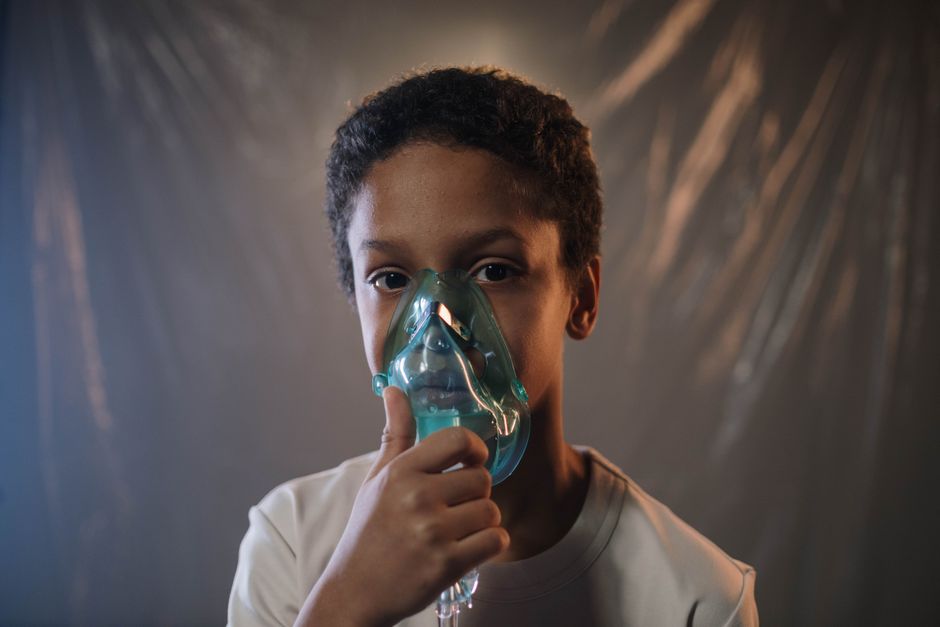
Medical oxygen therapy delivers oxygen at concentrations well above 21 percent, sometimes close to 100 percent, through a mask or nasal cannula. This is a treatment for specific conditions and is managed by clinicians. Breathing high concentrations of oxygen for extended periods without medical need is not harmless and can cause lung irritation.
Is 21 Percent Oxygen the Ideal Amount?
For humans living at sea level, 21 percent is simply the amount we evolved with. It is not necessarily “ideal” in any absolute sense — it is the baseline our bodies are built to handle.
Breathing air with more oxygen than normal does not improve health in healthy people. There is no evidence that oxygen bars, canned oxygen, or oxygen-enriched air provides benefits for people without a medical need. Some research has looked at whether supplemental oxygen helps athletes recover faster, but results have been mixed and do not support routine use.
At the other end, breathing air with less oxygen than normal is what happens at altitude, and the body adapts over time. People who live at high elevations permanently develop larger lung capacity and more red blood cells. This is a normal physiological response, not a health problem in itself.
What About Oxygen in Water and Other Environments?
Water holds dissolved oxygen, but at much lower concentrations than air. Fish and other aquatic animals extract oxygen from water through gills. The amount of dissolved oxygen in water varies with temperature and other factors, and it is measured in different units than the percentage in air.
This is a common source of confusion. When people ask about oxygen levels in water, they usually mean dissolved oxygen, which is typically expressed in milligrams per liter, not as a percentage of the water itself.
In the air, the 21 percent figure refers to the fraction of gas molecules that are oxygen. It is a straightforward measurement of the atmosphere’s composition, and it holds true across the planet at ground level.
Key Numbers at a Glance
| Gas | Percentage in Dry Air |
|---|---|
| Nitrogen | About 78% |
| Oxygen | About 21% |
| Argon | About 0.9% |
| Carbon dioxide | About 0.04% |
| Other gases | Trace amounts |
These figures describe dry air at sea level. They are the standard reference values used in physiology and respiratory medicine, and they apply to the air you breathe every day.
Frequently Asked Questions
What percentage of the air we breathe is oxygen?
About 21 percent of the air you breathe is oxygen, with nitrogen making up most of the rest at roughly 78 percent. This percentage stays nearly the same everywhere at ground level.
Does the oxygen percentage change at high altitude?
No, the percentage stays at about 21 percent, but the air pressure drops, so each breath delivers fewer oxygen molecules. That pressure drop, not a change in percentage, is what causes altitude sickness.
Is 21 percent oxygen enough for the human body?
Yes, 21 percent is the concentration humans evolved with at sea level and is fully sufficient for healthy people. The body only needs supplemental oxygen when a medical condition or extreme altitude prevents it from getting enough from normal air.
What is a normal blood oxygen level?
Normal arterial oxygen saturation is generally considered 95 to 100 percent, measured with a pulse oximeter. This is a different measurement from the 21 percent oxygen in the air and reflects how much oxygen your red blood cells are carrying.
