
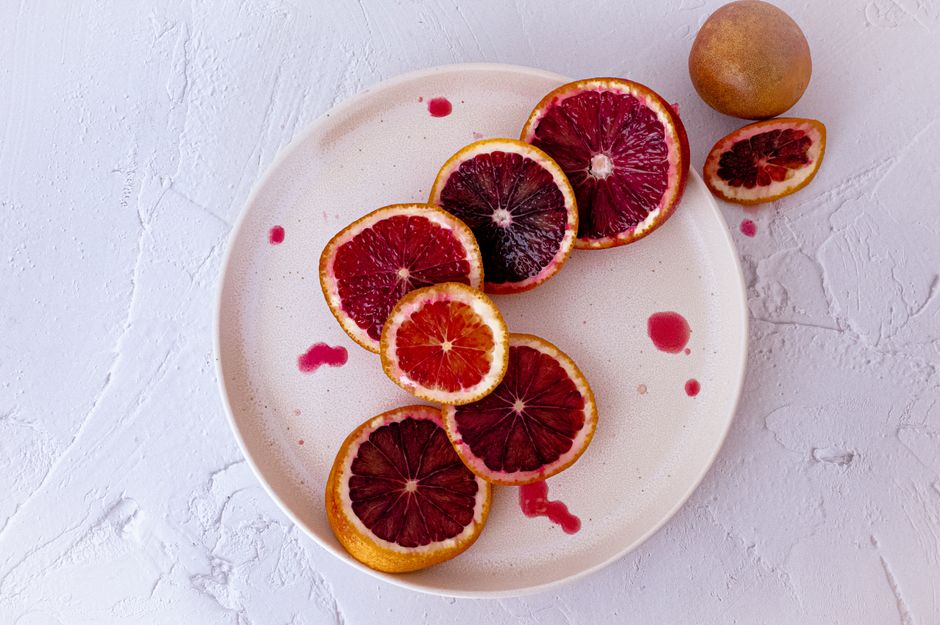
Blood oranges get their red color from pigments called anthocyanins. These pigments are produced only when the fruit is exposed to cold temperatures during ripening — a combination of having the right genes and a cold spell that turns them on. Without the cold, the same fruit would stay orange or develop only a faint pink blush.
What Makes a Blood Orange Red?
The red color in blood oranges comes from anthocyanins. These are the same pigments that make blueberries blue and cherries red. Regular oranges do not produce anthocyanins. Blood oranges have a specific set of genes that allow them to make these pigments, but those genes are not active all the time. They need a trigger.
What Makes A Blood Orange Red Genes And Cold?
The genes for anthocyanin production are present in blood orange varieties like Moro, Tarocco, and Sanguinello. But these genes stay quiet during the warm growing season. When nighttime temperatures drop — typically below 50°F (10°C) for several nights — the tree responds to the cold stress. It activates the genes, and the fruit begins to produce anthocyanins. The colder the nights, the deeper the red. This is why blood oranges from cooler regions, like the volcanic soils of Sicily, are known for their intense color. Growers in warmer areas often get paler fruit or no color at all.
How Do Cold Temperatures Trigger Red Color?
Cold stress causes changes inside the fruit cells. The plant produces molecules that protect itself from cold damage, and anthocyanins are one of those protective compounds. They act like a natural antifreeze and also shield the fruit from sun damage. The biochemical pathway starts when cold air signals the plant to produce an enzyme called phenylalanine ammonia-lyase (PAL). This enzyme kicks off a chain reaction that ends with anthocyanin being deposited in the peel and sometimes the flesh. The process takes several weeks. A sudden frost does not color the fruit overnight.





Are All Blood Oranges Red?
No. Blood orange varieties vary in how much pigment they make. The Moro variety is the darkest — it can be nearly black-red on the outside and deep burgundy inside. Tarocco is sweeter and often has red streaks rather than solid color. Sanguinello is similar to Tarocco but with a more even red blush. The intensity also depends on the tree’s age, the soil, and how much sunlight the fruit gets. A blood orange grown in a warm winter may look mostly orange with just a few red spots. It is still a blood orange genetically, but the color never fully develops.
What Is the Difference Between Blood Oranges and Regular Oranges?
Regular oranges get their color from carotenoids — the same orange pigments found in carrots. Blood oranges contain those too, but they layer anthocyanins on top. This gives blood oranges a wider range of flavor, often described as raspberry-like or winey, along with the usual citrus sweetness. Blood oranges also have a shorter season, usually from December through April, depending on the variety and location. Nutritionally, both are excellent sources of vitamin C and fiber. Blood oranges add anthocyanins, which are antioxidants not found in regular oranges.
Are Blood Oranges Healthier Than Regular Oranges?
Antioxidants like anthocyanins are linked to reduced inflammation and better heart health in population studies. But no research has directly compared blood oranges and regular oranges in a way that proves one is significantly healthier. Eating a blood orange instead of a regular orange gives you the same vitamin C and fiber plus some extra plant compounds. That is a reasonable choice, but not a medical necessity. The most important thing is eating fruit at all. The difference between two types of oranges is small compared to the difference between eating fruit and not eating it.
How to Choose and Store Blood Oranges
Look for fruit that feels heavy for its size — that means it is juicy. The skin color can range from orange with a red blush to deep crimson. A pale orange blood orange may still be delicious even if it lacks the dramatic red color inside. Store them at room temperature if you plan to eat them within a few days, or in the refrigerator for up to two weeks. The red color is stable, but the flavor fades over time. Eat them soon after cutting; the exposed flesh can turn brown from oxidation, like an apple.
Frequently Asked Questions
Are blood oranges genetically modified?
No. Blood oranges are a natural mutation of the sweet orange that occurred centuries ago in Sicily. They have been grown and selected by farmers for hundreds of years, not created in a lab.
Can you grow blood oranges at home?
Yes, if you live in a citrus-friendly climate with cool winter nights. Without enough cold, the fruit will not develop its red color. Some home growers use techniques like leaving fruit on the tree through cold snaps to improve color.
Do blood oranges taste different from regular oranges?
Yes. Blood oranges have a more complex flavor with notes of raspberry or dark berries mixed with citrus. They are generally less acidic and sweeter than navel oranges, especially the Tarocco variety.
Is the red color safe to eat?
Yes. Anthocyanins are natural plant pigments found in many fruits and vegetables. They are safe and considered beneficial. The red color may stain clothing or cutting boards, so rinse surfaces quickly.
