
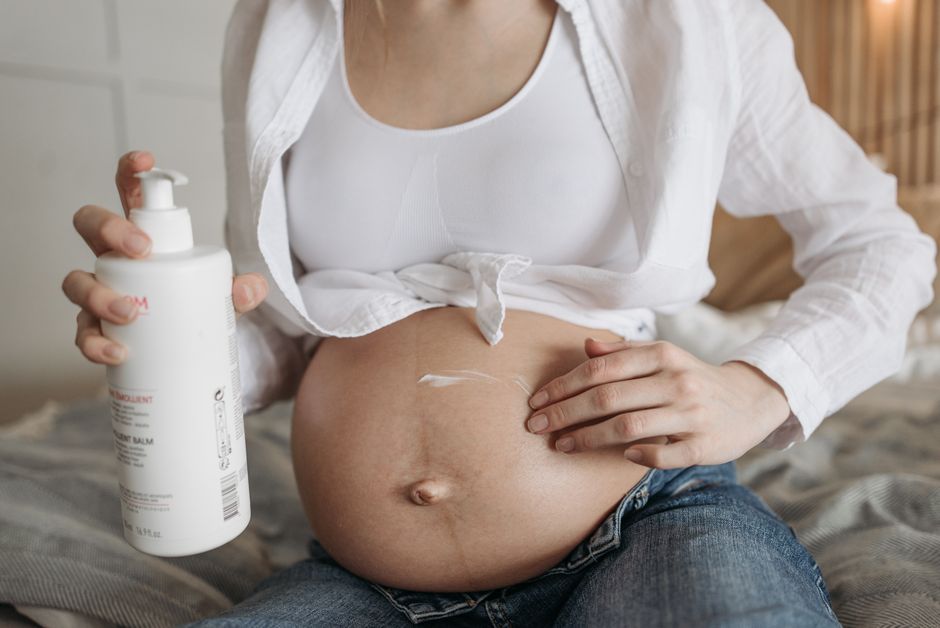
Pregnancy changes your skin in real ways, and the lotion you used before may not feel right anymore. The short answer: a good pregnancy lotion is fragrance-free, hypoallergenic, and free of ingredients like retinoids and high-dose salicylic acid. Avoid products containing retinol, hydroquinone, and certain essential oils. The longer answer involves understanding why your skin changes, what ingredients are actually a concern, and how to choose a product that hydrates without risk.
Why Does Skin Change During Pregnancy?
Hormones drive most of the changes. Estrogen and progesterone levels rise sharply, which affects oil production, blood flow, and how your skin holds water.
Many women develop dry, itchy patches, especially on the belly, thighs, and breasts as the skin stretches. Others experience the opposite — more oil and breakouts. Both are normal. Blood volume increases by roughly 40-50% during pregnancy, which can make skin look flushed or cause veins to become more visible.
Stretch marks are a separate issue. They form when the dermis tears under rapid stretching. No lotion has been proven to prevent stretch marks entirely, though keeping skin well-moisturized may reduce itching and discomfort. Some research suggests that products containing centella asiatica or hyaluronic acid may help, but the evidence is not strong enough to call them a prevention method.
Melasma, sometimes called the “mask of pregnancy,” causes dark patches on the face. Sun exposure makes it worse. Sunscreen is the most effective tool here, not lotion.
Which Ingredients Should You Avoid in Pregnancy Lotion?
Some ingredients are absorbed through the skin into the bloodstream. For most, the amount absorbed is small. But for a few, the risk is real enough that dermatologists and obstetricians recommend avoiding them entirely during pregnancy.
Retinoids are the most important to avoid. Retinol, retinaldehyde, and prescription retinoids like tretinoin are all forms of vitamin A. Oral isotretinoin (Accutane) is known to cause severe birth defects. Topical retinoids are less studied, but the consensus is to avoid them during pregnancy. Check ingredient labels carefully — retinol appears in many anti-aging creams and serums.
Hydroquinone is a skin-lightening agent used for dark spots. It has high absorption rates through the skin — some studies suggest up to 35-45% — and animal studies have raised concerns. Most dermatologists advise against it during pregnancy.
Salicylic acid is trickier. In low concentrations (under 2%), it is generally considered safe when used in wash-off products like cleansers. But leave-on lotions with higher concentrations are a different story. High-dose salicylic acid has been linked to complications in animal studies. The safest approach: avoid leave-on products with salicylic acid, especially in the first trimester.
Essential oils are not regulated as strictly as drugs. Some, like clary sage and juniper, have been traditionally used to stimulate menstruation. Whether they pose a real risk in lotion form is unclear, but there is no benefit worth the uncertainty. Fragrance of any kind is a common irritant, and pregnancy can make skin more reactive.
Phthalates and parabens are preservatives and stabilizers found in many cosmetics. They are endocrine disruptors, meaning they can interfere with hormone signaling. The evidence on harm during pregnancy is not conclusive, but many clinicians recommend choosing products without them when possible. This is a precaution, not a proven risk.
What Ingredients Are Safe and Actually Helpful?
Several ingredients have solid evidence behind them for safe, effective hydration during pregnancy.
Ceramides are lipids that occur naturally in your skin barrier. They help lock in moisture and repair a compromised barrier. They are well-studied, safe, and widely available in drugstore lotions.
Hyaluronic acid holds up to 1,000 times its weight in water. It is a humectant, meaning it draws water into the skin. It is safe topically and effective for the dry, tight feeling that comes with stretching skin.
Glycerin is another humectant with a long safety record. It is inexpensive, well-tolerated, and appears in most basic moisturizers.
Shea butter and cocoa butter are emollients that soften and smooth skin. They do not prevent stretch marks, but they do reduce dryness and itching. Some people find them heavy; others love them. It is a texture preference, not a medical decision.
Colloidal oatmeal is FDA-recognized as a skin protectant. It is particularly useful for itchy, irritated skin. If your belly itches at night, a lotion with colloidal oatmeal may genuinely help.
Niacinamide (vitamin B3) is safe and helps with redness and barrier function. It is a good option if your skin has become sensitive or reactive during pregnancy.



How to Read a Lotion Label Like a Clinician
Product labels are not designed to be clear. They are designed to sell. Here is how to cut through the marketing.
Check the active ingredients list first. This is the section regulated by the FDA. If you see retinol, hydroquinone, or salicylic acid above 2%, put the product back.
Then look at the full ingredient list. Ingredients are listed in descending order of concentration. The first five ingredients make up the bulk of the product. If fragrance or a specific essential oil appears in the top five, the product is likely to irritate sensitive skin.
Look for the words “fragrance-free” — not “unscented.” Unscented products can still contain masking fragrances that hide the chemical smell. Fragrance-free means no fragrance ingredients were added at all.
Products labeled “hypoallergenic” are not guaranteed to be safe, but they are formulated to minimize allergic reactions. This label is not strictly regulated, so it is a starting point, not a guarantee.
One more thing: “dermatologist-tested” and “clinically proven” are marketing phrases. They have no standardized meaning. A product can claim both and still contain ingredients you want to avoid.
What Lotion Is Good For Pregnancy And What To Avoid — A Simple Checklist
If you want a quick reference, here is the practical summary.
Choose lotions that contain:
- Ceramides
- Hyaluronic acid
- Glycerin
- Colloidal oatmeal
- Shea butter or cocoa butter
- Niacinamide
Avoid lotions that contain:
- Retinol, retinaldehyde, or tretinoin
- Hydroquinone
- Salicylic acid above 2%
- Fragrance or essential oils
- Phthalates and parabens (when alternatives exist)
When in doubt, choose the simplest product. A basic, fragrance-free moisturizer with ceramides and glycerin is hard to beat. It does not need to be expensive or marketed as “pregnancy-safe” to be safe.
If you have a pre-existing skin condition like eczema or psoriasis, talk to your dermatologist before switching products. Some prescription topical treatments are safe during pregnancy, and some are not. Do not stop a prescribed treatment without asking your doctor first.
Does “Pregnancy-Safe” Labeling Mean Anything?
Not much. The term “pregnancy-safe” is not regulated by the FDA. Any brand can print it on a label without proving anything.
Some brands do formulate specifically for pregnancy and test their products accordingly. Others simply add the phrase to capture market share. The label alone tells you nothing about the actual ingredients.
Your better approach is to read the ingredient list yourself and compare it against the avoid list above. If a product is fragrance-free, free of retinoids and hydroquinone, and contains basic moisturizing ingredients, it does not matter whether the label says “pregnancy-safe.”
There is one exception worth noting. Some products marketed for stretch marks contain ingredients like onion extract or peptides. The evidence for these ingredients preventing stretch marks is weak. They are not harmful, but they are also not proven to do what they claim.
When Should You Talk to a Doctor About Your Skin?
Some skin changes during pregnancy warrant a medical conversation, not a new lotion.
If you develop a rash that spreads, blisters, or weeps fluid, see a doctor. If itching is severe — especially on the palms and soles — mention it to your obstetrician. Severe itching in the third trimester can be a sign of intrahepatic cholestasis of pregnancy, a liver condition that requires medical management.
If you have a history of melasma and want to treat it, wait until after delivery. Most treatments for melasma are not recommended during pregnancy, and the condition often fades on its own within a few months postpartum.
If your acne gets significantly worse, ask your obstetrician about safe options. Some topical treatments, like azelaic acid and certain erythromycin preparations, are considered safe. Others, like retinoids, are not. Do not guess.
The general rule: if a skin issue is causing you real distress, ask a professional. Lotion is for comfort and hydration. It is not a treatment for medical conditions.
Frequently Asked Questions
Can I use baby lotion during pregnancy?
Yes, most baby lotions are safe because they are typically fragrance-free and formulated for sensitive skin. They may not be moisturizing enough for pregnancy-related dryness, so check the ingredient list for ceramides or glycerin.
Is cocoa butter safe to use on my belly during pregnancy?
Yes, cocoa butter is safe and can help with dryness and itching. It will not prevent stretch marks, but it is a harmless way to keep the skin comfortable.
Can I use vitamin C serum while pregnant?
Yes, topical vitamin C is considered safe during pregnancy and is often recommended for melasma. It is an antioxidant that can help with pigmentation without the risks associated with hydroquinone or retinoids.
Is it safe to use sunscreen during pregnancy?
Yes, sunscreen is safe and important, especially if you have melasma. Mineral sunscreens with zinc oxide or titanium dioxide sit on the skin surface and are generally considered the safest choice during pregnancy.
