
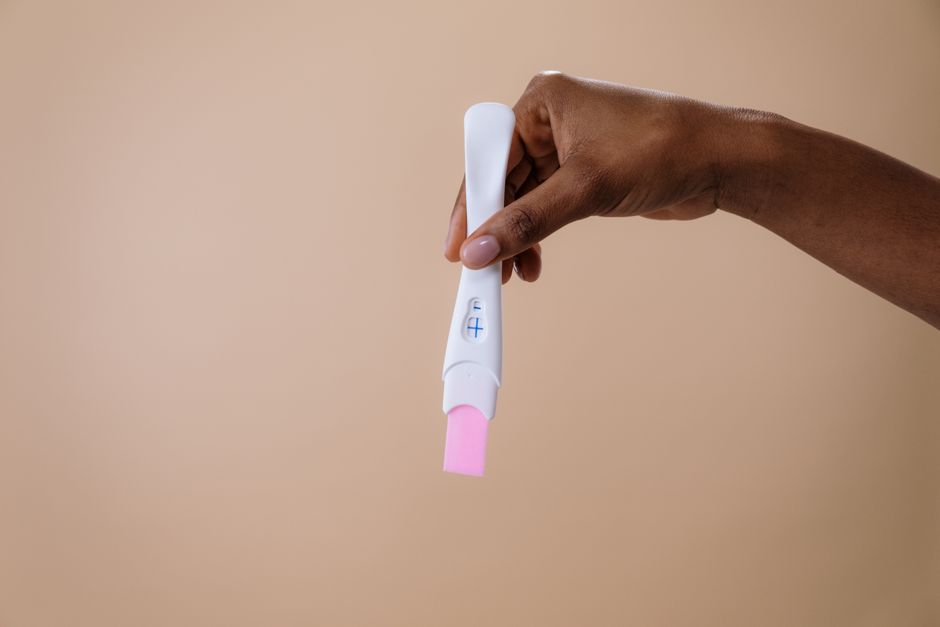
Waiting to find out if you are pregnant can feel like the longest time of your life. The most reliable answer is to take a test on the first day of your missed period. For the most accurate result, test first thing in the morning with your first urine of the day. Some early detection tests claim to work sooner, but waiting until after you miss your period gives you the most trustworthy answer.
How Do Home Pregnancy Tests Work?
Home pregnancy tests detect a hormone called human chorionic gonadotropin (hCG). Your body starts making hCG after a fertilized egg attaches to the lining of your uterus. This process is called implantation and it happens about 6 to 12 days after ovulation.
The test uses antibodies that react with hCG in your urine. If hCG is present at a certain level, the test shows a positive result. Most tests are designed to detect hCG levels of 20 to 50 mIU/mL. Your hCG levels double roughly every 48 to 72 hours in early pregnancy.
This is why timing matters. If you test too early, your hCG levels may still be too low for the test to detect.
When Should You Take A Pregnancy Test for the Most Accurate Results?
The best time to take a pregnancy test is after you have missed your period. For most women with a regular 28-day cycle, this is day 29 or later. Research published in the journal Obstetrics & Gynecology found that testing on the day of your missed period gives a 99% accuracy rate for most home tests.
| Test Timing | Typical Accuracy |
|---|---|
| Day of missed period | 99% or higher |
| 1-2 days before missed period | 75-90% depending on test |
| 5-6 days before missed period | 50-75% depending on test |
| 1 week after missed period | Nearly 100% |
If you cannot wait, some early detection tests claim to work up to 6 days before your missed period. But these results are less reliable. A study by the manufacturers of Clearblue found that 76% of pregnancies could be detected 6 days early, but this dropped to 55% for some other brands. The key point is that a negative test this early does not mean you are not pregnant.
Does It Matter What Time of Day You Test?
Yes, it matters. Your first morning urine is the most concentrated. When you sleep, you do not drink fluids, so hCG builds up in your bladder overnight. This gives you the highest chance of detecting low levels of the hormone.
Testing later in the day can give false negatives if you have been drinking water or other fluids. Diluted urine can hide hCG. One study from the Journal of the American Medical Association found that testing with afternoon urine increased the false negative rate by 10-15% compared to morning urine.
If you test in the afternoon, try to hold your urine for at least 4 hours and avoid drinking too much water beforehand. But morning is still the safest bet.



What Can Cause a False Positive or False Negative?
False positives are rare but possible. A false positive means the test says you are pregnant when you are not. This can happen if you have hCG from a recent pregnancy loss or from certain fertility medications that contain hCG. Some medical conditions like ovarian tumors or pituitary gland issues can also produce hCG.
False negatives are much more common. The main reason is testing too early. Other causes include:
- Diluted urine from drinking too much fluid before the test
- Not following the test instructions exactly, like reading the result too soon or too late
- Using an expired or improperly stored test
- Having a very early miscarriage without knowing it
If you get a negative result but still think you might be pregnant, wait 48 to 72 hours and test again. Your hCG levels should have doubled by then.
How Early Can You Test With Different Brands?
Not all pregnancy tests are the same. Standard tests detect hCG at 25 mIU/mL or higher. Early detection tests can pick up levels as low as 10 mIU/mL. This difference is why some brands claim to work 6 days before your missed period.
The First Response Early Result test is one of the most sensitive on the market. Research from the Journal of Clinical Endocrinology & Metabolism found it could detect hCG levels as low as 6.3 mIU/mL in some cases. Other brands like Clearblue and EPT are slightly less sensitive but still reliable after a missed period.
Cheaper store-brand tests often use the same technology as name brands. The main difference is the sensitivity level. If you want the earliest possible result, choose a test labeled “early detection” or “sensitive.” But remember, even the most sensitive test cannot guarantee accuracy before your missed period.
What Should You Do If You Get a Positive Result?
A positive result on a home test is very likely correct. But you should confirm it with a blood test at your doctor’s office. Blood tests can detect hCG at much lower levels, around 1 to 2 mIU/mL, and can also give you a precise number.
Your doctor may also want to do a urine test in the office. These are similar to home tests but may use different technology. Most doctors will also schedule an early ultrasound around 6 to 8 weeks to confirm the pregnancy and check for a heartbeat.
If you get a positive result, start taking a prenatal vitamin with folic acid. The CDC recommends 400 micrograms of folic acid daily to prevent neural tube defects. Also, avoid alcohol, smoking, and certain medications. Call your doctor to schedule your first prenatal appointment.
What If You Get a Negative Result but Still Have Symptoms?
Pregnancy symptoms like nausea, breast tenderness, and fatigue can happen for many reasons. They do not always mean you are pregnant. Stress, hormonal changes, or even an upcoming period can cause similar symptoms.
If your period does not start within one week of a negative test, test again. You may have ovulated later than you thought, which means implantation happened later too. This can delay when hCG appears in your urine.
Some women have irregular cycles, making it hard to know when to test. If your cycles vary by more than 7 days, wait at least 21 days after unprotected sex before testing. This gives your body enough time to produce detectable hCG if you are pregnant.
Frequently Asked Questions
Can I take a pregnancy test at night?
You can, but it is less reliable than testing in the morning. Your urine is more diluted at night, which can lead to a false negative.
How many days after implantation can I test positive?
Most home tests can detect hCG about 4 to 6 days after implantation. But waiting until your missed period gives the most accurate result.
Can a pregnancy test be wrong?
False positives are very rare, but false negatives are common if you test too early. Following the instructions and testing at the right time reduces errors.
Should I take a second test if the first is positive?
It is not necessary, but some women do for reassurance. A second positive test confirms the result. Then see your doctor for confirmation.
