
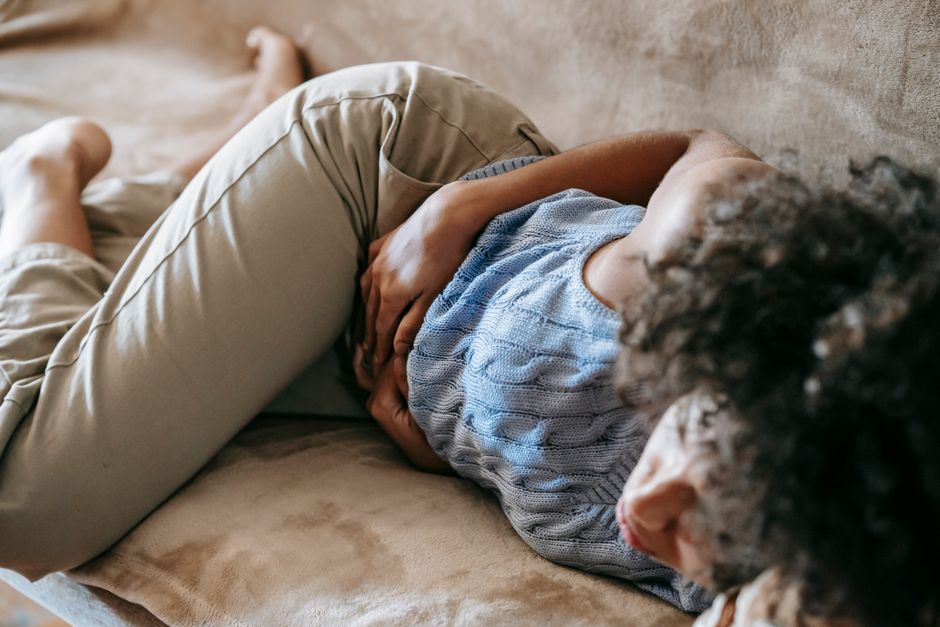
Yes, cramps can be a sign of pregnancy. Many women feel mild cramping in their lower abdomen or pelvis during early pregnancy, often before they even miss a period. This happens because the fertilized egg attaches to the uterine lining, and the uterus begins to stretch and grow. While cramps are common, they are rarely the only sign, and they feel different for each woman.
What Do Early Pregnancy Cramps Feel Like?
Early pregnancy cramps are often described as a pulling, tugging, or stretching sensation. They are usually mild and come and go. Many women say they feel similar to menstrual cramps but are often lighter and located lower in the belly.
Some women feel them on one side. Others feel them across the whole lower abdomen. The sensation can last a few seconds or continue for hours at a very low level. Unlike period cramps, which often build and then release, pregnancy cramps tend to stay steady or feel like a dull ache.
It is important to know that sharp, severe, or one-sided pain is not typical for early pregnancy. That type of pain needs medical attention right away. Mild cramping that does not get worse is usually nothing to worry about.
When Do Pregnancy Cramps Usually Start?
Cramping can start as early as 6 to 12 days after conception. This is when implantation occurs. The fertilized egg burrows into the uterine lining, and that process can cause mild cramping and sometimes light spotting called implantation bleeding.
For most women, these early cramps happen before a missed period. That means you might feel them at the same time you would normally expect your period to start. This timing is why many women mistake early pregnancy cramps for their period coming.
Research published in the journal Human Reproduction found that about 30 percent of women report cramping in the first four weeks of pregnancy. The cramps usually fade by the end of the first trimester as the body adjusts to the growing uterus.
Can Cramps Be A Sign Of Pregnancy vs. Period Cramps?
This is the most common question women have. The short answer is that both can feel similar, but there are differences. Period cramps are caused by the uterus contracting to shed its lining. Pregnancy cramps are caused by the embryo implanting and the uterus beginning to expand.
Here is a comparison of how they typically differ:
| Symptom | Early Pregnancy Cramps | Period Cramps |
|---|---|---|
| Timing | 6-12 days after ovulation | 1-2 days before period starts |
| Location | Low center or one side | Lower abdomen, often spreading to back |
| Intensity | Mild, steady, or dull | Can be mild to severe, often waves |
| Bleeding | Light spotting (pink or brown) | Heavier flow, bright red |
| Other signs | Nausea, breast tenderness, fatigue | Bloating, mood changes, cravings |
If your cramps feel different than your usual period cramps, that is worth noticing. But the only way to know for sure is to take a pregnancy test or get a blood test from your doctor.




What Other Early Signs Often Accompany Cramps?
Cramps alone are not a reliable sign of pregnancy. They become more meaningful when other early symptoms appear at the same time. The most common early signs include breast tenderness, fatigue, and nausea.
Breast changes often start very early. Your breasts may feel sore, heavy, or tingly. The areolas may darken. This happens because hormone levels rise quickly after implantation.
Fatigue is another early sign. Many women feel unusually tired in the first weeks of pregnancy. This is caused by a sharp increase in progesterone, which has a sedating effect. If you are sleeping more than usual and still feel worn out, it could be a clue.
Nausea with or without vomiting affects about 70 percent of pregnant women, according to the American College of Obstetricians and Gynecologists. It often starts around week six but can begin earlier for some women. It is not limited to morning — it can happen any time of day.
Other signs include food aversions, a metallic taste in the mouth, mood swings, and frequent urination. No single symptom confirms pregnancy. But when several of these show up together with cramping, it is more likely.
When Should You Be Concerned About Cramps?
Most early pregnancy cramps are harmless. But some cramping needs immediate medical evaluation. Severe pain, heavy bleeding, or pain on only one side are red flags.
Ectopic pregnancy happens when the fertilized egg implants outside the uterus, usually in a fallopian tube. The CDC reports that ectopic pregnancies occur in about 2 percent of all pregnancies. Symptoms include sharp one-sided pelvic pain, shoulder pain, dizziness, and vaginal bleeding. This is a medical emergency.
Miscarriage is another concern. About 10 to 15 percent of known pregnancies end in miscarriage, most in the first trimester. Cramping with heavy bleeding and passing tissue are the main signs. If you have these symptoms, call your doctor or go to the emergency room.
Other causes of concerning cramps include urinary tract infections, ovarian cysts, and appendicitis. If your pain is severe, gets worse over time, or comes with fever or chills, see a doctor. It is always better to check than to wait.
What Should You Do If You Think Cramps Are From Pregnancy?
If you have mild cramps and think you might be pregnant, the first step is to wait until the day of your missed period. Home pregnancy tests are most accurate at that point. Testing too early can give a false negative because hCG levels are still low.
Take the test with your first morning urine. This is when hCG is most concentrated. Follow the instructions exactly. Most tests are over 99 percent accurate when used correctly after a missed period.
If the test is positive, call your doctor to schedule a prenatal visit. They can confirm the pregnancy with a blood test or ultrasound. If the test is negative but your period does not come, test again in a few days.
In the meantime, take care of yourself. Stay hydrated. Rest when you feel tired. Avoid alcohol, smoking, and high-dose caffeine. Start taking a prenatal vitamin with folic acid if you have not already. Folic acid reduces the risk of neural tube defects by up to 70 percent, according to the CDC.
Do not take pain relievers like ibuprofen or aspirin without asking your doctor. Acetaminophen (Tylenol) is generally considered safe in early pregnancy, but check with your healthcare provider first.
Common Misconceptions About Pregnancy Cramps
A common myth is that cramps always mean something is wrong. That is not true. Mild cramping is a normal part of early pregnancy for many women. It does not mean you are about to miscarry or that the baby is in danger.
Another misconception is that if you have cramps, you cannot be pregnant because your period is coming. This is how many women miss early signs. Cramps from implantation and cramps from a period can happen at the same time of the month. Do not assume cramps mean your period is on its way.
Some people also believe that pregnancy cramps are always located in the center of the lower abdomen. While that is common, some women feel them on one side. This can happen if the embryo implants on one side of the uterus. As long as the pain is mild and not sharp, it is usually normal.
There is also a widespread claim that severe cramps are a sign of a healthy pregnancy. This is not supported by evidence. Severe pain is never a normal part of early pregnancy. If you are in significant pain, see a doctor regardless of what you read online.
Frequently Asked Questions
Can cramps alone mean I am pregnant?
No, cramps alone are not enough to confirm pregnancy. They are a common early sign but need to be paired with other symptoms like a missed period or breast tenderness.
How early can pregnancy cramps start?
Cramps can start as early as 6 to 12 days after conception during implantation. This is often before a missed period.
Do pregnancy cramps feel like period cramps?
They can feel similar but are often milder, lower in the abdomen, and more of a dull ache than a sharp cramp. Every woman experiences them differently.
When should I worry about pregnancy cramps?
Worry if the pain is severe, one-sided, or comes with heavy bleeding, fever, or dizziness. These can be signs of ectopic pregnancy or miscarriage.
