

If you think you might be pregnant, waiting to take a test is the hardest part. The short answer is that you should wait until the first day of your missed period. For most people, that is about 14 days after ovulation. Testing too early is the number one reason for a false negative, and that just causes more stress and confusion.
How Do Home Pregnancy Tests Work?
Home pregnancy tests detect a hormone called human chorionic gonadotropin, or hCG. Your body starts making hCG only after a fertilized egg attaches to your uterus lining. This process is called implantation.
Implantation usually happens 6 to 12 days after ovulation. Once implantation occurs, hCG levels double roughly every 48 hours in early pregnancy. The test needs a certain amount of hCG in your urine to show a positive result.
Most home tests claim to detect hCG at levels around 20 to 25 mIU/mL. But your urine may not reach that concentration until a few days after implantation. This is why timing matters more than the brand of the test.
How Long To Wait Before Taking A Pregnancy Test for the Most Accurate Result
The most reliable time to test is the first day of your missed period. For a person with a regular 28-day cycle, that is about day 29 from the start of your last period. Testing at this point gives you the highest chance of an accurate result.
Some early detection tests claim to work up to 6 days before your missed period. Research published in the journal Human Reproduction found that testing 6 days before a missed period catches only about 10% of pregnancies. That number jumps to 97% by the day of the missed period.
If you test before your missed period and get a negative result, you cannot trust it. You must test again after your period is late. Many people get a negative test and assume they are not pregnant, only to find out they tested too soon.
| Timing | Accuracy Rate | Recommendation |
|---|---|---|
| 6 days before missed period | About 10% | Too early, not reliable |
| 4 days before missed period | About 50% | Can test but retest if negative |
| 1 day before missed period | About 90% | Better but still not ideal |
| Day of missed period | Over 97% | Best time to test |
| 1 week after missed period | Over 99% | Most definitive result |
What Happens If You Test Too Early?
Testing before your body has made enough hCG leads to a false negative. This is the most common error people make. You get a negative result even though you are pregnant.
A false negative can delay important steps like starting prenatal vitamins or making a doctor appointment. It can also cause emotional whiplash. You think you are in the clear, then your period does not come and you have to retest.
There is also a less common risk of a false positive. This can happen if you test very early and then have a chemical pregnancy. A chemical pregnancy is an early miscarriage that happens before you would normally know you were pregnant. The test shows positive, but the pregnancy does not continue. This can be emotionally difficult and confusing.
Some people report that testing early with a faint line causes unnecessary worry. The line may not get darker because hCG levels are still very low. This leads to days of anxiety waiting for the next test result.
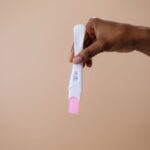




Does the Time of Day Matter for a Pregnancy Test?
Yes, when you take the test during the day affects the result. First morning urine has the highest concentration of hCG. You have not been drinking water all night, so the hormone is less diluted.
If you test later in the day, your urine may be too diluted to show a positive result, especially in early pregnancy. The American College of Obstetricians and Gynecologists recommends using first morning urine for the most accurate result.
If you cannot test first thing in the morning, try to hold your urine for at least four hours before testing. Do not drink a lot of water before the test. Drinking too much fluid can dilute your urine and lower the hCG concentration below the test’s detection limit.
This is especially important if you are testing before your missed period. In early pregnancy, hCG levels are still low. Diluted urine can easily push those levels below the test threshold.
What Can Cause a False Positive or False Negative?
False negatives are far more common than false positives. The main cause is testing too early. Other causes include diluted urine, an expired test, or not following the instructions exactly.
Some medications can interfere with results. Fertility treatments that contain hCG, like some injections used for ovulation, can cause a false positive. The hCG from the medication stays in your system for up to 10 days after the last injection.
Other medications like antihistamines, diuretics, and some pain relievers are not known to cause false results. There is a persistent myth that antibiotics cause false positives. Research shows this is not true. Antibiotics do not affect hCG levels or pregnancy test results.
Medical conditions that involve hCG production, such as some rare ovarian tumors, can cause a false positive. This is extremely rare. The more likely explanation for a false positive is a chemical pregnancy or user error.
Common Misconceptions About Pregnancy Test Timing
One widespread myth is that any positive line, no matter how faint, means you are definitely pregnant. A faint line usually does mean pregnancy, but it can also be an evaporation line. An evaporation line appears when the urine dries on the test strip after the recommended reading time. Always read the result within the time frame listed in the instructions, usually 3 to 5 minutes.
Another myth is that drinking orange juice or pineapple juice helps the test turn positive. There is no evidence that any food or drink affects hCG levels in urine. Your diet does not change the accuracy of a pregnancy test.
Some people believe that a negative test means they are not pregnant, no matter when they tested. This is not true. If you test before implantation has finished, you will get a negative result even if you are pregnant. The only way to rule out pregnancy is to test after a missed period.
A common internet claim is that shaking the test or tilting it changes the result. This is not accurate. Physical movement of the test does not affect the chemical reaction. The result is determined by the presence of hCG in the urine sample, not by how you handle the test.
Frequently Asked Questions
How many days after ovulation should I take a pregnancy test?
Wait at least 14 days after ovulation if you have a regular 28-day cycle. Testing earlier than 12 days after ovulation often gives a false negative.
Can I take a pregnancy test at night?
You can, but first morning urine is more reliable. If you test at night, avoid drinking fluids for at least four hours before the test.
What does a faint line on a pregnancy test mean?
A faint line usually means you are pregnant, but it could be an evaporation line. Read the test within the time frame on the instructions to be sure.
How long after implantation can I test positive?
Most people test positive 5 to 7 days after implantation. Implantation happens 6 to 12 days after ovulation, so a positive test typically appears around the time of your missed period.
