
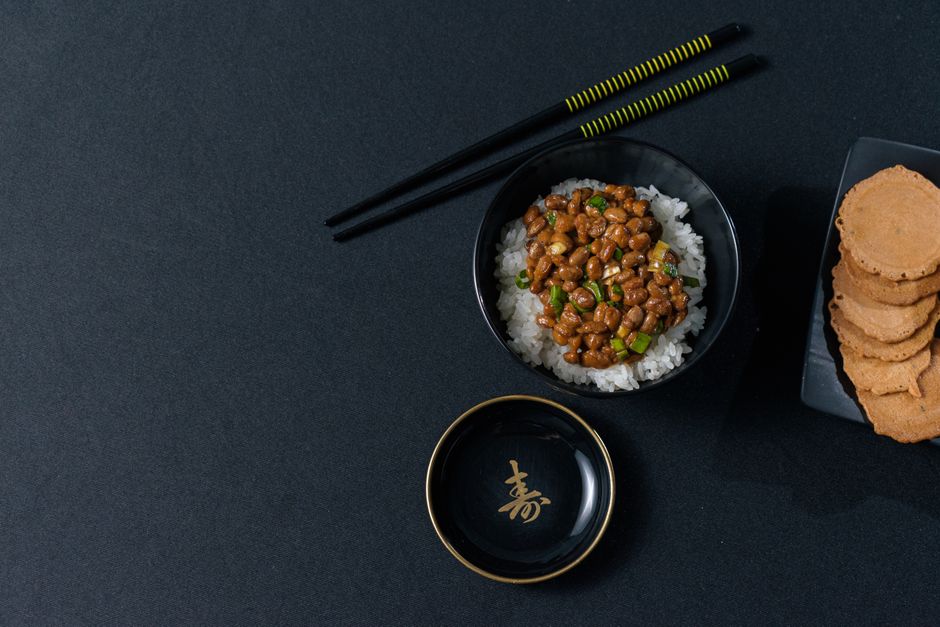
Natto is fermented soybeans, and its taste is best described as earthy, nutty, and sharply savory with a distinct ammonia-like note that many people find challenging at first bite. The texture is what surprises people most: sticky, stringy, and viscous, thanks to long protein strands that form during fermentation. Nutritionally, natto is high in plant protein, vitamin K2, and fiber, and it is one of the few common foods that delivers a meaningful amount of the enzyme nattokinase.
What Is Natto Taste and Texture Really Like?
Natto tastes strongly of fermentation. The dominant flavors are savory and slightly bitter, with a tangy, almost cheese-like quality. Some people compare it to aged blue cheese or a very ripe, funky miso. The ammonia note comes from the fermentation process itself, not from spoilage.
The texture is the bigger hurdle for most first-timers. Natto develops long, sticky threads when stirred. These strands are a normal part of fermentation and are not a sign the food has gone bad. The beans themselves are soft and slightly slippery.
How natto is served changes the experience significantly. In Japan, it is commonly eaten over hot rice with soy sauce, mustard, or scallions. The heat and the seasoning soften the ammonia edge and make the flavor more approachable. Eaten cold and plain, the taste is much more intense.
If you have tried natto and disliked it, you are not alone. Surveys in Japan have found that a notable share of the population dislikes it, even though it is a traditional food there. Taste preference for natto appears to be partly cultural and partly individual.
What Is the Nutrition Profile of Natto?
Natto is nutritionally dense for its calorie count. A typical 100-gram serving provides roughly 200 calories, around 18 grams of protein, and about 5 grams of fiber. It is also a source of iron, calcium, magnesium, and potassium.
The standout nutrient in natto is vitamin K2, specifically a form called menaquinone-7 (MK-7). Fermented soy foods are among the richest dietary sources of MK-7. Vitamin K2 activates proteins involved in blood clotting and calcium regulation. This is well established in human physiology.
| Nutrient (per 100g natto) | Approximate Amount |
|---|---|
| Calories | 200 kcal |
| Protein | 18 g |
| Fiber | 5 g |
| Vitamin K2 (MK-7) | Very high — among the richest food sources |
| Iron | ~8 mg |
| Calcium | ~90 mg |
These figures are approximate and vary by brand and preparation. Natto also contains nattokinase, an enzyme produced during fermentation. Nattokinase has been studied for its effects on blood clotting, but the research is mostly laboratory and small-scale. No large human trials have confirmed clinical benefits from eating natto.
Does Natto Have Proven Health Benefits?
The strongest evidence for natto relates to vitamin K2 and bone health. Vitamin K is required for carboxylation of osteocalcin, a protein involved in bone mineralization. Observational studies in Japan have linked higher natto intake with better bone density. However, observational studies cannot prove cause and effect.
Vitamin K2 from natto may also play a role in cardiovascular health by helping regulate where calcium is deposited in the body. This mechanism is well understood. Whether eating natto translates into fewer heart attacks or strokes is not established by large randomized trials.
Nattokinase has been studied for its ability to break down fibrin, a protein involved in blood clots. This activity has been demonstrated in laboratory settings. Human studies are small and limited. The evidence does not currently support nattokinase as a treatment for any medical condition.
Some research suggests natto may support digestive health because it contains fermented soy compounds and live cultures. The evidence here is limited and mostly indirect. Fermented foods in general have been associated with gut health, but natto specifically has not been the subject of large clinical trials.
What is clear: natto is a nutritious food. What is not clear: whether it prevents or treats specific diseases. Be cautious of any source that claims natto cures or treats a condition. No clinical evidence currently confirms that.


Who Should Be Careful With Natto?
Natto is high in vitamin K2, which interacts with blood-thinning medications, particularly warfarin. Vitamin K can reduce the effectiveness of warfarin. If you take warfarin, talk to your doctor before eating natto or any other high-vitamin-K food.
People with soy allergies should avoid natto. Soy is one of the major allergens. Symptoms can range from mild to severe, and natto is not safe for anyone with a confirmed soy allergy.
Natto contains tyramine, a compound that can affect blood pressure in people taking monoamine oxidase inhibitors (MAOIs). If you take an MAOI, ask your doctor whether natto is safe for you.
For most healthy adults, natto is a safe food. There are no established upper limits for natto consumption. However, because of its vitamin K content, anyone on blood-thinning medication should treat it as a food that requires medical guidance.
How Does Natto Compare to Other Soy Foods?
Natto is not the same as tofu, tempeh, or edamame. Tofu is made from coagulated soy milk and is not fermented. Tempeh is fermented but uses a different culture and does not produce nattokinase or the same sticky texture. Edamame is immature soybeans, steamed and eaten whole.
The key differences are fermentation and nutrient profile. Natto’s fermentation produces vitamin K2 and nattokinase, which are not present in unfermented soy foods. Tofu contains calcium and protein but almost no vitamin K2. Tempeh contains some K2 but at lower levels than natto.
If you are looking for vitamin K2 from food, natto is one of the best sources. If you are looking for a mild-tasting soy food, tofu or edamame are better choices. If you want fermented soy without the strong ammonia note, tempeh is a middle ground.
One non-obvious point: natto’s vitamin K2 content is not destroyed by cooking, but the nattokinase enzyme is sensitive to heat. If you are eating natto for the enzyme, heating it may reduce that enzyme’s activity. If you are eating it for vitamin K2, cooking does not significantly reduce it.
How Do You Eat Natto If You Are New to It?
Start with a small amount. A spoonful over hot rice is the traditional entry point. The heat from the rice softens the ammonia smell and makes the texture less overwhelming.
Stir natto vigorously before eating. This makes the strands more uniform and improves the texture. Add soy sauce, mustard, or scallions to balance the flavor. Some people add a raw egg, but raw egg carries a risk of Salmonella. If you are pregnant, elderly, or immunocompromised, use a pasteurized egg or skip it.
You can also mix natto into omelets, pasta, or stir-fries. Cooking reduces the ammonia note. It also reduces nattokinase activity. If you are eating natto for taste and general nutrition, cooking is fine. If you are eating it specifically for the enzyme, eat it raw or lightly warmed.
Natto is available frozen or refrigerated at Asian grocery stores and some mainstream supermarkets. Frozen natto keeps for months. Once thawed, it should be eaten within a few days.
Is Natto Worth Trying?
Natto is a nutrient-dense fermented food with a strong, distinctive taste. It is one of the best dietary sources of vitamin K2 and provides good plant protein and fiber. The evidence for its specific health benefits is strongest for bone health and vitamin K status, but it is not a treatment for any disease.
If you take blood thinners, have a soy allergy, or take an MAOI, talk to your doctor before trying natto. For everyone else, it is a safe food to experiment with. Start small, serve it hot, and season it well. If you dislike it, that is a normal response. Not every traditional food suits every palate.
Frequently Asked Questions
What does natto taste like?
Natto tastes earthy, nutty, and sharply savory with a distinct ammonia-like note. The flavor is often compared to aged cheese or strong miso, and the texture is sticky and stringy.
Is natto healthy to eat every day?
For most healthy adults, eating natto daily is considered safe and provides vitamin K2, protein, and fiber. However, if you take blood-thinning medication like warfarin, daily natto can interfere with your medication and should be discussed with your doctor.
Does natto contain vitamin K2?
Yes, natto is one of the richest dietary sources of vitamin K2, specifically menaquinone-7 (MK-7). This form of vitamin K2 is well absorbed and plays a role in bone and cardiovascular health.
Can natto help with blood clots?
Natto contains nattokinase, an enzyme that has shown clot-dissolving activity in laboratory studies. However, no large human trials have confirmed that eating natto prevents or treats blood clots, so it should not be used as a substitute for medical treatment.
