
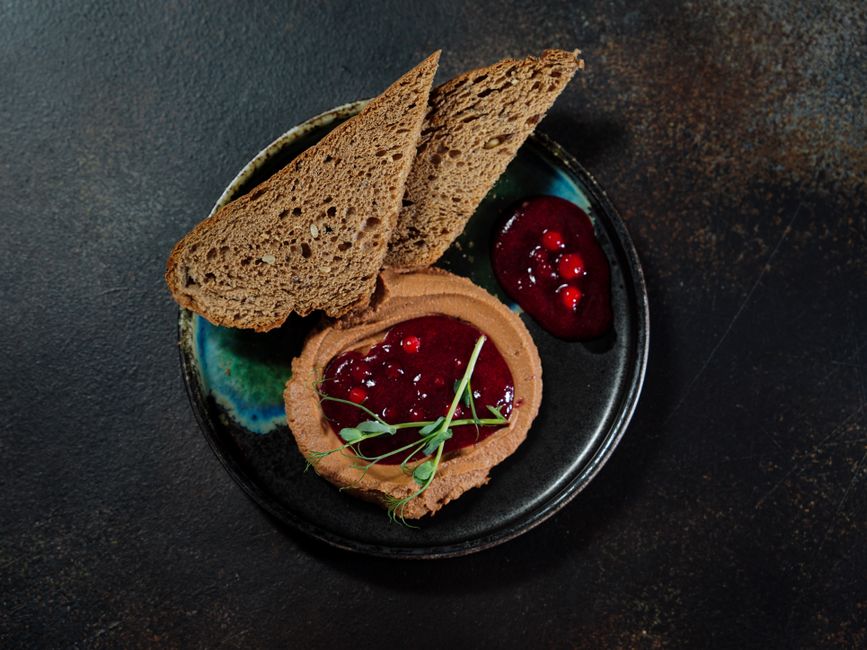
Liver pâté is a spread made primarily from cooked liver, fat, and seasonings, blended into a smooth paste. The classic French version uses pork liver, but chicken, duck, and beef liver are also common. Nutritionally, liver pâté is dense in protein, vitamin A, iron, and B vitamins, but it is also high in fat, cholesterol, and sodium depending on the recipe.
What Is Liver Pate Made Of Ingredients And Nutrition?
The base ingredients are simple: liver, fat, and salt. The liver is usually pork, chicken, duck, or beef. The fat is often butter, cream, or pork fatback. Onions, garlic, herbs like thyme, and spices like nutmeg or black pepper are standard additions.
Some commercial versions add milk, eggs, or breadcrumbs as binders. Others add wine or brandy for flavor. The mixture is cooked slowly, then pureed until smooth. A traditional French pâté may also include pork meat alongside the liver, which changes the texture and fat content.
The nutrition varies by recipe. A typical 100-gram serving of pork liver pâté contains roughly 300-400 calories. Protein is around 10-15 grams. Fat is usually 25-35 grams, with saturated fat making up a significant portion. Carbohydrates are low, typically under 5 grams.
Is Liver Pate High in Vitamin A?
Yes, liver pâté is exceptionally high in vitamin A. Liver is one of the most concentrated food sources of preformed vitamin A, called retinol. A single serving can provide several times the daily recommended intake.
This is important because vitamin A is fat-soluble, meaning your body stores it rather than excreting it easily. Eating liver pâté regularly can lead to excessive vitamin A levels over time. This is especially relevant for pregnant women, because high vitamin A intake during pregnancy is linked to birth defects. Most health authorities advise pregnant women to limit or avoid liver and liver products entirely.
For most adults, eating liver pâté occasionally is not a concern. The issue arises with frequent consumption. If you eat pâté weekly, your vitamin A intake may exceed safe levels. This is not a reason to avoid it entirely, but it is a reason to treat it as an occasional food rather than a daily staple.
How Much Iron and B12 Does Liver Pate Provide?
Liver pâté is a rich source of heme iron, the form of iron that your body absorbs most easily. A 100-gram serving can provide around 5-9 milligrams of iron, which is a substantial portion of the daily requirement for most adults. For comparison, the recommended daily intake is about 8 milligrams for men and 18 milligrams for menstruating women.
Vitamin B12 is also abundant. Liver is one of the best natural sources of this vitamin, which is essential for nerve function and red blood cell production. A single serving of pâté can easily cover the entire daily B12 requirement of about 2.4 micrograms.
These nutrients make liver pâté genuinely valuable for people at risk of iron deficiency or B12 deficiency, such as older adults or people with restrictive diets. However, the high vitamin A content means you should not use liver pâté as a daily supplement. Other foods like lean meat, fish, eggs, and fortified cereals can provide iron and B12 without the vitamin A risk.





Is the Fat in Liver Pate Healthy or Unhealthy?
The fat profile depends entirely on the recipe. Traditional pâté made with pork fatback or butter is high in saturated fat. A 100-gram portion can contain 10-15 grams of saturated fat, which is a significant portion of the recommended daily limit of about 20 grams for a 2,000-calorie diet.
Some commercial and homemade versions use cream or olive oil instead, which changes the fat profile. Olive oil-based pâtés contain more monounsaturated fat, which is generally considered heart-healthier. However, the total fat content remains high regardless of the fat source.
The cholesterol content is also notable. Liver itself is high in cholesterol, and the added fat increases it further. A 100-gram serving of pâté can contain 100-200 milligrams of cholesterol. Current dietary guidelines no longer emphasize dietary cholesterol as strongly as they once did, but for people with high cholesterol or heart disease, this is still worth considering.
If you enjoy pâté, the practical approach is portion control. A thin spread on a cracker or slice of bread is a reasonable serving. Eating a quarter of a tub in one sitting is where the fat and calorie intake becomes problematic.
How Does Liver Pate Compare to Other Spreads?
Compared to butter, liver pâté offers more protein and micronutrients but similar fat content. Compared to hummus, pâté is higher in fat and cholesterol but also higher in iron and B12. Compared to cream cheese, pâté provides more protein and significantly more vitamins and minerals.
The table below shows approximate values per 100 grams for common spreads. These are general estimates because recipes vary widely.
| Spread | Calories | Protein | Fat | Iron |
|---|---|---|---|---|
| Liver pâté | 300-400 | 10-15 g | 25-35 g | 5-9 mg |
| Butter | 717 | 0.9 g | 81 g | 0 mg |
| Hummus | 166 | 7.9 g | 9.6 g | 2.4 mg |
| Cream cheese | 342 | 6.2 g | 34 g | 0.4 mg |
These numbers show that pâté is not a low-fat food by any standard. Its value lies in nutrient density, not calorie control. If weight management is your primary goal, hummus is the lighter choice. If you want maximum iron and B12 per bite, pâté wins clearly.
Are Store-Bought and Homemade Versions Different?
Store-bought pâtés vary widely in quality. Some are made with real liver and minimal additives. Others contain fillers, modified starches, and preservatives to reduce cost and extend shelf life. Reading the ingredient list is the only reliable way to tell the difference.
High-quality commercial pâtés often list liver as the first ingredient and contain recognizable items like pork, butter, onions, and salt. Lower-quality versions may list liver much further down, with water, starch, and flavorings taking up more of the product. Some cheap pâtés contain very little actual liver and rely on artificial liver flavoring.
Homemade pâté gives you full control over ingredients. You can choose high-quality liver from a trusted source, control the salt, and use a fat you are comfortable with. The tradeoff is effort and time. Pâté is not difficult to make, but it does require cooking, blending, and chilling.
One safety note applies to both homemade and store-bought versions: liver pâté is perishable. It must be refrigerated and consumed within a few days of opening. Homemade pâté without preservatives typically lasts 3-5 days in the refrigerator. Some versions can be frozen for longer storage, but the texture may change after thawing.
Who Should Avoid Liver Pate?
Pregnant women should avoid liver pâté due to the high vitamin A content. This is a clear, well-established recommendation. Excessive preformed vitamin A during pregnancy is associated with an increased risk of birth defects.
People with gout may also want to limit liver pâté. Liver is high in purines, which the body breaks down into uric acid. For people prone to gout attacks, high-purine foods can trigger flares.
People with chronic kidney disease should be cautious. Liver is very high in protein and phosphorus, both of which can be problematic when kidney function is reduced. A doctor or renal dietitian can provide specific guidance.
Anyone taking certain medications should check for interactions. Vitamin A supplements, some acne medications like isotretinoin, and some cholesterol medications can interact with high dietary vitamin A. If you take prescription medications regularly, ask your pharmacist or doctor about liver consumption.
How Much Liver Pate Is Safe to Eat?
There is no single official guideline for liver pâté consumption. The general clinical direction is clear: treat it as an occasional food, not a daily one. For most healthy adults, eating liver pâté once or twice a week in small portions is unlikely to cause problems.
A reasonable serving is about 30-50 grams, roughly two to three tablespoons. This provides meaningful amounts of iron and B12 while keeping vitamin A and saturated fat intake within a manageable range.
If you eat liver in other forms, such as cooked liver slices or liverwurst, factor that into your total liver intake. The vitamin A from all liver sources adds up. Keeping total liver consumption to about one serving per week is a sensible approach for most adults. Pregnant women should avoid liver products entirely and discuss alternatives with their healthcare provider.
Frequently Asked Questions
Is liver pate safe to eat during pregnancy?
No, pregnant women should avoid liver pâté because it is very high in vitamin A, which can harm fetal development. Discuss iron and B12 alternatives with your healthcare provider.
Can I eat liver pate every day?
Daily consumption is not recommended because the vitamin A and saturated fat content can build up over time. Occasional small servings are fine for most healthy adults.
Is chicken liver pate healthier than pork liver pate?
Chicken liver pâté tends to be slightly lower in calories and fat than pork liver pâté, but both are high in vitamin A and iron. The added fat in the recipe matters more than the liver type.
How long does homemade liver pate last in the fridge?
Homemade liver pâté typically lasts 3-5 days when properly refrigerated in an airtight container. Freeze it if you need to store it longer.
