
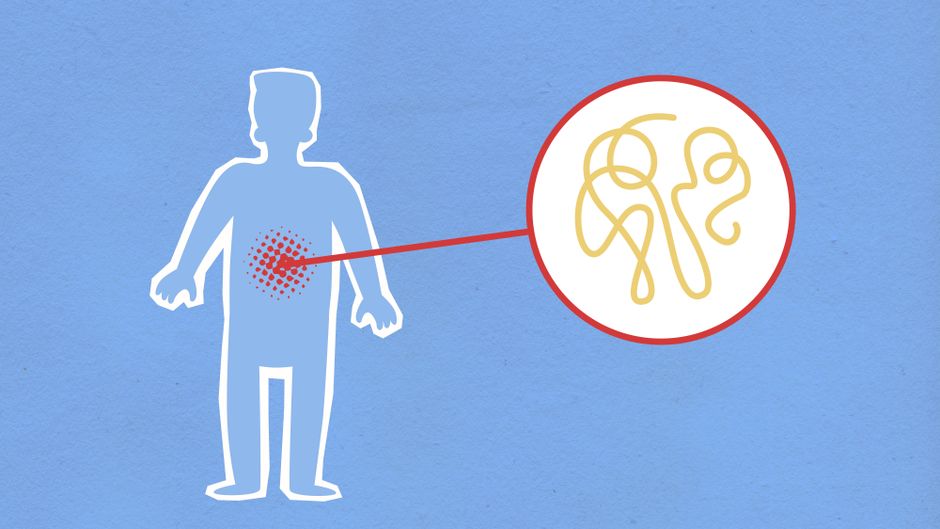
Your digestive tract is a muscular tube about 30 feet long. Motility is the coordinated squeezing and relaxing of those muscles that moves food through it — from the moment you swallow to the moment waste leaves your body. Without motility, food would simply sit in place. There is no pump, no gravity assist, and no conscious control over most of the process. The muscles do all the work, and they do it on a schedule your nervous system manages automatically.
What Is Motility in Digestion?
Motility in digestion is the movement of the gastrointestinal tract’s smooth muscle that propels, mixes, and breaks down food as it travels from the esophagus to the colon. It is not one motion but several different patterns, each suited to a specific part of the journey.
The gastrointestinal tract has two main muscle layers. An inner layer wraps around the tube in circles. An outer layer runs lengthwise. When the circular muscles contract, they narrow the tube. When the longitudinal muscles contract, they shorten it. Working together in precise sequences, these layers produce the movements that keep digestion moving.
The enteric nervous system — sometimes called the gut’s own brain — coordinates much of this locally. It contains hundreds of millions of neurons embedded in the gut wall and can manage motility largely on its own. The vagus nerve and other branches of the autonomic nervous system provide additional input from the brain and spinal cord.
The two main movement patterns
Peristalsis is a wave of contraction that pushes contents forward. A ring of muscle contracts behind the food bolus while the muscle ahead relaxes. This wave travels down the tract, moving contents in one direction.
Segmentation is different. It involves localized contractions that chop and mix contents rather than pushing them forward. Segmentation is especially active in the small intestine, where it blends food with digestive enzymes and brings nutrients into contact with the intestinal wall for absorption.
How Does Motility Work in Each Part of the Digestive Tract?
Each section of the digestive tract has its own motility pattern, timing, and purpose. What works in the stomach would be useless in the colon.
Esophagus
Swallowing triggers a peristaltic wave that carries food down to the stomach. This happens in seconds. A second wave follows if the first does not clear the esophagus completely. The lower esophageal sphincter — a ring of muscle at the bottom — relaxes to let food pass, then closes to prevent stomach contents from flowing back up.
Stomach
The stomach stores food, mixes it with acid and enzymes, and empties it into the small intestine at a controlled rate. The pyloric sphincter, a muscular valve at the stomach’s outlet, regulates this emptying. Liquids pass through relatively quickly. Solids are ground into particles small enough to pass. Fats slow emptying — which is why a high-fat meal can keep you feeling full longer.
Small intestine
Segmentation dominates here. Rhythmic local contractions churn chyme — the semi-liquid mixture of food and digestive juices — against the intestinal wall for absorption. Peristaltic waves gradually push contents forward. The entire process takes roughly three to five hours in a healthy adult, though this varies with meal composition and individual factors.
Colon
The colon absorbs water and electrolytes and stores waste. Its motility is slower and more episodic than the small intestine. Haustral contractions — segmenting movements in the colon’s pouches — mix contents and promote water absorption. Mass movements are stronger peristaltic waves that push waste toward the rectum, often triggered by eating.
The gastrocolic reflex is a well-established response: eating stimulates colonic activity. This is why many people feel the urge to have a bowel movement shortly after a meal, especially in the morning.
What Controls and Affects Gut Motility?
Motility is regulated by a layered system of nerves, hormones, and local signals. Disruption at any level can slow things down or speed them up.
The enteric nervous system handles most moment-to-moment control. It uses neurotransmitters including acetylcholine (which generally stimulates contraction) and nitric oxide (which promotes relaxation). The autonomic nervous system modulates this — the parasympathetic branch generally stimulates digestion, while the sympathetic branch — the “fight or flight” system — tends to inhibit it.
Hormones also play a role. Gastrin, motilin, and cholecystokinin are among the signaling molecules that influence motility timing and intensity. Some are released in response to food; others follow fasting rhythms.
Several everyday factors can affect motility:
- Diet: Fiber adds bulk and supports regular colonic movement. Fat slows gastric emptying. Large meals trigger stronger colonic responses.
- Hydration: Dehydration can slow motility and contribute to hard stools.
- Physical activity: Movement tends to support normal motility, though the relationship is not fully understood.
- Stress: Psychological stress can alter gut motility through the brain-gut axis. The effect varies — some people experience slowing, others speeding up.
- Medications: Opioids, anticholinergics, and some antidepressants can slow motility. Certain others can accelerate it.
- Sleep: Disrupted sleep patterns are associated with changes in gut function.



What Happens When Motility Goes Wrong?
Motility disorders occur when the muscles or nerves that control digestion do not work properly. Symptoms depend on which part of the tract is affected and whether movement is too slow or too fast.
When motility is too slow, contents linger. This can cause bloating, nausea, constipation, and a feeling of fullness that lasts longer than expected. When motility is too fast, contents move through before the body can absorb enough water and nutrients. This can cause diarrhea, urgency, and in some cases nutrient malabsorption.
Several conditions involve disrupted motility. Gastroesophageal reflux disease (GERD) can involve abnormal function of the lower esophageal sphincter and altered esophageal motility. Irritable bowel syndrome (IBS) is associated with changes in gut motility patterns, though the relationship is complex and not fully understood. Gastroparesis is a condition of delayed gastric emptying without a physical blockage. Inflammatory bowel diseases like Crohn’s disease and ulcerative colitis can affect motility through inflammation and structural changes.
These conditions are diagnosed by a doctor. Symptoms like chronic bloating, persistent constipation or diarrhea, unexplained weight loss, or vomiting should be evaluated. Self-diagnosis based on symptom patterns alone is unreliable.
What Does Normal Motility Look Like?
Normal motility varies widely between healthy people. There is no single “correct” transit time.
Whole-gut transit — the time from eating to elimination — typically ranges from about 10 to 73 hours in healthy adults, according to research using standardized measurement methods. That is a broad range, and it reflects real biological variation.
Bowel movement frequency also varies. Some healthy people have three movements a day. Others have three a week. Both can fall within normal limits if stools are well-formed and there is no discomfort or straining.
What matters more than a specific number is a change from your own baseline. A sudden shift in frequency, consistency, or ease of passage that persists is worth discussing with a doctor.
Can You Support Healthy Motility?
There is no proven way to “optimize” motility beyond basic habits that support normal gut function. The evidence for most supplements marketed for motility is limited or absent.
What the evidence does support:
- Fiber intake: Adequate dietary fiber supports regular bowel movements. The USDA recommends about 25 grams per day for adult women and 38 grams for adult men, though most Americans fall short.
- Fluid intake: Staying hydrated supports normal stool consistency. Water needs vary by individual, activity level, and climate.
- Regular physical activity: Movement is associated with healthier gut transit, though the exact mechanisms are not fully established.
- Consistent meal patterns: Eating at regular times supports the gastrocolic reflex and normal digestive rhythms.
Probiotics, digestive enzymes, and herbal “gut motility” supplements are widely sold. The evidence for most of these specific products is limited. Some strains of probiotics have been studied for specific conditions, but results vary and no product is established as a general motility aid for healthy people.
If you have persistent digestive symptoms, see a doctor. Motility disorders are real medical conditions that require proper evaluation. They are not something to self-treat with supplements or dietary experiments alone.
Frequently Asked Questions
What is motility in digestion in simple terms?
Motility is the muscular movement of your digestive tract that pushes and mixes food as it travels from your mouth to your colon. It happens automatically through coordinated muscle contractions controlled by your nervous system.
How long does food take to move through your digestive system?
Whole-gut transit typically ranges from about 10 to 73 hours in healthy adults, depending on the person and the meal. The stomach empties in a few hours, the small intestine takes roughly three to five hours, and the colon can hold contents for a day or more.
What causes slow motility in the gut?
Slow motility can result from medications like opioids, dehydration, low fiber intake, certain medical conditions, or disruption of the nerves and muscles that control the gut. A doctor can help identify the cause if symptoms persist.
Can you improve gut motility naturally?
Adequate fiber, hydration, regular physical activity, and consistent meal timing support normal motility, but no lifestyle change is proven to fix a diagnosed motility disorder. Persistent symptoms should be evaluated by a doctor.
