
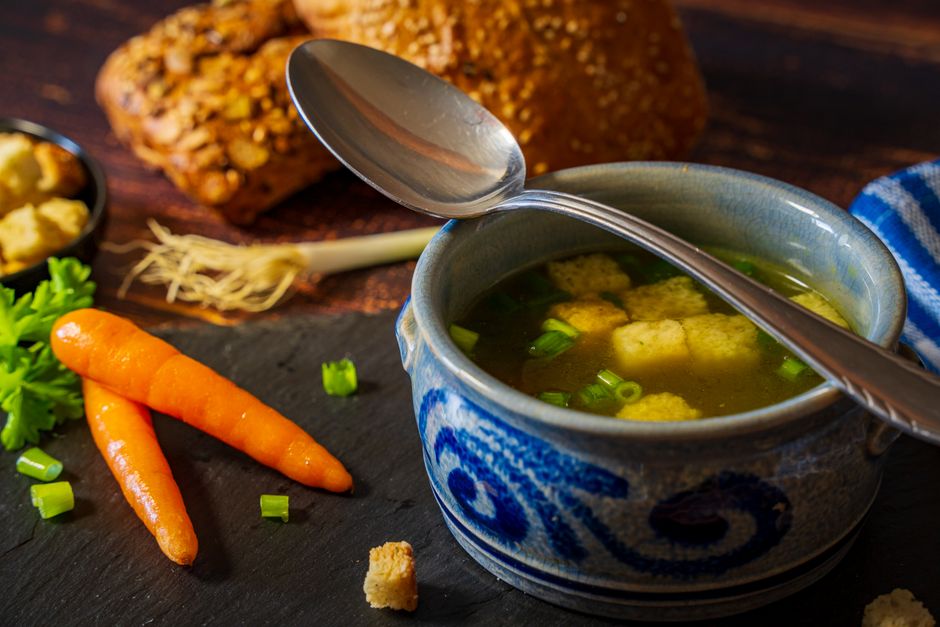
Pea soup is not inherently fattening. Whether it adds pounds depends almost entirely on how it is made and how much of it you eat. A plain split pea soup made with water or low-sodium broth is a nutrient-dense, high-fiber food that fits comfortably into most eating patterns. Cream-based or salt-pork-heavy versions can carry far more calories and fat per bowl.
Calories in pea soup range widely. A one-cup serving of homemade split pea soup made with water and vegetables typically lands somewhere between 150 and 200 calories. The same soup made with heavy cream and butter can exceed 400 calories per cup. That gap is the whole story.
How Many Calories Are in Pea Soup?
There is no single calorie number for pea soup because the recipe determines everything. The peas themselves are the steady part. One cup of cooked split peas provides roughly 230 calories, about 16 grams of fiber, and around 16 grams of protein, according to USDA nutrient data. When those peas are turned into soup with water or broth, the calorie density drops because you are adding volume without adding much energy.
What moves the number up or down:
- Liquid base: Water or low-sodium broth adds almost no calories. Heavy cream adds roughly 50 calories per tablespoon.
- Meat: Ham hocks, bacon, and salt pork are traditional but add significant fat and sodium. A smoked turkey leg adds protein with less fat.
- Fat added during cooking: Butter, oil, or a roux can add 100 or more calories per serving.
- Portion size: A restaurant bowl may hold two cups or more. Two cups of a 180-calorie soup is 360 calories before you add anything on the side.
A reasonable estimate for a homemade pot of split pea soup with a modest amount of lean meat and no cream falls in the 150 to 250 calorie range per one-cup serving. Canned and restaurant versions vary too much to give a single figure, so check the label or ask about preparation.
Is Pea Soup Fattening on Its Own?
No food is fattening in isolation. Weight gain happens when you consistently take in more calories than you burn. Pea soup is actually a poor candidate for causing that, for a few reasons rooted in how the body handles food.
Fiber and protein both slow digestion and tend to increase satiety — the feeling of fullness that helps you stop eating. Split peas are unusually high in both. A soup that leaves you full for several hours is less likely to be followed by snacking than a lighter, less satisfying meal of equal calories.
The calorie density matters too. Foods with high water and fiber content give you more volume per calorie. A large bowl of broth-based pea soup fills the stomach with relatively few calories compared to, say, a similar volume of a cream-based soup or a plate of pasta. Research on satiety has consistently found that volume and fiber influence how full people feel, though individual responses vary.
Where pea soup can become fattening is in the additions. Cream, butter, fatty cured meats, and large portions of bread or crackers served alongside can turn a light meal into a heavy one. The soup is not the problem. The build is.
What Are the Nutrition Facts for Pea Soup?
The exact profile depends on the recipe, but the general picture is consistent. Split peas are a legume, and legumes share a nutritional signature: high fiber, moderate protein, low fat, and a range of micronutrients.
| Nutrient (approximate, per 1 cup homemade split pea soup with water and vegetables) | Amount |
|---|---|
| Calories | 150–200 |
| Protein | 8–12 g |
| Fiber | 8–12 g |
| Fat | 1–3 g |
| Carbohydrates | 25–35 g |
| Sodium | Varies widely — can exceed 800 mg depending on broth and meat |
Split peas also supply iron, potassium, folate, and B vitamins. They are naturally low in fat and contain no cholesterol. These values shift considerably if you add cream, butter, or cured meat. A ham-based version can double the sodium and add several grams of saturated fat per serving.
One clarification worth making: peas are often grouped with starchy vegetables, but nutritionally they behave more like a protein and fiber source. That matters if you are counting carbohydrates or building a balanced plate.



Does Pea Soup Help With Weight Management?
Soup, and pea soup in particular, has some features that support weight management — but the evidence is about the pattern, not the single food. Studies on soup consumption have generally found that people who eat broth-based soup before or as a meal tend to eat fewer total calories at that meal. The mechanism is likely a mix of volume, water content, and slower eating pace.
Split peas add fiber and protein to that equation. Both nutrients are associated with greater satiety in controlled feeding studies, though the size of the effect varies between people. Fiber also feeds gut bacteria and supports digestive regularity, which is a separate benefit from weight.
What pea soup cannot do is override a calorie surplus elsewhere. If you eat a filling bowl of pea soup and then eat the same dinner you would have eaten anyway, the soup is an addition, not a substitute. Used as a meal or a meal-starter in place of something more calorie-dense, it can help. Used as a side dish on top of a full meal, it adds calories like any other food.
Is Canned or Restaurant Pea Soup Different?
Yes, and the difference is often large. Canned soups are formulated for shelf stability and flavor, which usually means more sodium and sometimes more fat or added sugar than a homemade version. Some canned split pea soups with ham contain well over 800 milligrams of sodium per cup. That is a meaningful amount for anyone watching blood pressure.
Restaurant pea soup is harder to assess because recipes are not standardized. Cream-based versions, common in some restaurants, add fat and calories quickly. A bowl could easily contain 400 to 600 calories depending on the recipe and portion.
If you are tracking calories or sodium, the label is your most reliable source for canned products. For restaurant soup, asking whether it contains cream or how it is thickened gives you a reasonable idea. Many kitchens are willing to tell you.
Who Should Be Careful With Pea Soup?
For most people, pea soup is a healthy food. A few groups may need to pay closer attention.
People with high blood pressure or heart conditions that require sodium restriction should watch the sodium content, especially in canned or restaurant versions. The peas themselves are low in sodium. It is the broth, meat, and added salt that drive the number up.
People with irritable bowel syndrome or other conditions sensitive to FODMAPs may find that split peas and other legumes trigger bloating or gas. Peas contain fermentable carbohydrates that some digestive systems handle less comfortably. This is a tolerance issue, not a safety one, but it is real for some people.
People with gout or a history of kidney stones sometimes hear that they should avoid legumes. The evidence here is more nuanced than the common advice suggests. Purine-rich foods were long thought to raise gout risk, but research has not consistently shown that vegetable purines carry the same risk as purines from meat and seafood. Anyone with these conditions should follow the guidance of their own clinician rather than a general rule.
For everyone else, the main practical caution is portion size and what goes into the pot.
How Can You Make Pea Soup Lighter?
You do not have to give up flavor to keep pea soup light. A few adjustments make a noticeable difference without changing the character of the soup.
- Use low-sodium or unsalted broth instead of regular broth or bouillon.
- Skip cream entirely. Split peas are naturally creamy when blended, so a little of the cooking liquid pureed in gives body without fat.
- Choose smoked turkey or a small amount of lean ham instead of salt pork or bacon.
- Add carrots, celery, onion, and herbs for flavor instead of relying on salt.
- Watch the bread or crackers on the side. They often add more calories than the soup itself.
None of these changes require special ingredients. They mostly come down to what you leave out rather than what you add.
Frequently Asked Questions
Is pea soup high in calories?
A homemade broth-based split pea soup is moderate in calories, typically around 150 to 200 per cup. Cream-based or meat-heavy versions can be much higher.
Can I eat pea soup while trying to lose weight?
Yes, it can fit well because its fiber and protein content support fullness. The key is using it as a meal or meal-starter rather than adding it on top of a full meal.
Is split pea soup healthy?
It is generally a nutritious choice, providing fiber, protein, and several vitamins and minerals. Canned and restaurant versions are often much higher in sodium, so check the label when you can.
Does pea soup have a lot of carbs?
A one-cup serving typically contains around 25 to 35 grams of carbohydrates, mostly from the peas themselves. That is moderate and comes packaged with fiber, which slows digestion.
