
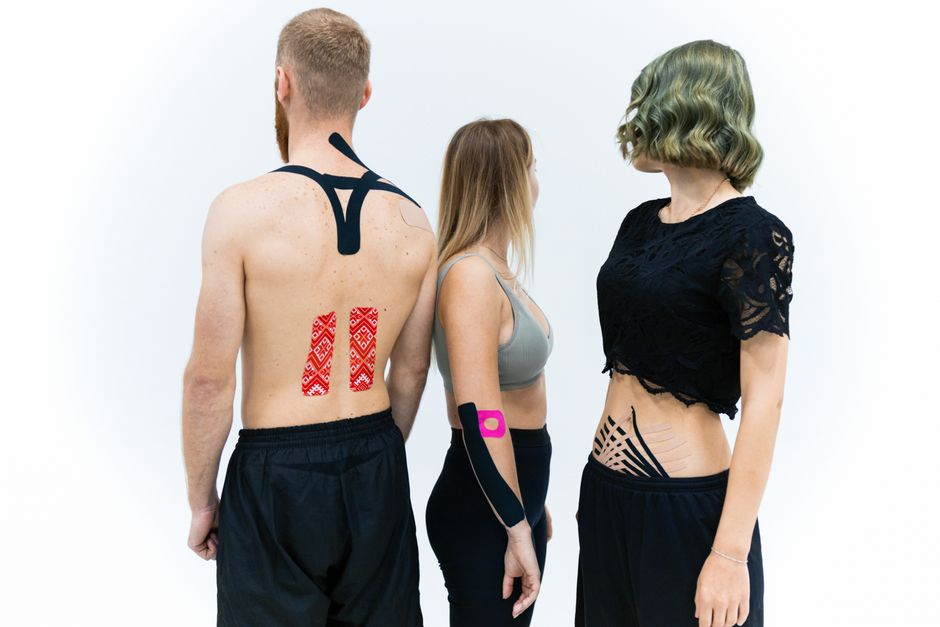
Kinesiology tape is a thin, stretchy, cotton-based adhesive tape used to support muscles and joints without restricting movement. Unlike traditional athletic tape, which is stiff and designed to limit motion, kinesiology tape moves with your body. It was developed in the 1970s by a Japanese chiropractor and has since become common in sports medicine, physical therapy, and general fitness settings.
How Does Kinesiology Tape Work?
The tape works through a mechanical action on the skin. When applied with tension, it gently lifts the top layer of skin away from the tissue beneath it. This lifting effect is the core of how the tape is thought to function.
That small space between skin and muscle changes pressure in the area. Some researchers believe this improves blood flow and lymphatic drainage. Others focus on how the tape affects sensory nerves in the skin. The stretch of the tape provides constant, light input to those nerves, which may alter how your brain perceives pain in that region.
What the tape does not do is physically hold a joint in place. It is not strong enough to prevent significant joint movement. Kinesiology tape is a sensory tool, not a structural brace.
What Is Kinesiology Tape Used For?
People use kinesiology tape for a range of musculoskeletal complaints. Common uses include shoulder pain, knee instability, lower back strain, and muscle soreness after exercise. Athletes often wear it during competition, but it is equally common in everyday clinical practice.
Physical therapists and athletic trainers apply it to support recovery from injury. Some use it to reduce swelling after surgery. Others apply it to improve posture or to assist weak muscles during rehabilitation exercises.
It is also used in pediatric therapy and for conditions like plantar fasciitis and shin splints. The tape itself does not cure any of these conditions. It is typically part of a broader treatment plan that includes exercise, stretching, or manual therapy.
Does Kinesiology Tape Actually Work?
The evidence on kinesiology tape is mixed. Some studies show modest benefits for pain relief and range of motion. Others find no significant advantage over a placebo or sham taping. The quality of research varies widely, and results are not consistent across studies.
For pain reduction, some clinical trials report short-term improvements. This effect may last only a few days. For muscle strength or performance enhancement, the evidence is weaker. Most research does not support the claim that kinesiology tape improves strength or athletic performance.
One area where the tape may be more useful is proprioception. This is your body’s ability to sense its own position in space. The sensory input from the tape may improve joint awareness, which could help during rehabilitation after injury.
It is important to distinguish between what the tape does and what people claim it does. No credible study has shown that kinesiology tape heals tissue faster, corrects muscle imbalances, or prevents injury. These claims are marketing, not medicine.




How Is Kinesiology Tape Applied?
Application technique matters. The tape has a specific adhesive that activates with body heat. It is designed to stay on for several days, even through sweat and showering.
The tape comes in strips that are applied with varying amounts of stretch. Different techniques serve different purposes. A strip applied with 0% stretch may be used for lymphatic drainage. A strip applied with 50-75% stretch may be used for joint support. The exact technique depends on the goal and the area being taped.
Most people should have the tape applied by a trained professional at least once. Physical therapists, chiropractors, and athletic trainers receive instruction in taping methods. Learning from a professional helps ensure the tape is placed correctly.
Applying the tape incorrectly can reduce its effectiveness. It can also cause skin irritation if the adhesive is pulled too tight at the ends of the strip. The ends are typically applied with no stretch to keep the tape from peeling.
What Are the Risks and Side Effects?
Kinesiology tape is generally safe for most people. The most common side effect is skin irritation from the adhesive. This can range from mild redness to a more significant rash. People with sensitive skin or known adhesive allergies should test a small piece of tape on their arm before using it on a larger area.
Do not apply kinesiology tape over open wounds, rashes, or sunburned skin. The adhesive can further irritate damaged skin. Avoid using it over areas with active infection or where there is deep vein thrombosis, as the pressure changes could theoretically affect blood flow in these situations.
If you have diabetes or circulatory problems, talk to your doctor before using kinesiology tape. The same applies if you are pregnant and considering taping your abdomen. No clinical guidelines currently exist for these specific populations.
Remove the tape if it causes significant discomfort, tingling, or numbness. This may indicate the tape was applied too tightly or is compressing a nerve.
Kinesiology Tape vs. Traditional Athletic Tape
These two products serve different purposes. Traditional athletic tape is rigid and non-elastic. It is designed to restrict joint movement and provide structural support. It is commonly used to protect injured ankles or wrists during sport.
Kinesiology tape is elastic and allows full range of motion. It provides sensory feedback rather than mechanical restriction. These are fundamentally different approaches to injury management.
For acute injuries where joint stability is the priority, traditional tape is usually the better choice. For chronic pain, muscle re-education, or conditions where movement is encouraged, kinesiology tape may be more appropriate. Some clinicians use both together for different purposes.
The choice depends on the specific injury and the treatment goal. A healthcare professional can help determine which approach suits your situation.
How Long Does Kinesiology Tape Stay On?
Kinesiology tape is designed to remain in place for three to five days. Some brands claim longer wear time, but most clinical guidance suggests removing it within this window. Leaving it on longer increases the risk of skin irritation.
The tape is water-resistant but not waterproof. You can shower with it, but prolonged soaking in a bath or pool may loosen the adhesive. Pat the tape dry gently after washing. Do not rub it with a towel, as this can cause the edges to peel.
Sleeping with the tape is generally fine. The adhesive is strong enough to stay in place overnight. If the tape starts to peel at the edges, you can trim the loose corners with scissors. Do not pull the tape off quickly, as this can damage the skin. Remove it slowly, in the direction of hair growth, or use a small amount of baby oil to help release the adhesive.
Who Should Not Use Kinesiology Tape?
Most healthy adults can use kinesiology tape without issues. However, certain groups should exercise caution. People with fragile skin, such as older adults or those taking long-term corticosteroids, may find the adhesive too aggressive. The tape can tear skin when removed.
People with cancer, particularly those with active tumors near the taping site, should avoid kinesiology tape. The theory that the tape improves local blood flow raises concerns in this population, though no studies have confirmed any specific risk. It is simply not worth the uncertainty.
If you are unsure whether kinesiology tape is appropriate for your condition, ask a healthcare professional. The tape is a tool, not a standalone treatment. It should not delay or replace proper medical evaluation of an injury.
Frequently Asked Questions
Can kinesiology tape be worn while exercising?
Yes, kinesiology tape is designed to be worn during physical activity. It stays in place through sweat and movement, though intense exercise may shorten how long it adheres.
Does kinesiology tape help with swelling?
Some evidence suggests the tape can help reduce swelling by lifting the skin and improving lymphatic drainage. The effect is modest and works best when combined with other treatments like compression or movement.
Is kinesiology tape the same as KT Tape?
KT Tape is one brand of kinesiology tape, not a separate product category. Many companies make kinesiology tape with similar materials and adhesive properties.
Can you sleep with kinesiology tape on?
Yes, you can sleep with kinesiology tape on. The adhesive is strong enough to stay in place overnight, and most people find it comfortable during sleep.
