
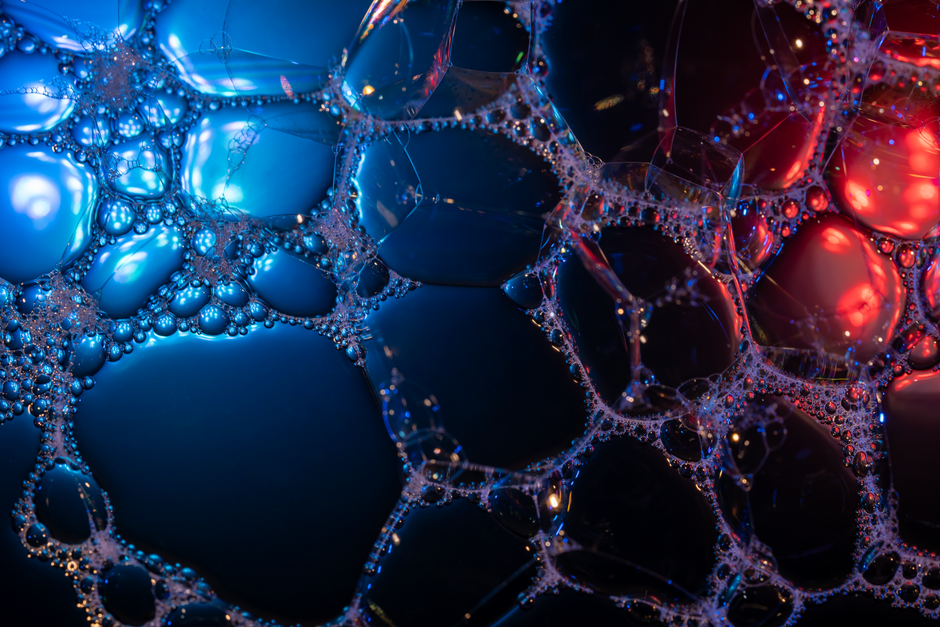
Drop a little oil into a glass of water and something remarkable happens. The oil does not dissolve. Instead, it forms a thin film on the surface or breaks into tiny droplets that float separately. That behavior is the beginning of a story about how living cells got their boundaries. Membranes form spontaneously in water because of a simple physical rule: water pushes certain molecules together. Those molecules, called phospholipids, have one end that loves water and one end that avoids it. When placed in water, they organize themselves so the water-loving parts face outward and the water-fearing parts hide inside. This self-assembly is not magic. It is basic chemistry and physics doing exactly what the laws of nature require.
What Are Membranes Made Of?
Cell membranes are built mostly from phospholipids. Each phospholipid has a head and two tails. The head contains phosphate and is polar, meaning it carries an electrical charge that attracts water. The tails are fatty acid chains that carry no charge and repel water.
Scientists call this arrangement amphipathic — the molecule has both a water-loving (hydrophilic) part and a water-fearing (hydrophobic) part. This dual nature is the key to everything that follows.
When phospholipids are placed in water, the water molecules try to form hydrogen bonds with each other. They cannot bond with the oily tails. That forces the tails together, away from water, while the heads stay in contact with water. The result is a double layer of molecules with tails pointing inward and heads pointing outward on both sides. This is called a lipid bilayer, and it is the basic structure of every cell membrane on Earth.
How Do Membranes Form Spontaneously In Water?
Membranes form spontaneously because the process lowers the system’s free energy. In simple terms, the molecules arrange themselves in the way that requires the least energy. The water molecules are happier when they are not forced to touch the oily tails. The tails are happier when they are packed together, away from water.
This is driven by something called the hydrophobic effect. It is not a force that pulls the tails together. It is the water pushing them together. Water molecules constantly move and form temporary bonds with neighbors. When an oily tail is present, water molecules cannot bond with it. They must reorganize around it, which costs energy. To avoid that cost, the tails cluster together, minimizing the surface area exposed to water.
The process is entirely spontaneous. No enzymes, no cellular machinery, no external energy is required. If you mix phospholipids with water, they will form bilayers on their own. This happens in a test tube just as it happens in a living cell. That fact is one of the strongest pieces of evidence that life itself may have begun with simple molecules assembling into membranes without any biological help.
The shape of the final structure depends on the geometry of the molecules. Phospholipids with two tails and a head roughly the same width form flat bilayers. Molecules with a large head and small tail tend to form spheres called micelles. Molecules with a small head and bulky tails may form inverted structures. The cell membrane is a bilayer because that is the most stable arrangement for its specific mix of lipids.
What Happens When Membranes First Form?
When phospholipids first meet water, they do not instantly form a perfect bilayer. They pass through intermediate stages. The molecules may form small clusters, then sheets, then close into hollow spheres called vesicles. These vesicles are essentially empty bags of membrane with water inside and outside.
This closing step is important. A flat bilayer has exposed edges where the tails touch water. Those edges are energetically costly. To eliminate them, the sheet bends and fuses into a sphere. A sphere has no edges. Every tail is safely hidden inside the bilayer.
This is why cell membranes are always closed structures. A red blood cell, a neuron, a bacterium — every cell is a sealed sac. The membrane cannot stay open because open edges are unstable. The physics of water forces the membrane to close.
Vesicles form readily in laboratories. Researchers routinely create them by hydrating dry phospholipids or by extruding lipid mixtures through tiny pores. These artificial vesicles, called liposomes, are used in drug delivery and cosmetics. They are not alive, but they behave exactly like the membranes of living cells in many ways.





Why Does This Matter for the Origin of Life?
The spontaneous formation of membranes is central to one of the biggest questions in science: how did life begin? Every living cell is enclosed by a membrane. Without a boundary, the chemistry of life would diffuse away. There would be no way to concentrate molecules or maintain differences between inside and outside.
If membranes can form without biological help, then the first step toward cellular life may have been easy. Fatty acids, which are simpler than phospholipids, can also form vesicles in water. Some research suggests that these simple molecules could have assembled into primitive membranes on early Earth, providing compartments where prebiotic chemistry could proceed.
This idea is supported by laboratory experiments. Scientists have shown that fatty acid vesicles can grow, divide, and even trap RNA inside. These are not living things, but they demonstrate that the basic properties of life — compartmentalization, growth, and division — can arise from simple chemistry.
However, the gap between a vesicle and a living cell is enormous. A modern cell membrane contains proteins, cholesterol, sugars, and a complex machinery for transport and signaling. The spontaneous formation of a lipid bilayer is only the first step. The rest required billions of years of evolution.
Do All Membranes Form the Same Way?
Not exactly. Phospholipid bilayers are the standard, but other molecules can form membranes too. Fatty acids, which have a single tail, form vesicles under specific conditions of pH and concentration. These are less stable than phospholipid bilayers but may have been more common on early Earth.
Some synthetic molecules also self-assemble into membranes. Block copolymers, which are long chains of repeating units, can form bilayers with properties different from natural lipids. These are used in materials science and drug delivery research.
Even within natural membranes, the composition varies. Animal cell membranes contain cholesterol, which stiffens the bilayer and reduces permeability. Plant and bacterial membranes have different lipid profiles. Archaea, a group of single-celled organisms, have membranes built from completely different lipids — ether-linked instead of ester-linked — that are more resistant to heat and acid.
The fundamental principle is the same everywhere: molecules with water-loving and water-fearing parts will arrange themselves into a bilayer when placed in water. The details depend on the specific molecules involved.
Can Membranes Form Without Water?
No. The hydrophobic effect requires water. In a solvent that does not have hydrogen bonding, the driving force for membrane formation disappears. Phospholipids do not spontaneously form bilayers in oil or in organic solvents like ethanol.
This is why water is considered essential for life as we know it. The same chemistry that makes membranes possible also makes water the universal solvent of biology. Every reaction in every living cell happens in water. Every membrane in every organism depends on water’s unique properties.
Some scientists have explored whether other liquids could support membrane formation. Formamide, a simple organic solvent, has been proposed as a possible medium for prebiotic chemistry. But no evidence shows that membranes form as readily in these alternatives as they do in water.
What Controls Membrane Stability?
Once a membrane forms, several factors determine how long it lasts. Temperature matters. Membranes have a melting point — below it, the lipids are packed tightly and the membrane is rigid. Above it, the lipids move more freely and the membrane is fluid. Cells regulate this by adjusting their lipid composition.
Salt concentration also affects membranes. High salt can cause vesicles to shrink or fuse. Low salt can make them swell. The ionic strength of the surrounding solution changes how the lipid heads interact with water.
pH is another factor. Extreme pH can hydrolyze the bonds in phospholipids, destroying the membrane. Most biological membranes function best in a narrow pH range near neutral.
In living cells, proteins constantly maintain and repair membranes. They flip lipids from one side to the other, remove damaged lipids, and help the membrane bend and fuse. None of this happens in a simple vesicle. A pure lipid bilayer is a passive structure — it forms, it persists, and it eventually degrades, all without any active input.
Frequently Asked Questions
Do membranes form spontaneously without any energy input?
Yes. The process is driven by the hydrophobic effect, which lowers the system’s free energy. No external energy is required for phospholipids to assemble into bilayers in water.
Why do membranes form spheres instead of flat sheets?
Flat sheets have exposed edges where the oily tails touch water, which is energetically costly. Bending into a sphere eliminates those edges, making the structure more stable.
Can any molecule form a membrane in water?
Only molecules with both water-loving and water-fearing parts can form membranes. Phospholipids, fatty acids, and some synthetic block copolymers have this property.
How long does it take for a membrane to form?
Formation is nearly instantaneous at the molecular level. When phospholipids are mixed with water, bilayers and vesicles form within seconds to minutes, depending on conditions.
