
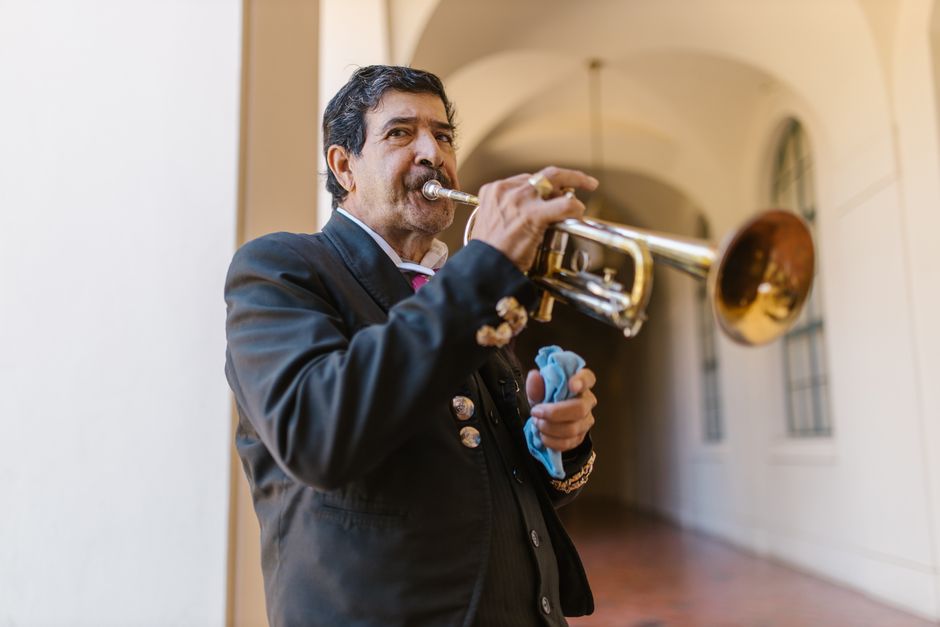
Learning to play the trumpet starts with three things: forming your lips correctly, learning to buzz, and getting a good seal on the mouthpiece. You do not need to read music or own a trumpet to understand the basics. You just need to know how the instrument works and what your body is supposed to do.
What Do You Need Before Your First Practice Session?
You need a trumpet, a mouthpiece, and a quiet space. That is the minimum. A music stand helps, but you can start without one. You also need clean hands and a clean mouthpiece. Trumpets are brass instruments, and brass reacts to oils and acids on your skin. Rinse the mouthpiece with cool water before you play and wipe the trumpet down after.
If you are renting or borrowing a trumpet, check that the valves move freely. Press each valve down and let it spring back up. If a valve sticks, the instrument needs oil before it will play correctly. Do not force a stuck valve. That can damage the instrument.
You do not need any special physical strength to start. The trumpet requires air control, not muscle. Many beginners push the mouthpiece hard against their lips trying to make a sound. That is the most common mistake and it will not help.
How Do You Hold the Trumpet Correctly?
Hold the trumpet with your left hand. Your left hand supports the weight of the instrument. Your left thumb goes over the leadpipe near the valves. Your fingers wrap around the valve casing between the first and third valve slides.
Your right hand operates the valves. Your right thumb goes under the leadpipe near the third valve slide. Your index, middle, and ring fingers rest on the three valve caps. Your right pinky rests on top of the hook near the bell. It should rest there lightly, not grip it tightly.
Keep your wrists straight. Many beginners bend their right wrist sharply to see the valves. That creates tension in your arm, which travels to your shoulder, neck, and lips. Tension anywhere in your body makes the trumpet harder to play.
Stand or sit with your back straight. If you sit, sit on the edge of the chair. Slouching compresses your lungs and reduces the air you can move through the horn.
How Do You Form Your Embouchure?
Embouchure is the French word for how you shape your mouth and lips on the mouthpiece. It is the single most important physical skill in trumpet playing.
Start by saying the letter “M” and holding the position. Your lips should be together, gently pressed, with the corners firm. Do not smile. Smiling stretches the lips thin and makes the sound weak. Do not pucker as if whistling. Puckering makes the lip tissue bunch up inside the mouthpiece, which blocks vibration.
Place the mouthpiece in the center of your lips. The mouthpiece rim should sit half on your upper lip and half on your lower lip. This is the standard position, though some players adjust slightly for comfort.
Your teeth should be slightly apart inside your mouth, as if saying “em.” The tongue rests low, like when you say “oh.” This creates space inside your mouth for air to move.
You are not squeezing your lips together like a vise. You are bringing them together gently, with the corners firm, like holding a piece of paper between your lips. The air pressure does the work, not the lip pressure.





How Do You Buzz Your Lips?
Buzzing is the foundation of all brass playing. The trumpet does not make the sound on its own. Your lips vibrate together, and the trumpet amplifies that vibration.
Take the mouthpiece off the trumpet. Put it against your lips in the embouchure position. Blow air through your lips as if you are blowing out a candle from six inches away. Your lips should vibrate together, producing a sound like a raspberry or a motorboat. That buzzing sound is exactly what you want.
If nothing happens, check two things. First, are your lips too tight? Loosen them slightly. Second, are you blowing enough air? Blow faster, not harder. Think of blowing a piece of paper off your hand. That fast, steady air stream is what you need.
Practice buzzing on the mouthpiece alone for a few minutes every day. This builds the lip muscles you need. It also teaches your lips to vibrate consistently, which is the hardest part of learning trumpet.
How Do You Make Your First Sound on the Trumpet?
Once you can buzz on the mouthpiece, attach it to the trumpet. Hold the trumpet in playing position. Form your embouchure. Place the mouthpiece on your lips. Blow the same way you did when buzzing on the mouthpiece alone.
The first sound may be rough. It may crack or squeak. That is normal. The trumpet is a physical instrument, and your lips are learning a new skill. Expect the first week of sounds to be imperfect.
If no sound comes out at all, check your air. Many beginners hold back because they are afraid of making an ugly sound. Do not hold back. The trumpet needs a full, steady stream of air. A weak air stream produces no sound or a weak, airy sound.
If you get a sound but it cuts off quickly, you are likely stopping your air. Keep the air moving through the phrase as if you are blowing through the entire length of the instrument and out the bell.
How Do You Use the Valves to Change Notes?
The trumpet has three valves. Each valve redirects the air through extra tubing, which lowers the pitch.
Valve 1 is closest to you. It lowers the pitch by two semitones. Valve 2 is in the middle. It lowers the pitch by one semitone. Valve 3 is farthest from you. It lowers the pitch by three semitones.
You press the valves with the pads of your fingers, not the tips. Press them all the way down quickly and let them come back up quickly. The valve action should be fast and clean, like tapping a table. Slow valve movement creates a slurred, sliding sound between notes.
Your fingers should stay curved and resting on the valve caps at all times. Do not lift your fingers high off the valves. Keep them close. This is called staying in the valve “home position.”
With no valves pressed, the trumpet plays the notes C, G, C, E, and G as you go higher. These are the notes of the harmonic series. Pressing valves changes which harmonic series you are in. Beginners typically start with the notes C, G, and C in the lower register.
How Do You Breathe Properly for the Trumpet?
Breathing for trumpet is not the same as normal breathing. You need a full, deep breath that fills your lungs from the bottom up.
Place your hand on your stomach just above your belt line. Breathe in through your mouth. Your stomach should push your hand outward. This is diaphragmatic breathing. It gives you the air volume you need.
Many beginners breathe high in the chest. This produces shallow breaths that run out quickly. It also creates tension in the neck and shoulders. Chest breathing is the most common breathing error among new trumpet players.
When you exhale, your stomach comes back in naturally. You do not need to force your stomach muscles to contract. Let the air flow out steadily. Think of your air as a continuous column, not a series of puffs.
Practice breathing without the trumpet. Inhale for four counts, exhale for four counts. Then inhale for four counts, exhale for eight. This builds your air capacity and control.
How Often Should You Practice?
Short daily practice beats long weekly practice. Ten to fifteen minutes a day is enough for a true beginner. Your lip muscles need time to recover, and over-practicing can cause soreness and bad habits.
Stop if your lips feel painful. Mild fatigue is normal. Sharp pain is not. If your lips hurt, you are pressing too hard or playing too long. Rest and resume the next day.
Consistency matters more than duration. Practicing five days a week for fifteen minutes will produce better results than practicing once a week for two hours. Your lips build strength through regular, moderate use.
Warm up gently each session. Start with mouthpiece buzzing for a few minutes before you put the trumpet to your lips. This prepares your embouchure and prevents strain.
What Are the Most Common Beginner Mistakes?
The most common mistake is pressing the mouthpiece hard against the lips. This cuts off blood flow and creates a thin, pinched sound. The mouthpiece should rest gently against your lips with just enough pressure to make a seal.
The second most common mistake is puffing the cheeks. Puffing cheeks means air escapes into the cheek pockets instead of going into the trumpet. Keep your cheeks flat against your teeth. Some players use a mouthpiece patch or practice in front of a mirror to catch this.
The third mistake is using too much mouthpiece pressure to reach higher notes. Beginners often try to play high notes by pressing harder. This does not work. Higher notes come from faster air and a slightly firmer embouchure, not from pressure.
Another common issue is holding the trumpet at an angle. The trumpet should be roughly parallel to the floor, angled slightly downward. Some beginners point the bell toward the ceiling. This distorts the embouchure and makes the sound unstable.
When Should You Get a Teacher?
A teacher is worth the money if you are serious about learning. The trumpet is a physical instrument, and small corrections in embouchure or posture make large differences in sound. A teacher can see what you cannot see about your own playing.
If a teacher is not possible, use a mirror. Watch yourself play. Check for puffed cheeks, bent wrists, and mouthpiece pressure. Record yourself playing and listen back. You will hear airiness or tension that you do not notice while playing.
Online video lessons are a reasonable middle ground. They cannot correct your posture in real time, but they demonstrate correct technique clearly. Combine videos with regular mirror practice and you can make steady progress on your own.
Frequently Asked Questions
How long does it take to make a sound on the trumpet?
Most beginners make their first sound within the first practice session, though it may be rough or weak. Getting a consistently clear tone typically takes two to four weeks of daily practice.
Is the trumpet hard to learn for beginners?
The trumpet is physically demanding because it requires precise lip control and consistent air support. The first few months are the hardest, but daily short practice sessions make the learning curve manageable.
Do you need strong lips to play trumpet?
No, you need controlled lips, not strong lips. Lip strength develops through regular practice, and pressing harder does not compensate for poor technique.
How many minutes a day should a beginner practice trumpet?
Ten to fifteen minutes daily is ideal for true beginners. Practicing five days a week for a short time produces better results than one long weekly session.
