
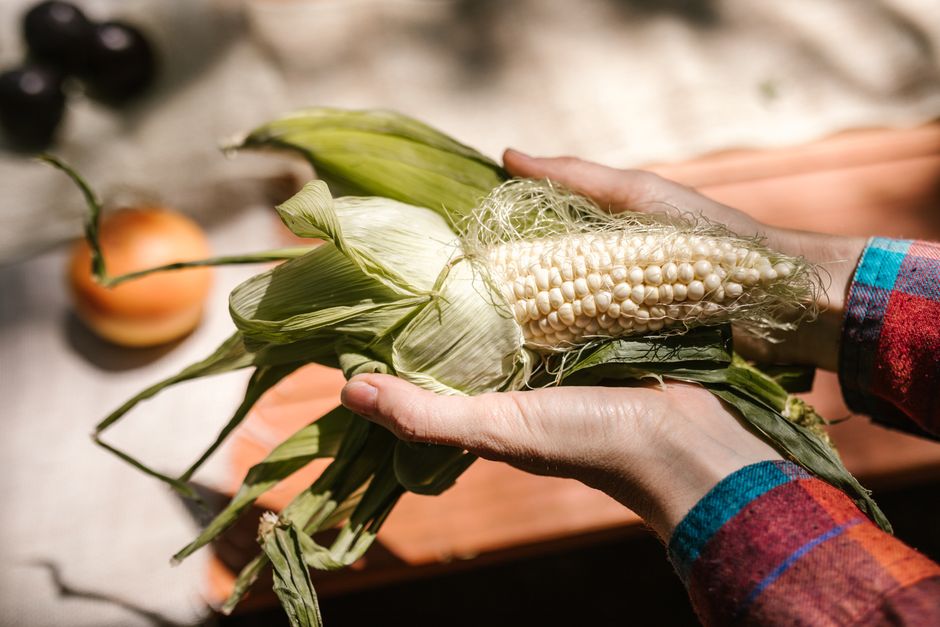
Husking corn means removing the tough outer leaves, called husks, and the thin, silky strands underneath before cooking or eating. The process is simple once you know the trick: peel the husks down, snap them off at the base, and rub away the silk with your hands or a soft brush. Fresh corn husks come off easily, while older or drier ears may take a bit more effort.
Why Do You Need To Husk Corn At All?
The husk is not edible. It is a thick, leafy wrap that protects the kernels while the corn grows in the field. The silk is the female reproductive part of the plant. Each strand connects to a single kernel, which is why removing silk completely can be tedious.
If you leave the husk on, the corn will not cook evenly when boiled or grilled. The silk can also trap moisture and dirt. More importantly, eating husk or silk is unpleasant and can be tough to chew. Removing both gives you clean, tender kernels ready for any recipe.
Some cooking methods intentionally keep the husk on, like grilling corn in its own wrapper. In those cases, you remove the husk after cooking, not before. But for most recipes — boiling, steaming, roasting, or eating raw — husking comes first.
What Is The Fastest Way To Remove Husks And Silk?
The microwave method is the fastest and cleanest technique for fresh corn. Cut off the stem end of the ear, leaving the husk intact. Microwave the ear for about 2 to 4 minutes, depending on your microwave power. Let it cool for a minute, then squeeze the ear from the top. The husk and silk slide off together in one piece.
This works because the microwave heats the moisture inside the husk, loosening the silk from the kernels. The silk comes away attached to the husk instead of sticking to the corn. It is the most reliable way to get a completely clean ear without rubbing every strand by hand.
For corn you plan to eat raw or cook by another method, use the standard hand method instead. Peel the husk down from the top, strip it off, and remove any remaining silk with your fingers or a clean kitchen towel.
How To Husk Corn By Hand Step By Step
Start at the top of the ear where the silk pokes out. Pull the husk leaves down one at a time or in small bunches. Work your way around the ear until all the leaves are peeled back to the stem.
Grip the base of the husk where it meets the stem. Twist and snap it off. Some people prefer to hold the ear with one hand and pull the husk downward with the other, which works just as well.
Once the husk is off, deal with the silk. Run your hand down the ear in a firm, sweeping motion. Most of the silk comes off this way. For stubborn strands, use a dry paper towel or a soft vegetable brush. Rub along the length of the ear, not across it, to avoid breaking kernels.
Check the tip of the ear. The last few rows of kernels often hide silk that is hard to see. Pull back any remaining husk fragments and pick off the silk by hand. Rinse the ear under cool water to remove any final bits.




What Is Husking Corn Without A Husker?
You do not need a special tool. A dedicated corn husker exists, but it is essentially a brush with stiff bristles. A clean dish towel, a paper towel, or even your bare hands work just as well for most ears.
The towel method is popular among home cooks. After snapping off the husk, wrap the ear in a dry towel. Rub the ear firmly from top to bottom. The towel grabs the silk and pulls it away from the kernels without bruising them.
If you have a soft-bristled vegetable brush, that works too. Brush along the length of the ear after husking. The bristles catch the silk without damaging the kernels. Avoid stiff scrub brushes, which can scrape the kernels and release their milky interior.
How To Husk Corn For Grilling With The Husk On
Grilling corn in the husk is a different process. You do not remove the husk first. Instead, you pull the husk back without detaching it, remove the silk, and then fold the husk back over the ear.
Peel the husk down like you are opening a banana, keeping it attached at the base. Pull off all the silk by hand or with a towel. Fold the husk back up over the kernels and tie the top with kitchen twine or a strip of husk leaf. Soak the corn in water for 15 to 30 minutes before grilling to prevent the husk from burning.
After grilling, the husk peels away easily. The kernels will have a smoky flavor and a slightly charred exterior. Some people prefer this method because the husk keeps the corn moist while it cooks.
Can You Husk Corn Ahead Of Time?
Yes, but there is a catch. Once husked, corn begins to lose moisture and sugar. The kernels start converting sugar to starch shortly after harvest, and husking speeds up that process.
If you husk corn more than a few hours before cooking, store it in the refrigerator in a sealed container or plastic bag. Use it within 24 hours for the best flavor and texture. Husked corn left at room temperature dries out quickly and becomes tough.
Unhusked corn keeps longer. Stored in the refrigerator, corn in its husk stays fresh for several days. The husk acts as natural packaging that slows moisture loss. For this reason, it is better to husk corn close to when you plan to cook it.
Is Husking Corn The Same As Shucking Corn?
The words mean the same thing. Husking and shucking both refer to removing the outer leaves and silk from an ear of corn. Regional preference determines which word people use. In the American South, “shucking” is more common. In other regions, “husking” is the standard term.
Neither word is technically wrong. Both describe the same task. If a recipe says “shuck the corn,” it means exactly what this article describes: remove the husk and silk before cooking.
What About Pre-Husked Corn In Stores?
Supermarkets often sell corn that has been partially husked, with the outer leaves removed but the inner layers and silk still in place. This is sometimes called “cleaned” corn. It is convenient, but it is not the same as fully husked corn.
You still need to remove the remaining inner husk and silk before cooking. The store does this to show off the kernels so shoppers can check for freshness and quality. It also reduces waste in the produce section.
Check for freshness before buying. The kernels should be plump and tightly packed. They should feel cool to the touch. If the kernels look shriveled or feel dry, the corn is past its prime.
Common Mistakes When Husking Corn
One common mistake is pulling the husk up instead of down. Always pull from the top of the ear toward the stem. Pulling the wrong way can tear the husk and leave fragments stuck to the kernels.
Another mistake is pressing too hard when removing silk. Firm pressure is fine, but aggressive rubbing can crush the kernels. Crushed kernels leak their milky interior, which makes the corn less juicy and more prone to drying out during cooking.
People also forget to check the tip of the ear. The narrow end often hides a few strands of silk that are easy to miss. These strands are harmless if eaten, but they are unpleasant in texture. A quick rinse after husking catches most of what your hands miss.
Frequently Asked Questions
Does microwaving corn remove the silk?
Yes, microwaving loosens the silk so it comes off with the husk in one piece. Cut off the stem, microwave for 2 to 4 minutes, then squeeze the ear from the top.
Can you eat corn silk?
Corn silk is technically edible and not toxic, but it is tough and stringy. Most people remove it because it has an unpleasant texture and no significant flavor.
How long does husked corn last in the fridge?
Husked corn stays fresh for about 24 hours when stored in a sealed container or plastic bag in the refrigerator. For longer storage, keep the husk on until you are ready to cook.
Do you rinse corn after husking?
Yes, a quick rinse under cool water removes loose silk and any dirt trapped between the kernels. Pat the ear dry before cooking.
