
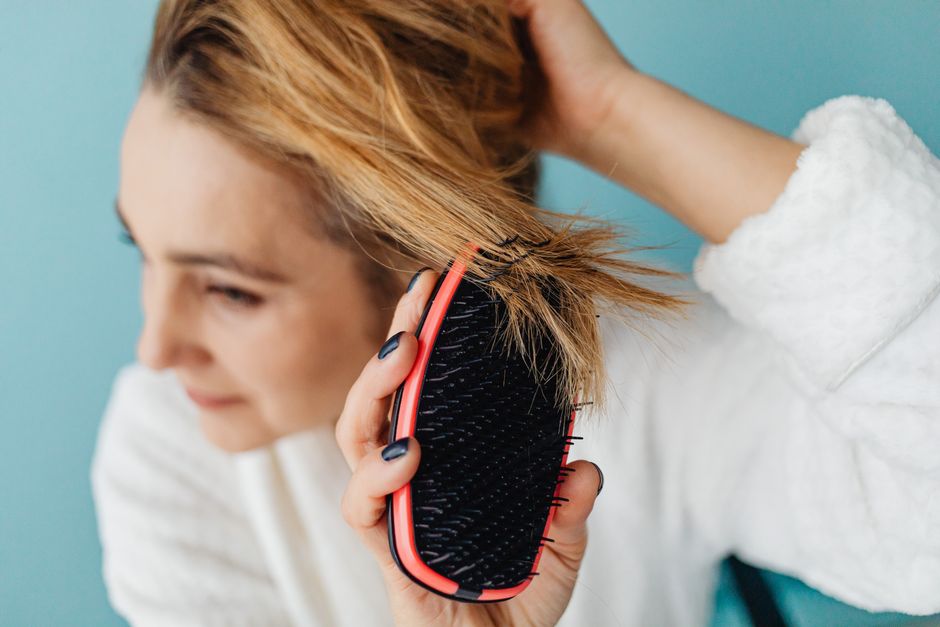
Hair breakage happens when the hair shaft snaps, usually because the hair has been weakened by damage, dryness, or stress. It is not the same as hair loss from the root, which involves the follicle. Breakage typically shows up as short, broken strands, split ends, and a frizzy halo around the top of the head. Most breakage is preventable once you identify what is causing the weakness in the first place.
What Is Hair Breakage Causes And Prevention: The Core Problem
Hair is made of a protein called keratin. Each strand has three layers: the outer cuticle, the middle cortex, and the inner medulla. The cuticle acts like a protective shield. When that shield stays flat and smooth, the hair is strong. When the cuticle lifts, cracks, or wears away, the inner cortex loses its protection. That is when the strand weakens and eventually snaps.
Breakage is a structural failure, not a disease. The follicle is still producing new hair. The problem is that the hair you already have is too damaged to survive normal everyday handling. Understanding this distinction matters because the solutions for breakage are different from the solutions for shedding.
What Are the Most Common Causes of Hair Breakage?
Heat styling is a leading cause. Flat irons, curling wands, and blow dryers set to high temperatures can boil the moisture inside the hair shaft. That moisture expands and creates bubbles within the cortex. The hair looks fine at first, but the internal structure is compromised. Over time, that damaged section breaks off.
Chemical treatments are equally damaging. Hair coloring, bleaching, perms, and relaxers all work by breaking and reforming bonds within the hair. Each treatment weakens the strand slightly. When treatments are done too frequently or left on too long, the cumulative damage becomes severe. Bleach is particularly aggressive because it removes pigment from the cortex directly.
Mechanical stress is another major factor. Tight ponytails, buns, braids, and weaves pull on the hair. This tension can cause the strand to snap at the point of stress. It can also damage the follicle over time, which is a different problem. Rough towel drying, aggressive brushing, and sleeping on cotton pillowcases create friction that wears down the cuticle.
Dryness is the underlying condition that makes all other damage worse. Hair that lacks moisture is brittle. Brittle hair snaps under pressure that healthy hair can absorb. Dryness can come from the environment, from over-washing, or from products that strip natural oils.
How Do You Know If You Have Breakage or Shedding?
This distinction is important because the two problems need different solutions. Shedding is normal hair loss from the root. The average person loses 50 to 100 hairs per day as part of the natural growth cycle. You usually notice shedding in the shower drain or on your brush, and each strand has a tiny white bulb at the end. That bulb is the root.
Breakage looks different. Broken hairs are shorter and have a frayed or blunt end with no bulb. You might notice small pieces of hair on your shoulders throughout the day. You might see that your hair is not getting longer even though you are not losing large clumps. Many people describe a “halo” of short, fuzzy hairs around their crown. That is breakage.
If you are losing hair from the root in large amounts, or if you notice thinning patches, that is a different issue. See a doctor or dermatologist. Breakage is a cosmetic problem. Significant shedding can be a medical one.



Which Hair Types Are Most Prone to Breakage?
All hair can break, but some types are more vulnerable than others. Curly and coily hair is structurally weaker at certain points along the strand. The bends and curves in the hair create natural weak spots where the cuticle is more likely to lift. This is why textured hair often breaks even without heat or chemical use.
Fine hair has a smaller diameter than thick hair. A thinner strand has less structural mass to resist damage. Fine hair can break from brushing alone if the brush is too aggressive or the hair is wet.
Color-treated hair is fragile regardless of its natural type. The chemical process of lifting color opens the cuticle and removes some of the hair’s natural protein and moisture. The result is hair that is permanently more porous and more prone to snapping.
What Daily Habits Are Causing Your Hair to Snap?
Wet hair is at its weakest state. When hair absorbs water, it swells and the bonds that hold the cortex together temporarily loosen. Brushing wet hair stretches those weakened bonds past their limit. This is why wet brushing causes so much breakage. Use a wide-tooth comb or your fingers instead, and be gentle.
Elastic hair ties are another hidden culprit. The thin ones grip tightly and create a single point of high tension. When you remove them, you can actually tear strands. The same goes for metal clips and barrettes with sharp edges. Look for spiral hair ties or scrunchies made of soft fabric, and alternate the position of your ponytail so the stress is not always in the same spot.
Sleeping is a time of constant friction. Cotton pillowcases absorb moisture from your hair and create drag as you move your head during the night. Silk or satin pillowcases reduce that friction significantly. Many people also find that a loose braid or a “pineapple” ponytail on top of the head protects the hair while sleeping.
How to Prevent Hair Breakage: What the Evidence Shows
Prevention is about reducing cumulative damage. There is no single product that can repair a broken hair strand. Once the hair is split or snapped, it cannot be fused back together. The only true fix is to cut off the damaged portion and protect the new growth.
Heat protection is non-negotiable if you use hot tools. Look for a product that contains a heat-protectant ingredient like silicones or certain polymers. These form a barrier between the heat and the hair shaft. The evidence for their effectiveness is well established. However, they reduce damage; they do not eliminate it. Lower the temperature on your tools whenever possible. If you can style your hair without heat, do that instead.
Deep conditioning is supported by evidence for improving the appearance and feel of damaged hair. Products containing proteins can temporarily fill in gaps in the hair shaft, making it feel stronger. Moisturizing conditioners smooth the cuticle, which reduces future friction damage. The effect is temporary, so regular conditioning is necessary to maintain the benefit.
Regular trims are the most reliable way to manage breakage. Split ends travel up the hair shaft. Cutting them off prevents the split from extending further and causing more breakage. Most stylists recommend a trim every 6 to 8 weeks, but the right interval depends on your hair type and damage level.
Do Hair Products Actually Repair Broken Hair?
No product can truly repair hair that is already broken. The hair is dead tissue. It has no capacity to heal itself. What products can do is temporarily patch the surface, smooth the cuticle, and add moisture that makes the hair more flexible and less likely to snap.
Protein treatments are a common approach. They work by depositing protein onto the hair, which can fill in damaged areas. The effect is cosmetic and temporary. Overusing protein treatments can actually make hair stiffer and more brittle, leading to more breakage. If you use protein treatments, follow the instructions and balance them with moisturizing conditioners.
Be skeptical of any product that claims to “repair” or “rebuild” hair. These claims are marketing language. The honest position is that products manage the condition of the hair and reduce further damage. They do not restore what has been lost.
Is Hair Breakage a Sign of a Health Problem?
Sometimes. If your hair is breaking and you have not been using heat, chemicals, or tight styles, it could point to an internal issue. Nutritional deficiencies can affect hair health. Low iron, low vitamin D, and inadequate protein intake have all been linked to poor hair condition. These deficiencies are more strongly associated with shedding than breakage, but the hair that grows under deficient conditions can be weaker and more prone to snapping.
Medical conditions can also change hair texture and strength. Thyroid disorders, for example, can make hair dry, brittle, and prone to breakage. This is a well-documented effect. If you notice sudden changes in your hair’s texture or breakage rate without an obvious external cause, it is worth discussing with a doctor.
One clarifying point: normal aging changes hair. Hair naturally becomes finer and drier as you get older. The growth rate slows. This is not a disease and it is not a deficiency. It is a natural process that makes hair more vulnerable to breakage over time.
Frequently Asked Questions
Can broken hair grow back?
Yes, but not from the broken point. The hair follicle continues to produce new hair, so the broken strand will eventually be replaced by normal growth. You need to trim the damaged ends to prevent the breakage from traveling further up the shaft.
Does biotin stop hair breakage?
Biotin supplements only help if you have a true biotin deficiency, which is rare in people eating a normal diet. Most research does not support biotin supplements for preventing breakage in healthy people.
How often should you cut your hair to prevent breakage?
Most people benefit from a trim every 6 to 8 weeks to remove split ends before they travel. If your hair is very damaged or you use heat frequently, you may need trims more often.
Is hair breakage the same as hair loss?
No. Breakage is the hair shaft snapping, while hair loss is shedding from the root. Breakage does not cause baldness, but significant shedding from the root can lead to thinning and should be evaluated by a doctor.
