
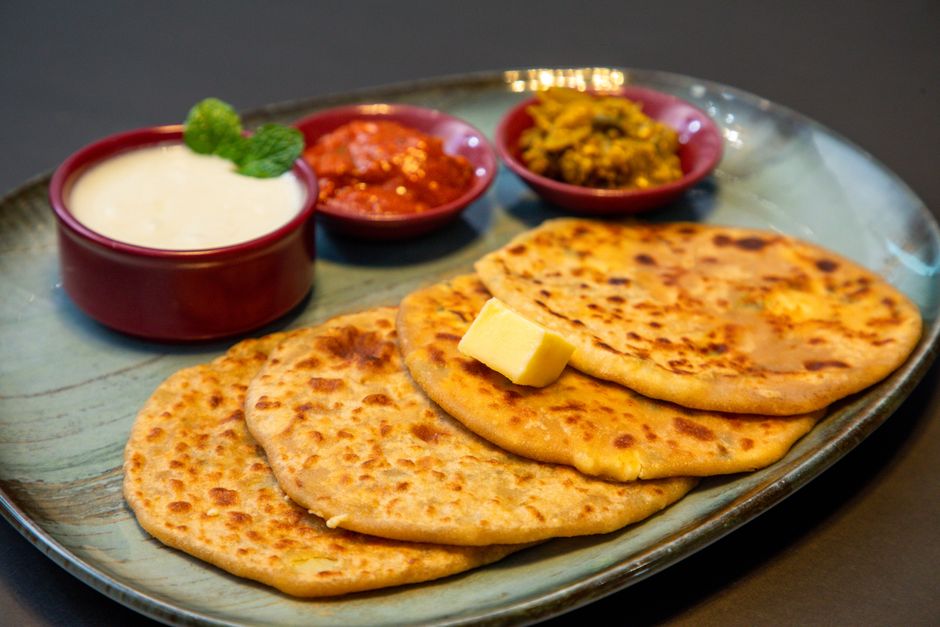
Ghee is clarified butter with the milk solids and water removed, leaving pure butterfat. It has been a staple in Indian and South Asian cooking for thousands of years. In recent years, it has gained popularity in the United States as a cooking fat with a high smoke point and a rich, nutty flavor. You can use it for sautéing, roasting, frying, and even as a spread, but its unique properties make it especially valuable for high-heat cooking.
What Is Ghee In Cooking And How To Use It?
Ghee is made by simmering butter until the water evaporates and the milk solids separate and settle at the bottom. These solids are then strained out, leaving a clear, golden liquid. What remains is almost pure fat, which is why ghee behaves differently than regular butter in the kitchen.
Because the milk solids are gone, ghee has a higher smoke point than butter. Butter smokes and burns around 350°F, while ghee can be heated to roughly 450°F before it starts to smoke. That makes ghee a better choice for searing meat, stir-frying vegetables, or any cooking method that requires high, sustained heat.
The flavor is another reason cooks reach for ghee. It has a deep, nutty, almost caramel-like taste that comes from the milk solids browning during the simmering process. This flavor carries into whatever you cook, adding richness without the dairy tang of butter.
How Is Ghee Different From Butter?
Butter is about 80% fat, 15% water, and 5% milk solids. Ghee removes the water and the milk solids, so it is essentially 100% fat. This difference matters for several reasons.
First, ghee is shelf-stable. Without the water and milk solids, bacteria cannot grow as easily, and ghee can be stored at room temperature for months without spoiling. Butter, by contrast, must be refrigerated and will go rancid if left out.
Second, ghee is lactose-free and casein-free. The milk solids that contain lactose and casein are removed during processing. People with mild lactose intolerance or a sensitivity to casein can often tolerate ghee, even though they cannot eat butter. This is not true for everyone, so if you have a severe dairy allergy, you should talk to your doctor before trying ghee.
Third, ghee has a lower moisture content. This means foods cooked in ghee tend to crisp up faster and more evenly than foods cooked in butter. The lack of water also means less splattering when you add food to a hot pan.
What Does Ghee Taste Like?
Ghee has a rich, nutty, and slightly sweet flavor. The taste is more pronounced than regular butter because the milk solids are toasted during the cooking process. Some people describe it as having a popcorn-like or butterscotch aroma.
The flavor intensity varies depending on how long the ghee is cooked. Commercial ghee is often milder, while traditionally prepared ghee that is simmered longer has a deeper, more caramelized taste. If you buy ghee from a store, the flavor will be consistent but generally milder than homemade versions.
Because the flavor is so distinct, ghee works well in dishes where you want that nutty richness to come through. It pairs naturally with roasted vegetables, rice dishes, and baked goods. In sweet applications, it adds a depth that plain butter does not offer.





How To Cook With Ghee
Ghee is one of the most versatile cooking fats available. Here are the main ways to use it in your kitchen.
Sautéing and stir-frying. The high smoke point means you can heat a pan to high temperatures without the fat breaking down. Vegetables, onions, and garlic cook quickly and evenly in ghee without burning.
Roasting. Toss potatoes, carrots, or squash in melted ghee before roasting. The fat helps vegetables brown and crisp on the outside while staying tender inside. The nutty flavor complements root vegetables especially well.
Searing meat and fish. Ghee creates a good crust on steaks, chicken, and fish. Because it does not burn at high temperatures, you can get a deep, golden-brown sear without the bitter taste of burnt butter.
Frying eggs. A spoonful of ghee in a hot pan gives eggs crispy edges and a rich flavor. It is a common breakfast preparation in many parts of South Asia.
Baking. You can substitute ghee for butter in most baking recipes. Use about 20% less ghee than the amount of butter called for, since ghee has no water. The texture of baked goods may be slightly different — often a bit more tender — and the flavor will be nuttier.
As a finishing fat. Drizzle melted ghee over popcorn, mashed potatoes, or steamed rice. It adds richness and flavor without needing to mix it in thoroughly.
Is Ghee Healthier Than Butter?
The short answer is that ghee and butter are nutritionally similar because both are almost entirely fat. Ghee has a slightly higher concentration of fat since the water is removed, but the types of fat are essentially the same.
Ghee is rich in saturated fat. A single tablespoon contains about 13 grams of total fat, of which roughly 8 grams are saturated. The American Heart Association recommends limiting saturated fat intake because it can raise LDL cholesterol levels, which is a risk factor for heart disease. This does not mean ghee is harmful in moderation, but it should not be treated as a health food.
Ghee does contain some fat-soluble vitamins, including vitamins A, D, E, and K. These vitamins are preserved during the clarification process. However, the amounts are small, and ghee is not a significant source of these nutrients in a typical diet.
Some research suggests that ghee may have anti-inflammatory properties due to compounds like butyrate, a short-chain fatty acid. Butyrate is produced in the gut and has been studied for its role in digestive health. However, the evidence for ghee specifically is limited, and no large human trials have confirmed these benefits. The butyrate content in ghee is also much lower than what is produced naturally by gut bacteria.
One area where ghee may have an advantage is for people with dairy sensitivities. Because the milk solids are removed, ghee contains negligible amounts of lactose and casein. If you experience digestive discomfort from butter but love the flavor, ghee may be a suitable alternative.
How To Store Ghee
Ghee does not need refrigeration. It can be stored in an airtight container in a cool, dark place for up to three months. If you keep it in the refrigerator, it will solidify but can be easily melted again.
The shelf life depends on how it is made and stored. Commercially produced ghee often lasts longer than homemade versions because it is processed under controlled conditions. Always check the expiration date on the package and trust your senses — if ghee smells rancid or develops an off flavor, discard it.
Keep ghee away from moisture. Water introduced into the jar can cause mold to grow, even though ghee itself is resistant to spoilage. Always use a dry spoon when scooping it out.
Is Ghee The Same As Clarified Butter?
Ghee and clarified butter are similar but not identical. Both are made by removing water and milk solids from butter, but the preparation differs slightly.
Clarified butter is simmered just long enough to separate the milk solids, which are then strained out. The result is a neutral, buttery fat with a mild flavor. Ghee is simmered longer, allowing the milk solids to brown and develop a nutty flavor before being strained.
This extra simmering time gives ghee its characteristic taste and a slightly lower moisture content. In practical terms, you can use them interchangeably in most recipes, but the flavor of the final dish will differ. If a recipe calls for clarified butter and you want a richer taste, ghee is a fine substitute.
Frequently Asked Questions
Can you use ghee instead of butter in baking?
Yes, you can substitute ghee for butter in most baking recipes. Use about 20% less ghee than the amount of butter called for because ghee contains no water.
Does ghee need to be refrigerated?
No, ghee can be stored at room temperature in an airtight container for up to three months. Refrigeration is optional and will make it solidify.
Is ghee lactose-free?
Yes, ghee is effectively lactose-free because the milk solids that contain lactose are removed during processing. People with lactose intolerance can usually tolerate ghee, but those with a severe dairy allergy should consult a doctor.
What is the smoke point of ghee?
Ghee has a smoke point of about 450°F, which is significantly higher than butter’s smoke point of around 350°F. This makes it suitable for high-heat cooking methods like searing and frying.
