
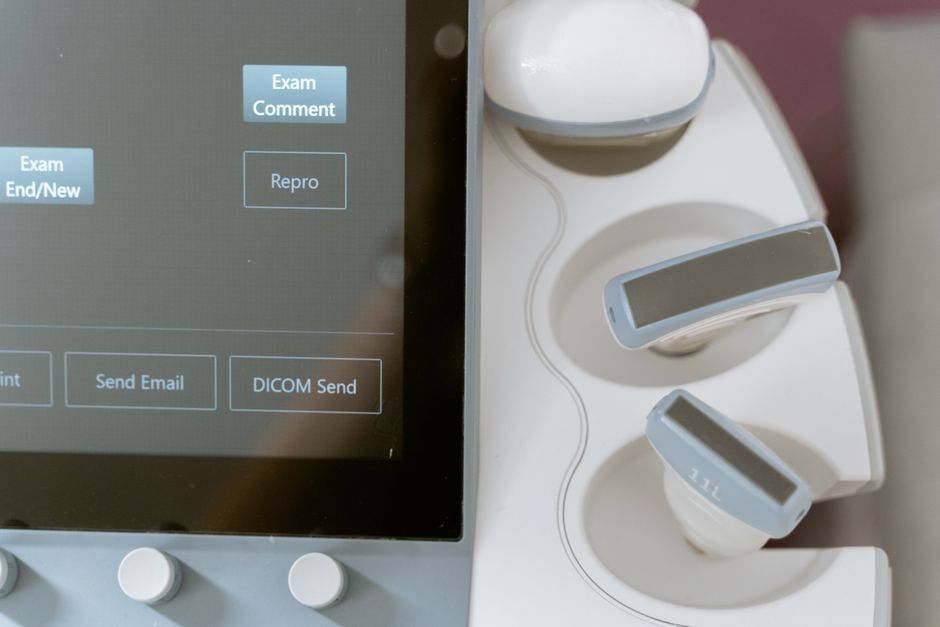
An MRI (magnetic resonance imaging) scan uses a powerful magnetic field and radio waves to create detailed pictures of the inside of your body. The “Fiesta” MRI is a specific imaging technique, not a different type of machine. It is a specialized sequence used during a scan to produce very clear, high-contrast images of fluid-filled structures, making it especially valuable for examining the brain, spinal cord, and joints.
What Is the Fiesta MRI Sequence?
Fiesta stands for Fast Imaging Employing Steady-state Acquisition. It is a type of MRI sequence, which is a particular set of instructions the scanner uses to capture images. Standard MRI scans take multiple pictures that show different types of tissue. The Fiesta sequence is designed to make fluid appear very bright and to provide sharp contrast between fluid and surrounding solid tissues.
This technique is also known by other names depending on the manufacturer of the MRI machine. You might see it called FIESTA-C, CISS, or b-FFE on a radiology report. These are all essentially the same type of sequence. The key benefit is that it produces high-resolution images very quickly, which helps reduce motion artifacts from the patient.
Because it makes fluid stand out so clearly, this sequence is excellent for looking at structures that are surrounded by or filled with fluid. It provides a level of anatomical detail that standard sequences often miss, particularly for small, delicate structures.
How Does the Fiesta Sequence Work?
MRI works by aligning the protons in your body’s water molecules with a strong magnetic field. The scanner then sends radio waves that knock these protons out of alignment. As the protons realign, they emit signals that the scanner detects and turns into an image.
Different sequences manipulate these signals to highlight different tissue properties. The Fiesta sequence uses a steady-state free precession technique. In simple terms, the scanner uses very short repetition times and specific flip angles to balance the signals from both T1 and T2 relaxation times. This creates a bright signal for fluids like cerebrospinal fluid (CSF), bile, and joint fluid.
The result is an image where fluid appears white and surrounding tissues appear darker. This strong contrast makes it easier to see the boundaries of fluid-filled structures and to identify small abnormalities that might be hidden in a standard scan.
What Conditions Is Fiesta MRI Used to Diagnose?
The Fiesta sequence is most commonly used to evaluate the brain, spine, and joints. In the brain, it is particularly useful for examining the cranial nerves—the nerves that originate directly from the brain. These nerves are small and surrounded by cerebrospinal fluid, which makes them difficult to see clearly with other sequences.
Doctors often order a Fiesta MRI when they suspect a condition affecting these nerves. For example, it is frequently used to evaluate patients with trigeminal neuralgia, a condition causing severe facial pain. The sequence can show if a blood vessel is compressing the trigeminal nerve. It is also used to assess for acoustic neuromas, which are benign tumors on the vestibular nerve, and to evaluate patients with hearing loss or dizziness.
In the spine, this technique helps visualize nerve roots and the spinal cord. It can be used to look for conditions like arachnoid cysts or to evaluate the detailed anatomy of the spinal canal. In joints, it is used to assess cartilage damage and to look for loose bodies within the joint space, such as in the knee or shoulder.
The Fiesta sequence is not a full MRI exam by itself. It is one part of a comprehensive imaging protocol. The radiologist will use it alongside standard sequences to get a complete picture of the area being examined.



What Are the Advantages of This Technique?
The main advantage of the Fiesta sequence is its superior contrast resolution for fluid-filled structures. This allows for better visualization of small anatomical details that are critical for diagnosing certain conditions. It provides a clear, three-dimensional view that helps surgeons plan procedures with greater precision.
Another benefit is speed. The sequence is relatively fast to acquire, which means patients spend less time in the scanner. This is particularly helpful for people who have difficulty staying still or who experience claustrophobia. Faster scans also reduce the likelihood of motion artifacts, which can degrade image quality.
Finally, this sequence does not require contrast dye. While contrast is sometimes used in addition, the Fiesta sequence itself relies on the natural contrast between fluid and tissue. This is an advantage for patients who cannot receive gadolinium-based contrast agents due to kidney problems or allergies.
Are There Any Risks or Limitations?
Like all MRI scans, the Fiesta sequence is generally very safe. It does not use ionizing radiation, so there is no radiation exposure. The risks are primarily related to the MRI environment itself, such as the presence of metal implants.
There are some limitations to this technique. It is not ideal for looking at tissues that do not contain much fluid, such as bone or solid organs. It is also more sensitive to certain types of artifacts, particularly magnetic field inhomogeneities, which can distort the image in some areas of the body.
The sequence is a diagnostic tool, not a treatment. A Fiesta MRI can show the anatomy clearly, but it cannot tell a doctor how a condition is affecting you functionally. The results must always be interpreted in the context of your symptoms and physical examination findings.
How Does a Fiesta MRI Compare to Other MRI Scans?
Standard MRI sequences, such as T1-weighted and T2-weighted images, are the workhorses of MRI. They provide good general anatomical information and are useful for detecting swelling, tumors, and inflammation. The Fiesta sequence is a specialized addition, not a replacement.
Think of it this way: a standard T2-weighted image shows fluid as bright, but the surrounding tissue contrast may be less defined. The Fiesta sequence provides a sharper, higher-resolution view of the fluid-tissue interface. This is why it is so valuable for the cranial nerves and other small structures.
In many cases, the radiologist will review the standard sequences first and then use the Fiesta sequence to get a closer look at a specific area of concern. The choice of which sequences to use depends entirely on the clinical question being asked.
What Should You Expect During a Fiesta MRI?
You will not notice any difference between a Fiesta MRI and a standard MRI scan. The experience is identical from the patient’s perspective. You will lie on a table that slides into the scanner, and you will need to remain still during the scan.
The scanner makes loud knocking and buzzing noises during the exam. You will be given earplugs or headphones to protect your hearing. The entire exam, which includes multiple sequences, typically takes between 30 and 60 minutes depending on the area being scanned.
There is no special preparation required for this type of scan. You can eat and drink normally and take your regular medications. You will need to remove any metal objects, such as jewelry, watches, and hearing aids, before the scan. Tell your doctor and the technologist about any implanted devices you have.
Who Reads the Results?
A radiologist, a doctor who specializes in interpreting medical images, will review your scan. They will look at all the sequences together, including the Fiesta images, to make a diagnosis. The radiologist will then send a report to the doctor who ordered the scan.
Your doctor will discuss the results with you and explain what they mean for your specific situation. It is important to remember that the MRI report is a piece of the diagnostic puzzle. Your doctor will combine the imaging findings with your medical history and physical exam to determine the best course of action.
Frequently Asked Questions
Is a Fiesta MRI different from a regular MRI?
No, it is the same machine and the same overall process. Fiesta is a specific imaging sequence used within a regular MRI exam to get sharper pictures of fluid-filled areas.
How long does a Fiesta MRI take?
The Fiesta sequence itself takes only a few minutes. The entire MRI exam, which includes several other sequences, typically takes 30 to 60 minutes.
Is a Fiesta MRI safe?
Yes, it is as safe as any other MRI sequence and uses no radiation. The main safety considerations are the same as for all MRIs, such as checking for metal implants.
Do I need contrast dye for a Fiesta MRI?
No, the Fiesta sequence does not require contrast dye. It relies on the natural bright signal of fluid to create contrast, though contrast may be used for other parts of the exam.
