
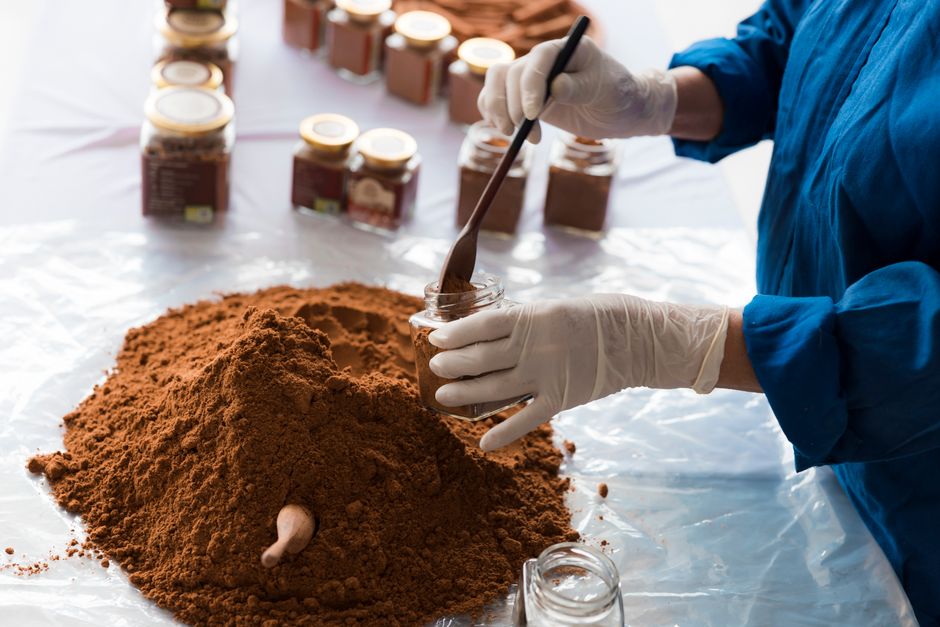
Carob is the roasted, ground pod of the carob tree, and it is used as a caffeine-free chocolate substitute. It tastes sweet and mildly chocolate-like, with a toasted, sometimes slightly fruity flavor. Nutritionally, carob is high in fiber and naturally sweet, but it is not a nutritional match for cocoa. It is most often used in baking, hot drinks, and chocolate-free treats.
The easiest way to understand carob is to stop thinking of it as “fake chocolate.” It is its own food with its own flavor and its own strengths. Once you know what it actually is, you can decide whether it belongs in your kitchen — and where it genuinely fits.
What Is Carob and Where Does It Come From?
Carob comes from the pods of the carob tree, an evergreen native to the Mediterranean region. The pods are dried, roasted, and ground into a powder that looks a lot like cocoa powder. The tree has been grown for food for a very long time, and the pods were historically eaten as a sweet snack.
The powder is what most people buy. You can also find carob chips, carob syrup, and carob bars. The syrup is made from the sweet pulp of the pod and is used as a sweetener. The powder is made from the roasted pod and seed material, and it is the product used most often as a cocoa replacement.
What Does Carob Taste Like?
Carob tastes sweet, earthy, and toasted. It has a chocolate-like quality, but it is not the same as chocolate. The flavor is milder and less bitter than cocoa, and it carries a subtle natural sweetness because the pod itself contains sugars.
People often describe a faint fruity or molasses note. Some notice a slightly sour edge. The exact flavor depends on how the carob was roasted and processed, so different brands can taste quite different from one another.
There is one practical catch worth knowing. Carob does not melt or behave like chocolate in cooking. It absorbs liquid and can turn baked goods dense or dry if you swap it in directly for cocoa. Many recipes that use carob adjust the fat and liquid to compensate. If you are baking with it for the first time, follow a carob-specific recipe rather than substituting it one-for-one.
How Does Carob Nutrition Compare to Cocoa?
Carob and cocoa are different foods with different nutrient profiles, and this is where a lot of confusion lives. Carob is naturally sweeter and contains more sugar and fiber than unsweetened cocoa powder. Cocoa is more bitter and is a much richer source of certain minerals.
The table below compares approximate values per 100 grams of unsweetened carob powder and unsweetened cocoa powder. These are general reference figures from standard food composition data, and actual products vary by brand and processing.
| Nutrient (per 100 g) | Carob powder | Unsweetened cocoa powder |
|---|---|---|
| Calories | About 220 | About 230 |
| Carbohydrate | Higher, including natural sugars | Lower, mostly fiber and starch |
| Fiber | High | High |
| Fat | Low | Higher |
| Caffeine | None (trace at most) | Present |
The key differences are caffeine and sugar. Carob contains essentially no caffeine, while cocoa does. Carob also brings its own sweetness, which is why some people use less added sugar when they cook with it. That natural sweetness is a real advantage for some recipes and a drawback for others, because it limits how well carob works in savory or very dark chocolate applications.





Is Carob Healthier Than Chocolate?
Carob is not automatically healthier than chocolate, and the comparison depends entirely on what you are comparing. A carob bar and a dark chocolate bar are both processed foods, and both can contain added sugar and fat. The claim that carob is a “healthier chocolate” is marketing more than nutrition science.
What carob genuinely offers is a caffeine-free option with natural sweetness and fiber. That matters for people who avoid caffeine or who want to reduce added sugar. What carob does not offer is the same mineral density as cocoa, and it does not carry the same body of research that cocoa does.
Cocoa has been studied for its flavanol content and its relationship to cardiovascular markers. Some research suggests cocoa flavanols can influence blood vessel function and blood pressure. Carob has its own polyphenols, but the human research on carob is much thinner. No large human trials have confirmed the same kind of cardiovascular benefit for carob that has been studied in cocoa. If you are choosing carob for health reasons, choose it for what it actually is — a caffeine-free, naturally sweet, fiber-containing food — not as a proven health upgrade.
Does Carob Have Any Real Health Benefits?
The evidence for carob’s health benefits is limited and mostly early-stage. Carob contains fiber and polyphenols, and some studies suggest these compounds have antioxidant activity in laboratory settings. That is not the same as demonstrated health benefits in people.
Some small studies have looked at carob’s effect on digestion and cholesterol, but the research is not strong enough to support firm claims. The evidence is mixed, and results vary. Carob is a reasonable food, but it should not be treated as a treatment for anything.
One honest point: a food being “natural” or “plant-based” does not make it medicine. Carob is a pleasant ingredient. It is not a supplement with proven clinical effects, and no clinical guidelines recommend it for any health condition.
Who Should Be Careful With Carob?
Carob is generally well tolerated, but a few groups should pay attention. Carob is a legume, so people with a legume allergy should be cautious, especially the first time they try it. If you have a known allergy to related plants, talk to a clinician before adding it to your diet.
Carob is high in fiber, and eating large amounts quickly can cause bloating or digestive discomfort. This is the same pattern seen with many high-fiber foods. Starting with small amounts and increasing gradually is the usual approach.
Carob syrup and carob-sweetened products can contain significant added sugar, so read labels if sugar intake matters to you. Carob powder itself is not a low-calorie food, and portion size still counts. For pregnant women, infants, and children, there are no specific clinical guidelines for carob intake, so it is best treated as an ordinary food rather than a special health product.
How Do You Use Carob in Cooking?
Carob works best when you treat it as its own ingredient rather than a cocoa substitute. It shines in baked goods, smoothies, hot drinks, and no-bake treats where its natural sweetness and mild flavor are welcome.
- Use carob powder in muffins, pancakes, and quick breads, adjusting liquid because it absorbs more than cocoa.
- Add a spoonful to smoothies or warm milk for a caffeine-free chocolate-like drink.
- Use carob chips in cookies where you want a milder, sweeter chocolate flavor.
- Pair carob with stronger flavors like cinnamon, vanilla, or coffee to round out its earthiness.
For hot drinks, carob powder dissolves less smoothly than cocoa, so whisk it into a little warm liquid first to avoid clumps. For baking, expect a denser result than cocoa unless the recipe is written for carob. These are practical adjustments, not health claims.
Is Carob Worth Trying?
Carob is worth trying if you want a caffeine-free, naturally sweet alternative to cocoa and you are willing to adjust your recipes. It is not a superior food, and it is not a proven health booster. It is simply a different ingredient with a pleasant flavor and a modest nutritional profile.
The most honest way to use carob is to enjoy it for what it is. If you like the taste and it fits your diet, it is a fine choice. If you are looking for a health benefit, carob is not the place to find one that is well established.
Frequently Asked Questions
Is carob the same as chocolate?
No, carob is a different food made from the pods of the carob tree, not from cacao. It tastes mildly chocolate-like but is naturally sweeter and contains no caffeine.
Does carob contain caffeine?
Carob contains essentially no caffeine, which is one of the main reasons people choose it over cocoa. Cocoa and chocolate do contain caffeine.
Is carob healthier than cocoa?
Not in any established way. Carob is caffeine-free and naturally sweet, but cocoa is a richer source of certain minerals and has more human research behind it. The evidence does not support calling carob healthier overall.
Can you substitute carob powder for cocoa powder in recipes?
You can, but not one-for-one, because carob absorbs more liquid and is naturally sweeter. Follow a carob-specific recipe or adjust liquid and sugar to get a good result.
