
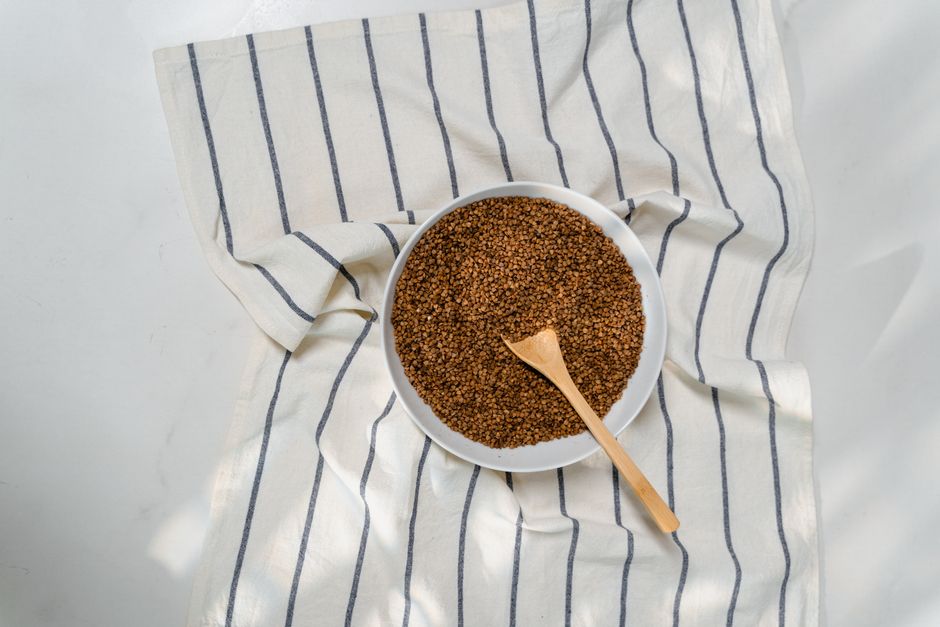
Buckwheat flour is a fine powder milled from the seeds of a plant called Fagopyrum esculentum, and it is naturally gluten free. Despite the word “wheat” in its name, buckwheat is not a wheat, not a grain, and not related to the wheat family at all. It is a seed from a flowering plant in the same broad group as rhubarb and sorrel, which is why it contains no gluten and can be used by people who must avoid it.
What Is Buckwheat Flour And Is It Gluten Free?
Buckwheat flour is made by grinding the triangular seeds of the buckwheat plant into powder. The seeds are botanically a fruit, often called a pseudocereal because they are used like a grain in cooking even though they are not one.
The gluten question has a clear answer. Buckwheat contains no gluten. Gluten is a protein found in wheat, barley, and rye. Buckwheat is not in that family, so it does not produce gluten proteins at all.
This makes buckwheat flour a common ingredient in gluten-free baking and in traditional dishes around the world, from Japanese soba noodles to Eastern European kasha to French galettes from Brittany.
One point that trips people up: “gluten free” as a botanical fact and “gluten free” as a safety guarantee are two different things. Buckwheat itself has no gluten. But buckwheat flour can pick up gluten during growing, milling, or packaging if it shares equipment or fields with wheat. For someone with celiac disease, that distinction matters.
Why Is Buckwheat Called Wheat If It Contains No Gluten?
The name is a historical accident, not a botanical one. Buckwheat got its English name because its seeds look like tiny beech nuts, and the word evolved from a Dutch term meaning “beech wheat.” Early European settlers used it the way they used wheat — ground into flour for bread and porridge — so the name stuck.
Botanically, the plant has nothing to do with wheat. It belongs to a different plant family entirely. Its closest common relatives in the kitchen are not grains at all.
This naming confusion causes real problems. People newly diagnosed with celiac disease or a wheat allergy sometimes avoid buckwheat out of caution, assuming the name means it contains gluten. It does not.
The reverse mistake is more common and more dangerous. Because buckwheat is gluten free by nature, some people assume any product with buckwheat in it is safe. That is not always true. A buckwheat pancake mix may also contain wheat flour. A soba noodle may be mostly wheat with only a small percentage of buckwheat. The ingredient list, not the name on the front of the package, is what tells you the truth.
Is Buckwheat Safe For People With Celiac Disease?
Pure buckwheat is considered safe for a gluten-free diet, and it is one of several pseudocereals that celiac organizations list as acceptable when it is not contaminated. The catch is contamination.
Cross-contact can happen at several points:
- Buckwheat grown in rotation with wheat, or in nearby fields
- Shared harvesting equipment
- Shared milling equipment at a facility that also grinds wheat
- Shared transport and storage
For this reason, people with celiac disease are generally advised to choose buckwheat products labeled gluten free. That label means the product meets a defined limit for gluten content, and it reflects testing and controls that plain buckwheat flour does not necessarily have.
A wheat allergy is a different condition from celiac disease. Celiac disease is an autoimmune response to gluten. A wheat allergy is an immune reaction to wheat proteins. Buckwheat is not wheat, so it does not contain the proteins that trigger a wheat allergy. However, buckwheat itself can cause allergic reactions in some people, which is a separate issue discussed below.





What Does Buckwheat Flour Do In Baking?
Buckwheat flour behaves very differently from wheat flour, and understanding why helps you use it well. Wheat flour contains gluten, a protein network that stretches and traps gas. That network is what gives wheat bread its chew and rise. Buckwheat has no such network.
Without gluten, baked goods made only with buckwheat tend to be dense, crumbly, and flat. They also brown quickly and have a strong, earthy, slightly bitter flavor that some people love and others find overpowering.
Practical approaches that work:
- Blend buckwheat with other gluten-free flours rather than using it alone
- Add binders such as eggs, xanthan gum, or psyllium to replace some of gluten’s structure
- Use it in recipes that do not need much rise, like pancakes, crepes, and flatbreads
- Toast the flour lightly to soften its raw, bitter edge
Buckwheat works best where its flavor is an asset. French galettes, Japanese soba, and Russian blini all lean on buckwheat’s character rather than trying to hide it.
Is Buckwheat Flour Nutritious?
Buckwheat is a genuinely nutrient-dense seed, and that is one reason it has held a place in traditional diets for centuries. It provides plant protein, fiber, and a range of minerals.
According to USDA nutritional data, a quarter-cup of buckwheat flour provides roughly 100 to 110 calories, about 3 to 4 grams of protein, and around 3 grams of fiber. It also supplies minerals including magnesium, manganese, copper, and phosphorus.
Buckwheat contains rutin, a flavonoid antioxidant, and it is a source of resistant starch, a type of carbohydrate that is not fully digested and feeds gut bacteria. These are real components of the food, though the health effects attributed to them in marketing often run ahead of the human evidence.
One honest caveat: being nutritious does not make buckwheat flour a health food in the way some products claim. It is a good ingredient with a solid nutrient profile. It is not a treatment for any condition, and no large human trials have shown that eating buckwheat flour prevents or reverses disease.
Can Buckwheat Cause Allergies Or Other Problems?
Buckwheat allergy is uncommon in the United States but well documented in some parts of Asia, particularly Japan and Korea, where buckwheat is eaten frequently. Reactions can range from mild to severe, and in rare cases anaphylaxis has been reported.
People with a known buckwheat allergy should avoid it, and that includes soba noodles, kasha, and any product listing buckwheat among its ingredients. Buckwheat pillows and hulls can also trigger reactions in sensitive people through inhalation or skin contact.
Buckwheat is also a source of FODMAPs, a group of fermentable carbohydrates that can cause digestive symptoms in some people with irritable bowel syndrome. This is not an allergy and not a sign of harm. It simply means some people tolerate it better than others.
There is a separate safety issue worth knowing. Buckwheat can accumulate a compound called fagopyrin, which makes skin more sensitive to sunlight in some animals and, rarely, in people who eat very large amounts of the raw plant. This is not a concern with normal amounts of milled flour in cooking.
How Does Buckwheat Flour Compare To Other Gluten-Free Flours?
Buckwheat is one of several gluten-free flours, and each behaves differently. The table below compares some common options on the qualities that matter most in the kitchen.
| Flour | Gluten Free | Flavor | Best Used For |
|---|---|---|---|
| Buckwheat | Yes | Earthy, slightly bitter | Pancakes, crepes, soba, flatbreads |
| White rice | Yes | Neutral, mild | All-purpose gluten-free blends |
| Almond | Yes | Nutty, sweet | Cakes, cookies, dense baked goods |
| Coconut | Yes | Sweet, coconutty | Baking with high moisture needs |
| Wheat | No | Neutral | Traditional breads and pastries |
Buckwheat stands out for its strong flavor and its mineral content. Rice flour is the most neutral and the easiest to swap into recipes. Almond and coconut flours add fat and moisture but behave very differently from grain flours and usually need recipe adjustments.
No single gluten-free flour replaces wheat perfectly. Most gluten-free baking relies on a blend rather than one flour, which is worth knowing before you buy a bag of buckwheat expecting it to work like all-purpose wheat flour.
How Should You Store Buckwheat Flour?
Buckwheat flour contains fats that can go rancid, so it does not keep as long as white wheat flour. Store it in an airtight container in a cool, dark place, and for longer storage keep it in the refrigerator or freezer.
Whole-grain and darker buckwheat flours spoil faster than lighter ones because they retain more of the seed’s oils. If the flour smells sharp, sour, or paint-like, it has turned and should be discarded.
Buying in smaller amounts more often is usually better than stocking up, especially if you bake with it only occasionally.
Frequently Asked Questions
Is buckwheat flour completely gluten free?
Yes, buckwheat contains no gluten because it is not a wheat, barley, or rye plant. However, it can be contaminated with gluten during growing or milling, so people with celiac disease should choose products labeled gluten free.
Is buckwheat the same as wheat?
No, buckwheat is not wheat and is not even a grain. It is a seed from a flowering plant, and its name comes from a resemblance to beech nuts rather than any botanical link to wheat.
Can I use buckwheat flour instead of regular flour in baking?
Not as a direct one-to-one swap, because buckwheat has no gluten to provide structure and rise. It works best blended with other gluten-free flours or used in recipes like pancakes and crepes that need little rise.
Is buckwheat flour healthy?
It is a nutritious ingredient that provides plant protein, fiber, and minerals including magnesium and manganese. It is not a treatment for any medical condition, and no large human trials have shown it prevents or cures disease.
