
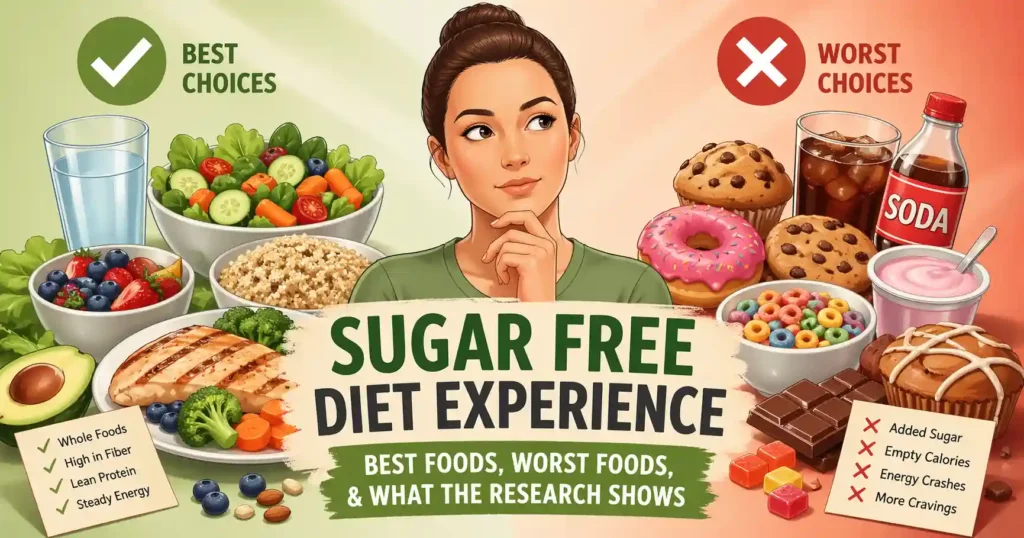
Sugar-free diet experience refers to the physical and behavioral changes that happen when added sugar intake is reduced or removed. The main effect is more stable blood glucose levels and fewer rapid spikes from processed foods.
Most measurable benefits depend on what replaces sugar, not just removing it.
Key Takeaways
- Added sugar is not required in the diet, and intake is usually too high
- Removing sugar works best when paired with better replacements
- Hidden sugars in daily foods matter more than occasional desserts
- Cravings change fast, but body changes take weeks
- Structured eating patterns work better than strict restriction
How Diet Affects Sugar-free Diet Experience: The Mechanism Explained
Sugar affects the body through absorption speed and insulin response. Fast-digesting sugars—especially in drinks—enter the bloodstream quickly. That triggers a sharp glucose rise followed by a drop, which often drives hunger and cravings.
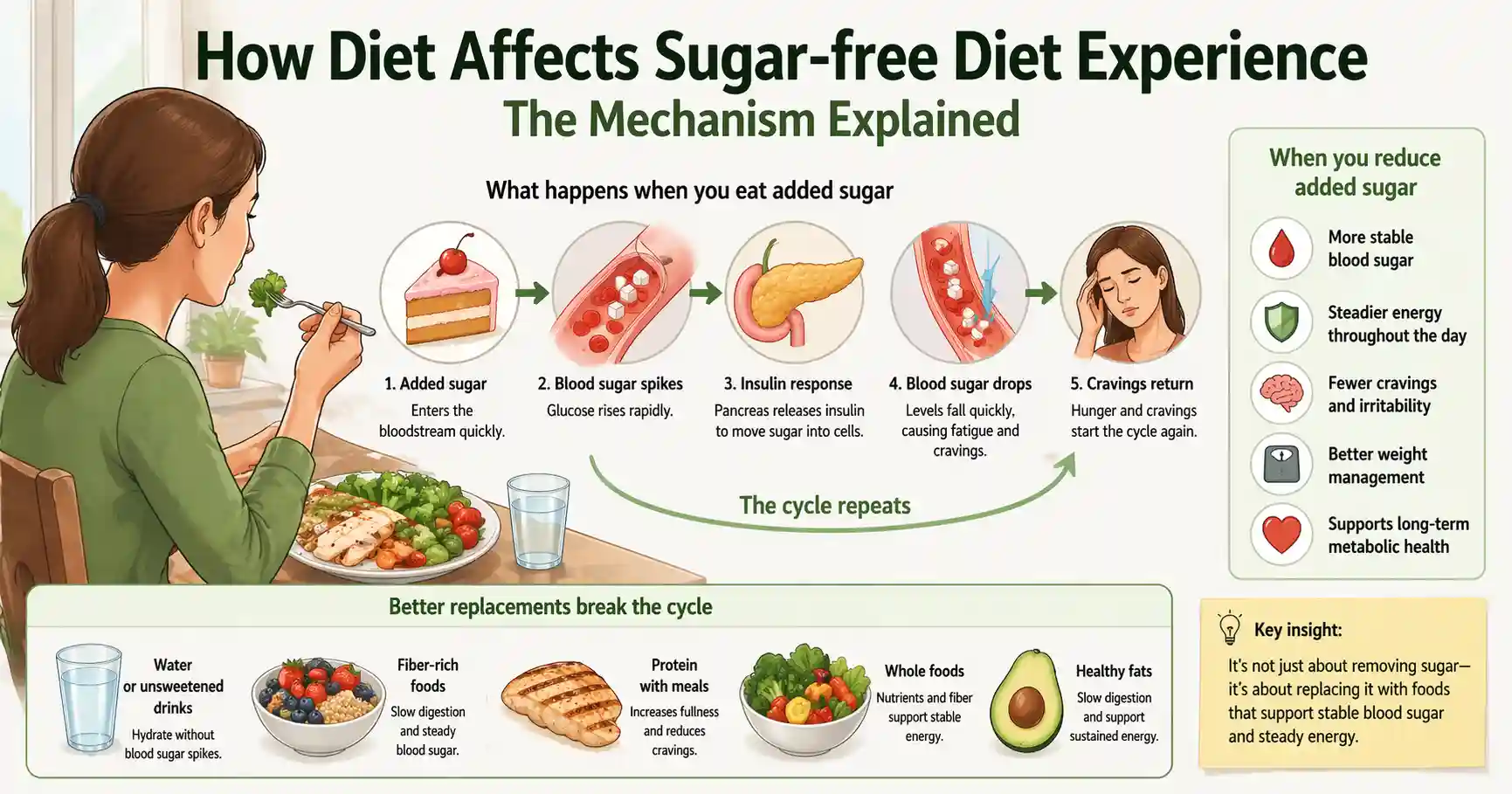
When added sugar is reduced, those swings become smaller. That is the first noticeable change.
The part most people miss is this: removal is only half the equation. If sugar is replaced with refined carbs, nothing really improves. If it is replaced with fiber, protein, and slower carbs, the metabolic response changes.
Harvard reports that added sugar is not required in the diet, and most people consume far more than recommended limits. The guideline is under 10% of daily calories, yet the average intake is much higher.
That gap explains why even small reductions can feel noticeable.
Foods With Real Evidence for Sugar-free diet experience Relief
Not all “healthy foods” improve outcomes. The ones that work do one thing: they reduce sugar exposure while stabilizing digestion.
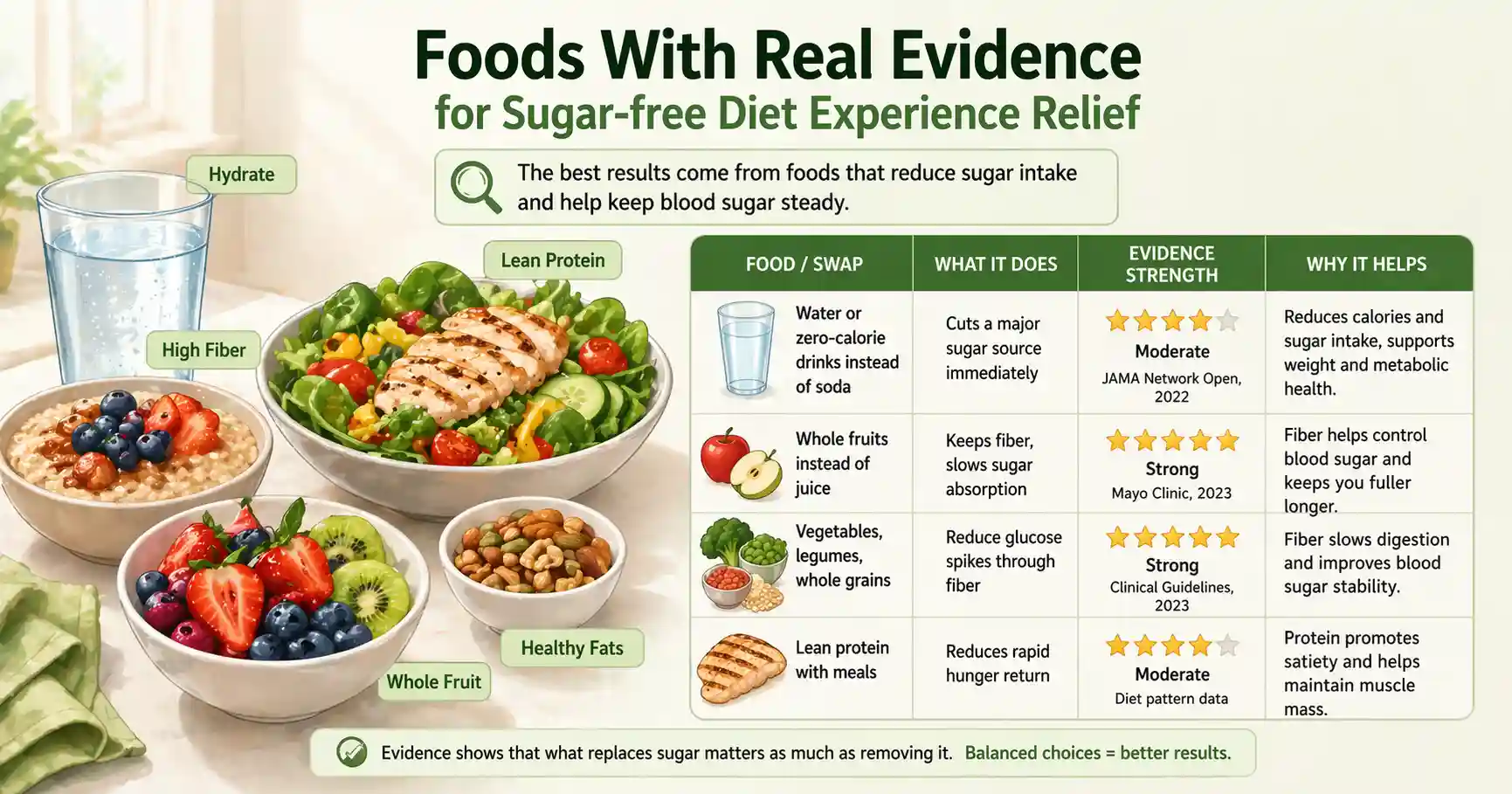
| Food / Swap | What it does | Evidence strength |
|---|---|---|
| Water or zero-calorie drinks instead of soda | Cuts a major sugar source immediately | Moderate (JAMA Network Open, 2022) |
| Whole fruits instead of juice | Keeps fiber, slows sugar absorption | Strong (Mayo Clinic guidance) |
| Vegetables, legumes, whole grains | Reduce glucose spikes through fiber | Strong (clinical guidelines) |
| Lean protein with meals | Reduces rapid hunger return | Moderate (diet pattern data) |
A 2022 JAMA Network Open meta-analysis found that replacing sugary drinks with low- or no-calorie options led to an average 1.06 kg weight reduction. That is not dramatic, but it is consistent across trials.
Here’s the uncomfortable part: replacing sugary drinks with water did not show the same effect in that analysis. That contradicts a lot of simplistic advice.
Why this matters: outcomes depend on behavior patterns, not just removing sugar.
Foods That Make a Sugar-Free Diet Experience Worse
The obvious ones are easy: soda, candy, desserts. The real problem is the hidden accumulation.
Harvard identifies the main contributors:
- Sugar-sweetened beverages
- Sweet snacks and desserts
- Breakfast cereals
- Sweetened yogurt
- Fruit juices
Most people underestimate these because they are spread across the day.
A typical pattern:
- Sweet cereal in the morning
- Flavored yogurt as a snack
- Juice or coffee drink midday
Individually, each looks harmless. Together, they push intake far above limits.
Another issue is perception. People often treat juice as healthy. It is not equivalent to a whole fruit. The fiber is gone, and absorption is faster.
What most advice gets wrong: it focuses on desserts, not daily intake patterns.





How Long Does a Dietary Change Take to Work?
Change happens in phases, not all at once.
- First 3–5 days
Cravings become obvious. This is mostly behavioral, not metabolic. - 2–4 weeks
Blood sugar patterns stabilize. Energy swings often feel less sharp. - 6–8 weeks
Measurable metabolic changes begin to show.
An 8-week low-sugar study in adolescents with fatty liver showed a 10.5% reduction in liver fat production and improvements in insulin markers. That is a small study and not in older adults, but it shows the timeline is measured in weeks, not days. (JAMA, 2021 via Healthline summary)
What people misunderstand: They expect results in days. That expectation kills consistency.
A Practical Eating Pattern for a Sugar-Free Diet Experience in Adults Over 40
Strict “no sugar” rules fail because they are hard to sustain. A better approach is structured eating.
Mayo Clinic recommends a simple pattern:
- Half plate: non-starchy vegetables
- Quarter: lean protein
- Quarter: carbohydrate (whole grains, beans, or starchy vegetables)
This works because it controls sugar without forcing extremes.
For adults over 40, this matters more because:
- Insulin sensitivity is often lower
- Recovery from spikes is slower
- Muscle mass affects glucose handling
Another mistake is relying on supplements. NIH reports that evidence for common options like chromium is inconsistent and not strong enough for routine use. Food patterns beat supplements most of the time.
FAQs
Which foods are worst for a sugar-free diet experience?
The worst foods are sugar-sweetened drinks, desserts, sweet snacks, breakfast cereals, sweetened yogurt, and fruit juice. These foods contribute most of the added sugar intake in typical diets. Liquid sugar is especially problematic because it absorbs quickly and does not reduce hunger effectively.
How quickly do dietary changes affect the sugar-free diet experience?
Changes in cravings can happen within a few days, but measurable health effects usually take several weeks. Research trials on sugar reduction typically run for at least two weeks, with clearer metabolic improvements appearing around six to eight weeks, depending on the person.
Can a diet alone treat a sugar-free diet experience?
Diet can improve blood sugar control and reduce sugar intake, but it does not address every underlying issue. Mayo Clinic treats diet as one part of a broader plan that may include physical activity and medical care, depending on the individual’s condition.
What is the best eating pattern for a sugar-free diet experience?
The most effective pattern includes vegetables, whole grains, lean protein, and limited added sugar. The Mayo Clinic plate method is a simple way to follow this structure. It focuses on balance rather than elimination, which makes it easier to maintain long-term.
Do supplements work better than food for a sugar-free diet experience?
No. Evidence from the NIH shows that common supplements like chromium have inconsistent results and are not recommended for routine use. Food-based changes improve multiple factors at once, including fiber intake, calorie control, and blood sugar stability.
