
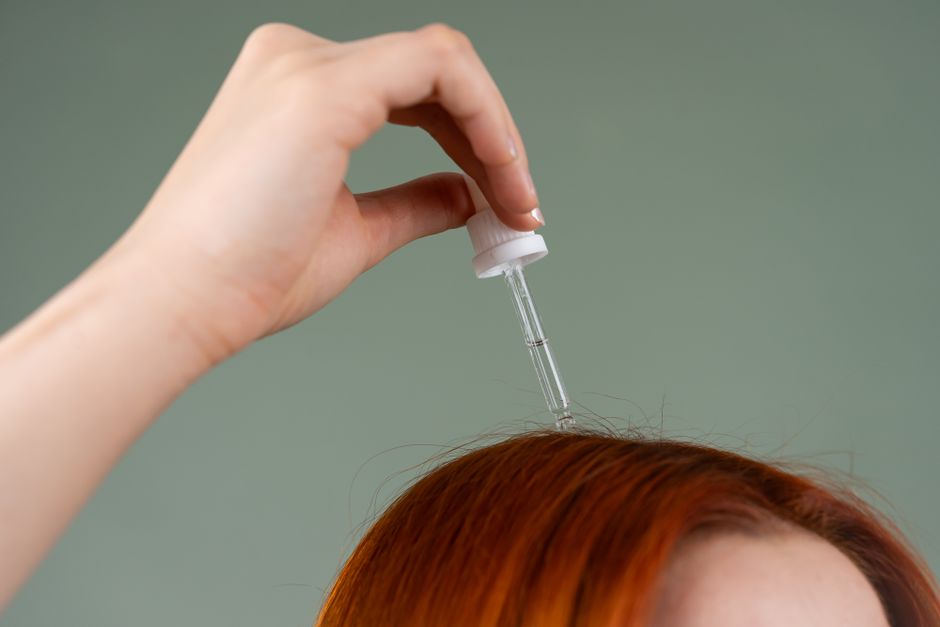
If you want to know what is best for hair regrowth, the proven treatments come down to a short list: minoxidil and finasteride for most people with common pattern hair loss, low-level laser therapy as a supporting option, and hair transplant surgery for areas where follicles are already gone. Everything else you see advertised — supplements, oils, shampoos, “scalp detox” — has far weaker evidence. Some of it has none at all.
That short list is not a marketing position. It reflects decades of clinical trials and regulatory review. The catch is that these treatments work differently, suit different people, and none of them brings back hair from a follicle that has permanently stopped producing it.
What Actually Causes Most Hair Loss?
Most hair loss in adults is androgenetic alopecia — pattern baldness. It is genetic, it is progressive, and it affects men and women differently.
In men, the hormone dihydrotestosterone (DHT) binds to receptors in susceptible scalp follicles. Over time, these follicles shrink. The growth phase shortens, the hair shaft gets thinner, and eventually the follicle stops producing visible hair. The hairline recedes and the crown thins first because those follicles are the most sensitive.
In women, the pattern is usually different. Hair thins broadly across the top of the scalp while the frontal hairline often stays intact. The mechanism involves androgens too, but the picture is more mixed, and other causes are more common than in men.
This matters because treatment only works on follicles that are still alive. A miniaturized follicle can sometimes be pushed back toward normal function. A follicle that has fully scarred over cannot. That single fact explains why early treatment outperforms late treatment, and why no topical product can regrow hair on completely bald, shiny scalp.
Other causes worth ruling out include thyroid disorders, iron deficiency, telogen effluvium (shedding after illness, stress, or childbirth), alopecia areata, and medication side effects. These are treated differently. A doctor can usually tell them apart by history and, when needed, blood tests or a scalp biopsy.
What Is Best For Hair Regrowth Proven Treatments?
Two medications have the strongest evidence: minoxidil and finasteride. Both are FDA-approved for pattern hair loss. Both have been studied in randomized controlled trials. Neither is a cure, and both require ongoing use to maintain results.
Minoxidil is available over the counter as a topical solution or foam. It is also available by prescription as an oral tablet, though oral use for hair loss is an off-label application. Topical minoxidil widens blood vessels and prolongs the growth phase of the hair cycle. It works for men and women. It typically takes several months before visible change appears, and stopping it usually reverses the benefit within months.
Finasteride is an oral prescription drug for men. It blocks the enzyme that converts testosterone into DHT, lowering DHT levels in the scalp. In clinical trials it has been shown to slow hair loss and, in a portion of men, produce regrowth. It is not approved for women of childbearing age because of the risk of birth defects in a male fetus. Postmenopausal women are sometimes prescribed it off-label, but the evidence in women is weaker than in men.
Both drugs have side effects. Minoxidil can cause scalp irritation, and oral forms can cause unwanted facial hair growth or a drop in blood pressure. Finasteride can cause sexual side effects in a minority of men. These are real and worth discussing with a clinician rather than dismissing or exaggerating.
What about everything else? Here is the honest picture:
- Low-level laser therapy — Some studies suggest modest benefit, and the FDA has cleared several devices. The evidence is weaker than for the two drugs above, and results vary.
- Microneedling — Some studies indicate it may improve results when combined with topical minoxidil. Evidence on its own is limited.
- Ketoconazole shampoo — Prescription-strength versions have shown some effect in small studies. It is often used alongside other treatments rather than alone.
- Supplements, oils, and special shampoos — No large human trials have confirmed meaningful regrowth for most of these products. Some are harmless. Some are a waste of money.
How Do You Know Which Treatment Fits Your Situation?
The right choice depends on three things: your sex, how much hair you have already lost, and whether the cause is actually pattern baldness.
For men with early to moderate thinning, the combination of topical minoxidil and oral finasteride is the most evidence-supported approach. Some clinicians add low-level laser therapy or microneedling. That combination is common in practice, though the added benefit of each extra step is not equally well proven.
For women, topical minoxidil is the best-supported single treatment. Beyond that, the picture gets murkier. Spironolactone, an anti-androgen, is sometimes prescribed off-label, and some studies support it, but it is not FDA-approved for hair loss. Finasteride is generally avoided in women who could become pregnant.
If your scalp shows no visible follicles in a given area, no medication will bring hair back there. That is where surgical options come in.





Does Hair Transplant Surgery Work?
Yes, for the right candidate. Hair transplant surgery moves DHT-resistant follicles from the back and sides of the scalp to thinning areas. Those transplanted follicles tend to keep their original characteristics, which is why they usually continue to grow in their new location.
Results are generally long-lasting for the transplanted hair itself. But surgery does not stop the underlying process. Untreated native hair around the transplant can keep thinning. Most surgeons recommend continuing medication after surgery for exactly this reason.
Surgery is not for everyone. It works best when there is enough donor hair and the loss is stable. It is a poor fit for active, rapidly progressing loss or for people with certain scarring conditions. It is also expensive, and results depend heavily on the skill of the surgeon.
What About Supplements and Natural Remedies?
This is where most marketing lives, and where the evidence is thinnest.
Some supplements have a small amount of supporting research — biotin for genuine biotin deficiency, saw palmetto for mild androgen effects, certain vitamins when a true deficiency exists. But for most people eating a normal diet, adding these does not regrow hair. Biotin deficiency is rare, and taking biotin when you are not deficient does not help. It can also interfere with certain lab tests, which is worth knowing.
Rosemary oil, onion juice, caffeine shampoos, and similar products show up in small studies. The studies are usually short, small, and sometimes funded by the companies selling the product. That does not make them fake, but it means the evidence is not strong enough to call them proven.
No topical oil or shampoo has been shown in large trials to regrow hair the way minoxidil or finasteride have. If a product claims to be “clinically proven” without naming the trial, treat that as a red flag.
How Long Before You See Results?
Hair grows slowly. A typical scalp hair grows about half an inch per month, and the growth phase lasts years. That biology sets the pace for any treatment.
With minoxidil, visible change usually takes several months. Early shedding in the first weeks is common and does not mean the treatment is failing — it often means follicles are cycling into a new growth phase. Finasteride tends to work more slowly, and many men notice stabilization before they notice regrowth.
A reasonable rule: give any proven treatment at least six months before judging it, and expect the best results at one year or longer. If nothing has changed by then, it may be time to reassess with a doctor. Consistency matters more than any single product choice. Skipping doses undermines the whole point.
When Should You See a Doctor?
See a clinician if your hair loss is sudden, patchy, or accompanied by scalp pain, scaling, or itching. Those patterns point away from ordinary pattern baldness and toward conditions that need different treatment.
Also see a doctor if you are a woman with new thinning, especially if it comes with irregular periods, acne, or excess facial hair. That combination can signal a hormonal issue worth investigating.
For typical gradual pattern loss, a primary care doctor or dermatologist can confirm the diagnosis and discuss prescription options. Bringing photos from a few years back helps establish how fast things are changing.
Frequently Asked Questions
What is the most effective treatment for hair regrowth?
Minoxidil and finasteride have the strongest evidence for pattern hair loss. Finasteride is for men, while minoxidil works for both men and women.
Can hair grow back on a completely bald spot?
No, once a follicle has permanently stopped producing hair, no topical or oral medication can bring it back. Hair transplant surgery can move healthy follicles into that area instead.
Do hair growth supplements actually work?
For most people, no large human trials have confirmed that over-the-counter supplements regrow hair. They may help only when a genuine nutrient deficiency is present.
How long does it take to see results from hair loss treatment?
Most proven treatments take several months before visible change appears, with the best results usually seen at one year or longer. Consistency is essential because stopping treatment typically reverses the benefit.
