
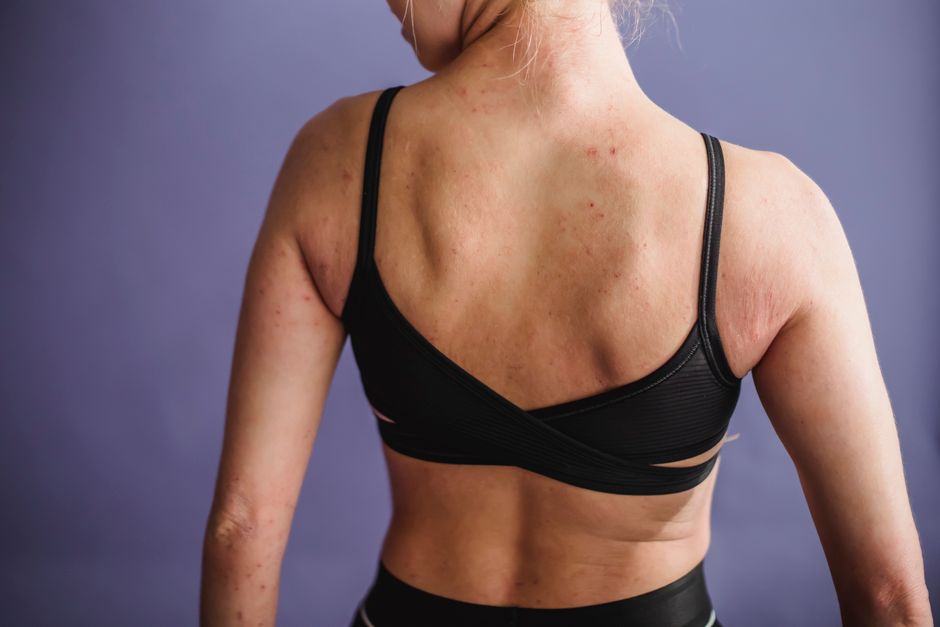
Back acne is acne that appears on the skin of your back, shoulders, and upper chest. It is not a sign of a hidden internal disease or a “toxic” body. It is the same condition as facial acne, caused by the same biological process: hair follicles becoming blocked with oil and dead skin cells, which then become inflamed. The reason it appears on the back is that this area has a high density of sebaceous (oil) glands, making it particularly prone to breakouts.
What Causes Back Acne in the First Place?
Acne on the back develops through a four-step process that dermatologists understand well. First, your skin produces an oily substance called sebum. Second, dead skin cells that should shed normally mix with that oil. Third, this mixture plugs the opening of a hair follicle. Fourth, bacteria that naturally live on the skin, specifically Cutibacterium acnes, multiply inside the blocked follicle. The immune system responds, causing redness, swelling, and pus.
This process is driven largely by hormones. Androgens, which are present in both men and women, stimulate the sebaceous glands to produce more oil. That is why acne often flares during puberty, menstrual cycles, and times of hormonal change. Genetics also play a role. If your parents had significant acne, you are more likely to have it too.
Is Back Acne a Sign of a Hormonal Problem?
In most people, back acne is not a sign of an abnormal hormonal condition. It is a normal response to normal hormone levels. The skin on your back is simply more sensitive to the androgens circulating in your body.
However, there are situations where acne can be a clue to a hormone imbalance. If a woman experiences sudden, severe acne along with irregular periods, thinning hair, or excessive facial hair, that combination warrants a medical evaluation. These symptoms can indicate polycystic ovary syndrome (PCOS) or another androgen excess disorder. The key distinction is the pattern. Mild to moderate back acne alone is rarely a red flag. Severe acne that appears suddenly in adulthood, or acne accompanied by other systemic symptoms, deserves a doctor’s attention.
What Makes Back Acne Different From Facial Acne?
The back has thicker skin than the face, and the pores are larger. This means back acne lesions can be deeper, larger, and more prone to scarring. The back also has more sebaceous glands per square inch than most other body areas, which explains why it is such a common location for breakouts.
There is also a mechanical factor unique to the back. Friction and pressure from clothing, backpacks, sports equipment, and even sleeping on certain sheets can worsen breakouts. This condition, called acne mechanica, occurs when physical irritation traps sweat and oil against the skin. Athletes often experience this because of tight workout gear and prolonged sweating.




Can Sweat and Exercise Cause Back Acne?
Sweat itself does not cause acne. The blocked follicles that lead to acne are caused by oil and dead skin cells, not water. However, sweat can make existing acne worse. When sweat mixes with surface oil, bacteria, and dirt, it can increase the chance that a follicle becomes blocked.
The bigger issue is how long sweat stays on your skin. Leaving sweaty clothing on for extended periods after a workout creates an environment where bacteria thrive. Showering promptly after exercise and changing into clean, dry clothing is a practical step that can reduce flare-ups. This is a matter of hygiene and irritation management, not a cure for acne.
Are Certain Foods or Diets Linked to Back Acne?
The connection between diet and acne is real but often overstated. Research has examined the role of high-glycemic foods and dairy products. High-glycemic foods, such as white bread, sugary drinks, and processed snacks, cause rapid spikes in blood sugar. This triggers a cascade of hormones that can increase oil production. Some studies have found that low-glycemic diets are associated with less acne.
Dairy is a more complicated picture. Some research suggests a link between skim milk consumption and acne, but the evidence is not consistent enough to make a universal recommendation. The current position in dermatology is that diet can influence acne for some people, but it is rarely the sole cause. If you notice a clear pattern between certain foods and your breakouts, it is reasonable to experiment with reducing those foods for a few weeks. There is no need to eliminate entire food groups based on general internet advice.
What Actually Works for Treating Back Acne?
Treatment for back acne follows the same principles as facial acne, but the thicker skin of the back often requires stronger products or longer treatment times. Over-the-counter washes containing benzoyl peroxide are a first-line option. Benzoyl peroxide kills acne bacteria and helps clear blocked pores. It is available in washes that you leave on the skin for a few minutes in the shower before rinsing.
Another common option is salicylic acid, which helps shed dead skin cells and unclog pores. It is available in body washes, sprays, and lotions. Both ingredients work, but they need consistent daily use for several weeks before visible improvement appears. Acne treatment is slow. Expect to wait six to eight weeks before judging whether a product works.
For moderate to severe cases, a dermatologist may prescribe topical retinoids, which are vitamin A derivatives that normalize skin cell turnover. Oral medications, including antibiotics or hormonal therapies like spironolactone for women, are reserved for cases that do not respond to topical treatment. Isotretinoin, a powerful oral retinoid, is highly effective but requires careful medical supervision due to potential side effects. Do not attempt to self-treat severe back acne with aggressive products. Deep, painful nodules on the back can scar permanently, and a dermatologist is the right person to guide treatment.
What Should You Avoid Doing?
Picking, squeezing, or scrubbing back acne makes it worse. The skin on the back is thick, and lesions sit deep. Attempting to pop them can push bacteria deeper, increase inflammation, and cause permanent scarring or dark spots that last for months.
Avoid harsh physical scrubs and loofahs used with aggressive pressure. This strips the skin’s protective barrier and increases irritation. Similarly, avoid oil-based body lotions or heavy sunscreens on the back, as these can contribute to blocked pores. If you use moisturizer, choose one labeled non-comedogenic, meaning it is formulated not to block pores.
When Should You See a Doctor for Back Acne?
You should see a dermatologist if over-the-counter products have not improved your back acne after two to three months of consistent use. You should also seek medical advice if your acne is painful, deep, or leaving scars. Acne that covers a large area of the back, or that appears suddenly and severely in adulthood, warrants professional evaluation.
There is no evidence that back acne is a sign of poor internal health, liver problems, or “toxins” in the body. These are myths that circulate online. Acne is a localized skin condition influenced by hormones, genetics, and local skin factors. If you are concerned about an underlying condition, a doctor can evaluate you properly, but the presence of back acne alone is not a diagnostic clue for systemic disease.
Frequently Asked Questions
Is back acne a sign of a serious health condition?
No, back acne is not a sign of a serious internal health condition in most cases. It is a common skin condition caused by blocked hair follicles, though sudden severe acne with other symptoms like irregular periods warrants a medical check.
How long does it take for back acne to clear up?
With consistent daily treatment using benzoyl peroxide or salicylic acid, improvement is typically visible within six to eight weeks. Deeper nodules may take several months to resolve, and a dermatologist can offer stronger options if needed.
Does back acne ever go away on its own?
Yes, back acne can improve or clear without treatment as hormone levels change, but this is not guaranteed. Many people need consistent skincare or medical treatment to control breakouts and prevent scarring.
Can a dirty back cause acne?
No, dirt does not cause acne. Acne forms when oil and dead skin cells block hair follicles, though poor hygiene can worsen existing breakouts by allowing sweat and bacteria to sit on the skin longer.
