
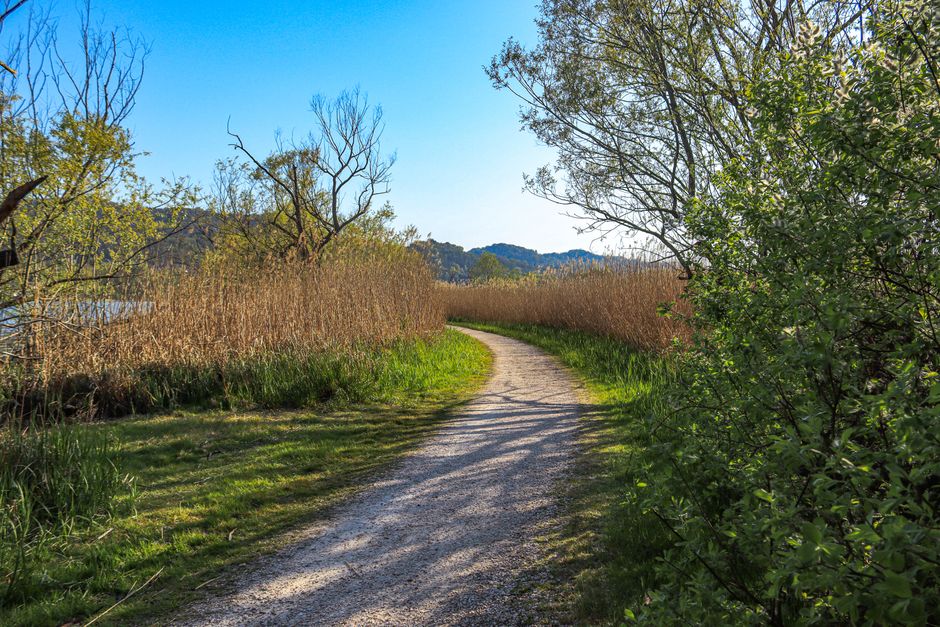
An ecological corridor is a strip of natural habitat that connects two or more larger habitat areas. Think of it as a wildlife highway. Animals use these corridors to move safely between parks, forests, and reserves. Without them, habitats become islands. Animals get trapped, cannot find mates, and populations shrink. Corridors solve that problem by giving wildlife a way to travel across landscapes changed by roads, farms, and cities.
They work by preserving or restoring a continuous path of native plants and trees. This path allows animals to migrate, find food, and breed with other groups. The science is straightforward. When you connect habitats, you keep gene pools healthy and help species survive environmental changes. It is not complicated ecology. It is basic geography applied to conservation.
Why Do Ecosystems Need Corridors?
Human development breaks nature into pieces. A highway through a forest cuts it in half. A housing development turns a meadow into a dead end for migrating birds. These fragments are called habitat patches. Each patch holds some wildlife but not enough for long-term survival.
Small isolated populations face serious problems. They lose genetic diversity. Inbreeding becomes common. A single disease or fire can wipe out everything. Corridors reverse this fragmentation. They link patches back together so animals can move freely. Think of it like opening doors between rooms that had been sealed shut.
Climate change makes corridors even more important. As temperatures rise, many species need to move toward cooler areas. A corridor gives them a safe route to travel that route. Without corridors, they hit a wall of farmland or suburbia and die trying to cross it.
What Is An Ecological Corridor And How Do They Work in Practice?
There are several types of corridors. The most common is a linear corridor. This is a long strip of vegetation along a riverbank, ridgeline, or old railroad bed. It can be as narrow as a hedgerow or as wide as a protected valley.
Stepping stone corridors are different. They are not one continuous path. Instead, they are a series of small habitat patches spaced close together. Animals hop from one patch to the next like stepping stones across a stream. This works well for birds and insects that can fly short distances between stops.
Landscape corridors are the largest type. These are broad swaths of protected land that connect major ecosystems. They often include multiple types of habitat within them. A landscape corridor might connect a mountain range to a coastal forest through farmland that has been restored to native grassland and woodland.
Corridors work through simple design principles. They need to be wide enough for the target species. A corridor for deer needs to be wider than a corridor for butterflies. They need native vegetation that provides food and shelter along the entire route. And they need to avoid barriers like roads or fences, or include safe crossings like wildlife bridges or underpasses.
What Evidence Supports Corridor Effectiveness?
Research consistently shows that corridors increase animal movement between habitat patches. Studies in North America, Europe, and Australia have tracked animals using radio collars and genetic samples. Animals in connected landscapes move more, find more mates, and maintain healthier populations than those in isolated patches.
One well-studied example is the Florida panther. This endangered cat needs large territories to hunt and breed. Corridors connecting protected areas in southern Florida have allowed panthers to expand their range and avoid inbreeding. Genetic diversity in the population has improved as a result.
Some studies suggest corridors also help plants. Seeds carried by animals moving through corridors can establish new populations in distant patches. This is harder to measure than animal movement, but the evidence is growing that corridors benefit entire ecosystems, not just the largest mammals.
The evidence is mixed on whether corridors work for all species. Some animals simply will not use them. Certain birds prefer to fly over open areas rather than follow a narrow strip of trees. Small rodents might avoid corridors if they attract too many predators. Corridor design must account for the specific needs of the species you are trying to help.





How Wide Does a Corridor Need to Be?
There is no single answer. Width depends on the species, the landscape, and the purpose of the corridor. For small mammals and reptiles, a corridor 50 to 100 meters wide may be enough. For large predators like bears or wolves, corridors may need to be several kilometers wide.
Edge effects matter a lot. A narrow corridor has more edge than interior habitat. Edge habitat is exposed to wind, sun, and predators from the surrounding landscape. Animals that need deep forest cover will not use a narrow corridor that is all edge. Making corridors wider reduces edge effects and makes them usable by more species.
Some conservation groups use a rule of thumb. For a corridor to function well for most forest species, it should be at least 200 meters wide at its narrowest point. This is not a hard rule. Local conditions vary. But it gives planners a starting target.
What Are the Main Challenges to Building Corridors?
Land ownership is the biggest obstacle. Corridors often need to cross private property. Farmers may not want to give up productive land. Developers see corridors as blocks to building. Conservation groups must negotiate easements, buy land, or create incentives for landowners to keep natural vegetation.
Roads are another major challenge. A corridor that ends at a highway is useless unless animals can cross safely. Wildlife crossings like overpasses and underpasses are expensive but effective. One overpass in Banff National Park in Canada has been used by thousands of animals including bears, wolves, and elk since it was built.
Corridors also require long-term maintenance. Invasive plants can take over and reduce habitat quality. Fire suppression can change vegetation structure. Without active management, a corridor can degrade and stop functioning within a few decades.
Climate change adds uncertainty. A corridor designed for today’s climate may not be in the right place in fifty years. Planners are now designing corridors that run north-south or upslope to allow species to track shifting climate zones over time.
How Do Corridors Differ From Greenways and Wildlife Crossings?
People often mix up these terms. A greenway is a corridor designed primarily for people. It might include bike paths and walking trails. While greenways can also serve as wildlife corridors, their main purpose is human recreation. An ecological corridor is designed first for wildlife.
A wildlife crossing is a specific structure that helps animals cross a road or railway. It is a bridge or tunnel, not a corridor. A corridor connects two large habitat areas. A crossing helps animals get past one barrier within that corridor. You need a corridor to connect the habitats. You need crossings to make the corridor safe where it meets a road.
Some corridors are purely natural. Others are restored or created by humans. A restored corridor might involve planting native trees along a river that was previously cleared for agriculture. A created corridor might be a strip of wildflower meadow planted between two forest patches. Both can work if they provide the right habitat structure.
Do Corridors Have Downsides?
Yes. Corridors can spread problems as well as benefits. Invasive species can travel along corridors and invade new areas. Diseases and parasites can move more easily between populations. Fire can spread through a corridor into previously isolated habitat.
Predators can use corridors to hunt more effectively. A corridor that helps deer move might also help wolves follow them. This is natural, but it can be a problem if the goal is protecting a specific prey species.
Some conservationists argue that corridors are not always the best use of limited resources. In some cases, it may be more effective to enlarge existing protected areas rather than spend money connecting them. The debate is ongoing. Most ecologists agree that corridors are valuable tools, but not the only tool.
Frequently Asked Questions
What is the difference between an ecological corridor and a habitat patch?
A habitat patch is a distinct area of natural habitat surrounded by different land use. An ecological corridor is a strip of habitat that connects two or more patches so animals can move between them.
How long does it take for an ecological corridor to become effective?
It depends on the type of corridor. A natural corridor that already has vegetation works immediately. A restored corridor that needs planting may take five to twenty years before it functions well for most species.
Can urban areas have ecological corridors?
Yes. Cities can create corridors along rivers, rail lines, and park systems. These urban corridors help birds, butterflies, and small mammals move through developed areas, though they are less effective for large animals.
Do ecological corridors help with climate change adaptation?
Yes. Corridors allow species to shift their ranges as temperatures change. Connecting habitats along north-south or elevation gradients gives wildlife a path to cooler areas without crossing dangerous human landscapes.
