
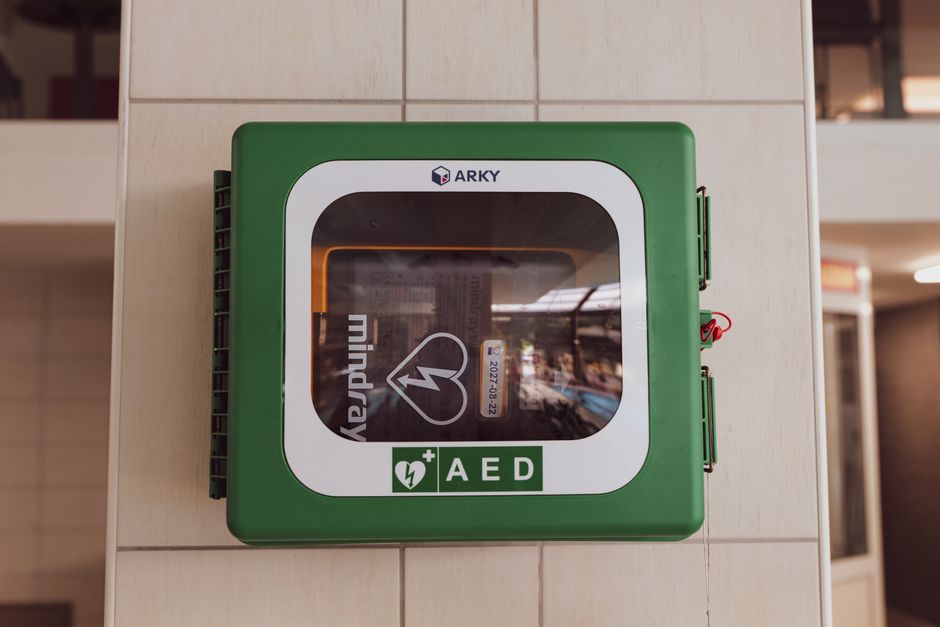
An automated external defibrillator, or AED, is a portable device that delivers a controlled electric shock to the heart. The shock is designed to stop a chaotic, irregular heart rhythm called ventricular fibrillation so the heart can resume a normal, effective beat. AEDs do not restart a stopped heart; they reset an electrical storm that prevents the heart from pumping blood.
What Heart Rhythm Does an AED Actually Treat?
An AED is designed for one specific emergency: sudden cardiac arrest caused by ventricular fibrillation (VF) or, in some cases, pulseless ventricular tachycardia (VT). In VF, the heart’s lower chambers quiver rapidly and erratically instead of contracting. This quivering pumps no blood to the brain or other organs.
The shock from an AED works by depolarizing the entire heart muscle at once. This brief, powerful jolt interrupts the chaotic electrical activity. It essentially resets the heart’s electrical system, giving the heart’s natural pacemaker cells a chance to regain control and produce a normal rhythm.
This is why timing matters so much. The longer the heart stays in VF, the more the heart muscle weakens. After several minutes, even a perfect shock may not be enough. The heart’s chance of responding to defibrillation drops with every passing minute.
How Does the AED Decide Whether to Shock?
The AED is not a manual device that requires a person to judge the rhythm. It analyzes the heart’s electrical activity through adhesive electrode pads placed on the bare chest. The device’s computer algorithm determines whether the rhythm is shockable or not.
If the rhythm is VF or pulseless VT, the AED will charge and instruct you to press the shock button. If the rhythm is not shockable — such as asystole (flatline) or pulseless electrical activity — the AED will not deliver a shock. It will instead instruct you to continue CPR. Shocking a non-shockable rhythm does not help and can damage the heart.
This built-in analysis makes AEDs safe for untrained bystanders. The device will not allow a shock to be delivered when it is not appropriate. You cannot override this decision by pressing the button before the device instructs you to do so.
What Does the Shock Physically Do to the Heart Muscle?
Think of the heart as having millions of individual muscle cells that contract together. During VF, these cells are firing at different times, creating a disorganized quivering. The electrical signal is a storm of uncoordinated activity.
The defibrillator shock delivers a high-energy current through the chest. This current creates a massive, simultaneous depolarization of the heart muscle cells. It forces every cell to reset to the same electrical state at the same moment.
After this reset, the heart’s primary pacemaker — the sinoatrial node — can fire normally again. It takes over and coordinates a regular heartbeat. This only works if the heart muscle is still viable. A heart that has been starved of oxygen for too long may not resume a normal rhythm even after a successful shock.
It is worth noting that the shock itself does not pump blood. It only creates the opportunity for a normal rhythm to return. That is why CPR immediately before and after a shock is critical. CPR keeps oxygenated blood flowing to the brain and heart during the minutes the heart is not pumping effectively.





How Do Aeds Work The Science Behind The Shock: Energy Levels and Current
AEDs deliver a specific amount of energy measured in joules. Most modern AEDs deliver between 120 and 200 joules for the first shock, though some devices use higher settings. The energy is delivered as a biphasic waveform, meaning the current flows in two directions between the electrode pads.
Biphasic waveforms are more efficient than older monophasic waveforms. They achieve successful defibrillation with lower energy levels, which means less damage to the heart muscle. The current flows from one pad to the other, passing through the heart and the surrounding chest tissue.
The electrode pads are placed in specific positions — typically one on the upper right chest and one on the lower left side of the chest. This positioning ensures the current passes through the heart’s mass in the most effective path. Correct pad placement matters as much as the energy level itself.
Why Is CPR Needed Before and After the Shock?
An AED is only one part of the chain of survival. The other essential part is high-quality chest compressions. CPR manually pumps blood through the body when the heart cannot. It keeps the brain and other vital organs alive while the AED analyzes and delivers the shock.
Studies consistently show that CPR before defibrillation improves survival rates, especially when the response time is longer than four minutes. The compressions maintain blood flow and may help keep the heart in a state that is more responsive to the shock.
After a successful shock, the heart may not immediately pump effectively. The rhythm may be restored, but the heart muscle may be weak or stunned. Immediate resumption of CPR provides blood flow during this period of recovery. The AED will re-analyze the rhythm every two minutes and guide you on whether another shock is needed.
Does an AED Work for a Heart Attack?
No. A heart attack and sudden cardiac arrest are different emergencies. A heart attack is a circulation problem caused by a blocked blood vessel that starves part of the heart muscle of oxygen. A person having a heart attack is usually awake and breathing.
Sudden cardiac arrest is an electrical problem. The heart’s rhythm becomes chaotic or stops entirely, and the person collapses, is unresponsive, and is not breathing normally. An AED is only useful in sudden cardiac arrest.
A heart attack can trigger sudden cardiac arrest. If a person having a heart attack collapses and stops breathing normally, that is the moment to use an AED. But for a conscious person with chest pain, an AED is not appropriate. Call emergency services and follow their instructions.
How Fast Does a Shock Need to Be Delivered?
Speed is the single most important factor in survival from sudden cardiac arrest. For every minute that passes without defibrillation, the chance of survival decreases by about 7 to 10 percent. After ten minutes, survival is unlikely without immediate advanced care.
This is why public access AEDs are placed in airports, shopping malls, gyms, and schools. Bystander use of an AED before emergency medical services arrive can double or triple the chance of survival. The device is designed to be used by anyone, with voice prompts guiding each step.
The sequence is simple: call for help, start CPR, turn on the AED, and follow the voice instructions. The AED will tell you when to stop compressions for analysis and when to press the shock button. The entire process is designed to minimize delays.
Are AEDs Safe to Use on Children and Pregnant Women?
AEDs are safe for use on children who are not breathing and unresponsive. Many devices come with pediatric electrode pads that reduce the energy level. If pediatric pads are not available, standard adult pads can be used on a child in an emergency. The risk of doing nothing is far greater than the risk of using adult pads.
For pregnant women in sudden cardiac arrest, the AED should be used exactly as it would be for any other adult. The shock is safe and necessary. The mother’s survival is the priority, and a normal heart rhythm is required to oxygenate both her and the fetus.
Standard AEDs are not designed for infants under one year of age. If an infant requires defibrillation, manual defibrillation by trained medical personnel is preferred. In an emergency where no other option exists, some guidelines allow the use of an AED with pediatric pads, but this should only be done if no alternative is available.
What Should You Not Do When Using an AED?
Do not touch the person while the AED is analyzing or delivering a shock. The device will clearly announce when to stand clear. Touching the person during analysis can interfere with the rhythm reading, and touching during the shock can deliver a painful jolt to you.
Do not use an AED on a person lying in water or with a wet chest. Move the person to a dry area and wipe the chest dry before attaching the pads. Water can conduct the electrical current across the skin and reduce the effectiveness of the shock.
Do not place the pads over medication patches, implanted devices, or jewelry. Remove any patches and wipe the area clean. Implanted pacemakers or defibrillators can interfere with the AED’s analysis, so pad placement should be adjusted if possible. These situations are rare, but they require quick thinking.
Frequently Asked Questions
Can an AED restart a stopped heart?
No, an AED does not restart a stopped heart. It only treats chaotic rhythms like ventricular fibrillation, which prevent the heart from pumping blood effectively.
Will an AED shock someone who has a normal heartbeat?
No. The AED analyzes the heart rhythm and will only deliver a shock if it detects a shockable rhythm. It will not shock a person with a normal heartbeat.
Can you use an AED on a person with a pacemaker?
Yes, but you should avoid placing the electrode pads directly over the implanted device. Adjust pad placement if possible and follow the AED’s voice prompts.
How long can an AED be used before help arrives?
Use the AED continuously until emergency medical services arrive and take over. The device will re-analyze the rhythm every two minutes and instruct you on when to continue CPR.
