
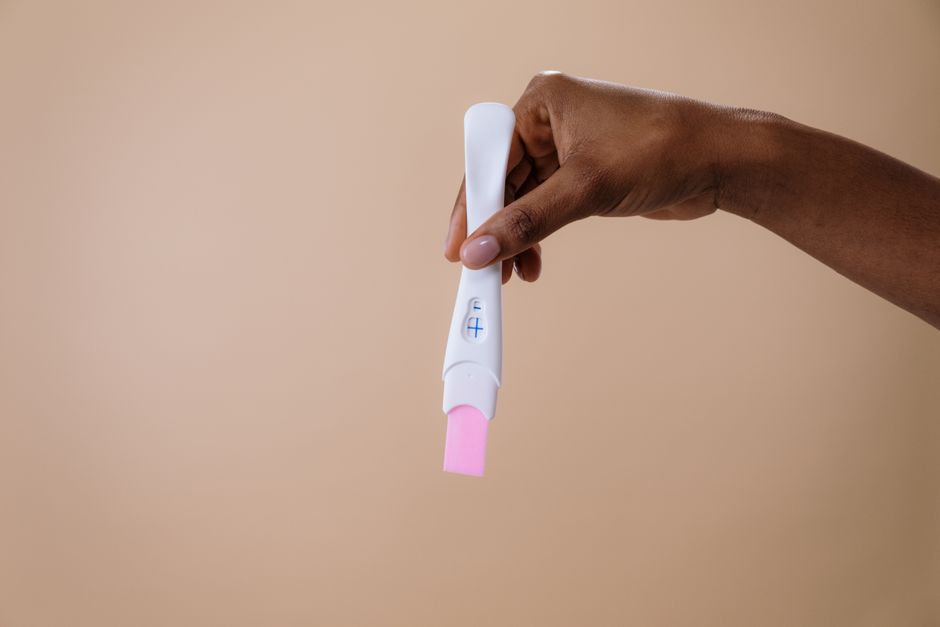
If you think you might be pregnant, waiting for answers feels like forever. The short answer is that a pregnancy test can detect pregnancy as early as 8 to 10 days after ovulation, but the most reliable result comes on the first day of your missed period. Home pregnancy tests work by detecting a hormone called human chorionic gonadotropin (hCG), which your body only produces after a fertilized egg implants in the uterus. Testing too early is the most common reason for a false negative, so understanding the timeline matters.
How Do Home Pregnancy Tests Detect hCG?
Home pregnancy tests are designed to detect human chorionic gonadotropin, or hCG. This hormone is produced by cells that form the placenta after a fertilized egg implants in the uterine lining. Before implantation, there is no hCG in your body. After implantation, hCG levels rise quickly, doubling roughly every 48 to 72 hours in early pregnancy.
The test strip contains antibodies that bind to hCG molecules in your urine. When enough hCG is present, the test line changes color. Most home tests claim to detect hCG levels at 25 mIU/mL or lower. Some “early detection” tests claim sensitivity down to 10 mIU/mL, but the actual performance can vary between brands.
Urine concentration matters. Your first morning urine is the most concentrated and typically contains the highest amount of hCG. Testing later in the day after drinking fluids can dilute your urine and potentially affect the result.
What Is the Earliest a Pregnancy Test Can Be Positive?
Implantation typically happens 6 to 10 days after ovulation. After implantation, hCG begins entering your bloodstream and urine. A highly sensitive test could theoretically detect hCG in urine as early as 8 to 10 days after ovulation. However, this is the earliest possible window, not the typical one.
For most women, testing before 12 days past ovulation produces a negative result even when pregnancy has occurred. The hCG level simply has not risen high enough yet. A negative test on day 10 does not mean you are not pregnant. It means the test could not detect hCG at that moment.
The packaging on early detection tests often says “5 days before your missed period.” This means 5 days before the day you expect your period to start. If your cycle is 28 days and you ovulate on day 14, that is day 23 of your cycle, or 9 days past ovulation. Some women will get a positive result then. Many will not.
When Is the Best Time to Take a Pregnancy Test?
The first day of your missed period is the most reliable time to test. By this point, hCG levels are usually high enough to be detected by virtually all home pregnancy tests. Testing on the day of your missed period reduces the chance of a false negative significantly.
If your periods are irregular, timing becomes harder. You may not know exactly when your period is due. In that case, wait at least 21 days after unprotected sex before testing. This allows enough time for ovulation, fertilization, implantation, and hCG production to occur.
Taking the test in the morning with your first urine gives the most accurate result. If you test later in the day, try to hold your urine for at least four hours and avoid drinking excessive fluids beforehand. This concentrates the hCG in your urine sample.





How Fast Can a Pregnancy Test Actually Work After Implantation?
Once implantation occurs, hCG enters your bloodstream and then your urine. It takes a few days for urinary hCG to reach a level that a home test can detect. Most research suggests that urine hCG becomes detectable 2 to 4 days after implantation.
If implantation happens on day 9 after ovulation, a sensitive test might be positive around day 11 to 13. If implantation happens on day 6, the test could be positive as early as day 8 or 9. The variation between women is significant. Some women have higher baseline hCG production. Others implant later in the window.
This is why testing multiple times over several days is common. A negative test one morning can become positive two days later. The hCG level is rising, and eventually it crosses the detection threshold of the test.
What Causes a False Negative Pregnancy Test?
Testing too early is the leading cause of false negatives. The test is working correctly, but the hCG level in your urine is below the detection limit. This is not a test failure. It is a timing issue.
Diluted urine can also cause false negatives. Drinking large amounts of water before testing lowers the concentration of hCG in your urine. Using first morning urine avoids this problem.
Certain medications can interfere with pregnancy test results. Fertility medications containing hCG, such as some used during IVF cycles, can cause false positives. However, most common medications including antibiotics and birth control pills do not affect test accuracy. Expired tests may also produce unreliable results.
A rare condition called the hook effect can cause false negatives in very advanced pregnancies or with certain medical conditions. This happens when extremely high hCG levels overwhelm the test antibodies. It is uncommon and not a concern for early pregnancy testing.
How Accurate Are Home Pregnancy Tests?
Home pregnancy tests are highly accurate when used correctly. When taken on the first day of a missed period, most tests have accuracy rates above 99 percent for detecting pregnancy. This means the tests are reliable for confirming pregnancy when positive.
False positives are much rarer than false negatives. A false positive can occur from a recent pregnancy loss, certain medical conditions, or fertility medications containing hCG. If you get a positive result, it is almost certainly correct. If you get a negative result but still suspect pregnancy, wait a few days and test again.
Blood tests performed in a doctor’s office can detect hCG earlier than urine tests. A qualitative blood test simply confirms whether hCG is present. A quantitative blood test measures the exact level. These tests are more sensitive and can detect pregnancy a few days earlier than home urine tests.
How Fast Can a Pregnancy Test Actually Work: The Bottom Line
The fastest a pregnancy test can work is around 8 days after ovulation with a highly sensitive test. Most women will need to wait until 12 to 14 days after ovulation for a reliable positive result. The first day of your missed period remains the most dependable testing time.
If you cannot wait, use first morning urine and an early detection test. Understand that a negative result before your missed period does not rule out pregnancy. Repeat the test in 2 to 3 days if your period does not arrive.
If you get a positive result, contact a healthcare provider to confirm the pregnancy and discuss next steps. If you get repeated negative results but your period never comes, see a doctor to determine the cause.
Frequently Asked Questions
Can a pregnancy test be positive 3 days after conception?
No, a test cannot be positive that early because implantation has not occurred yet. Fertilization happens in the fallopian tube, and it takes several days for the embryo to travel to the uterus and implant, which is when hCG production begins.
How many days after a missed period should I take a pregnancy test?
You can test on the first day of your missed period for the most reliable result. If you test earlier and get a negative result, wait 2 to 3 days and test again.
Can a negative pregnancy test turn positive the next day?
Yes, this can happen if you tested before hCG levels reached the detection threshold. Waiting a day allows hCG levels to rise, which can turn a negative result positive.
