
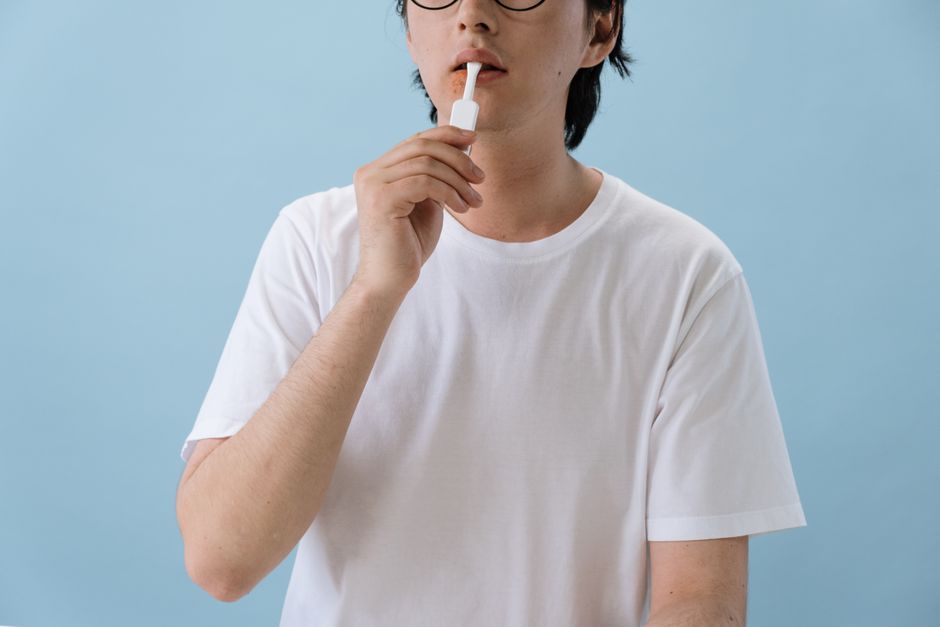
If you have a sore on your lip or in your mouth and you want to know if it is herpes, doctors use two main methods: a swab of the sore or a blood test. The swab test looks for the virus itself directly from the blister or ulcer. The blood test looks for antibodies your immune system made in response to a past or current infection. Neither test is perfect, and knowing which one you need depends on whether you have an active sore or not.
What Is the Difference Between a Swab Test and a Blood Test for Oral Herpes?
A swab test and a blood test do not look for the same thing. The swab test looks for the actual herpes simplex virus (HSV) DNA. A doctor or nurse takes a cotton swab and rubs it firmly over an active sore. The sample goes to a lab where they use a method called PCR (polymerase chain reaction) to detect the virus’s genetic material.
A blood test looks for antibodies. These are proteins your body creates to fight the virus. If you have antibodies, it means your immune system has encountered HSV at some point in your life. It does not tell you where the infection is or if you are contagious right now.
The swab test is the gold standard for diagnosing an active outbreak. The blood test is useful when you have no sores but suspect you have been exposed. Research published in the Journal of Clinical Virology shows that PCR swab tests detect HSV with over 95% accuracy when a sore is present. Blood tests are less reliable, especially for HSV-1, which is the type most commonly linked to oral herpes.
How Do They Test For Oral Herpes Swab And Blood Tests Work Step by Step?
For the swab test, the process is simple. A healthcare provider will ask you to uncover the sore. They will press a sterile swab against the blister or ulcer and rotate it to collect fluid and cells. This takes about 10 seconds. It can sting if the sore is raw, but it is over quickly.
The swab goes into a tube and is sent to a lab. The lab uses PCR to amplify any viral DNA present. Results typically come back in one to three days. Some clinics offer rapid PCR tests that give results in a few hours, but these are less common.
For the blood test, a technician draws blood from a vein in your arm. The sample goes to a lab where they test for two types of antibodies: IgM and IgG. IgM antibodies appear early after infection, usually within one to two weeks. IgG antibodies appear later, around three to six weeks after infection, and stay in your blood for life.
Most doctors rely on IgG tests because IgM tests are unreliable. The CDC does not recommend using IgM tests for herpes diagnosis because they often give false positives and cannot tell you when the infection happened.
When Should You Get a Swab Test Instead of a Blood Test?
If you have an active sore, get the swab test. That is the straightforward answer. The swab test tells you exactly what virus is in the sore and whether it is HSV-1 or HSV-2. This matters because HSV-1 is common on the mouth, but HSV-2 can also cause oral infections and changes how you manage the condition.
The blood test is useful in specific situations. If you have no sores but have had a known exposure, a blood test can tell you if you already have the virus. If you have recurrent symptoms like tingling or burning but no visible sores, a blood test might show past infection. Some people get blood tests as part of a full STD screening, though routine herpes testing is not recommended by the CDC for people without symptoms.
Here is a simple comparison of the two tests:
| Feature | Swab Test (PCR) | Blood Test (IgG) |
|---|---|---|
| What it detects | Viral DNA from an active sore | Antibodies from past or current infection |
| When to use | Only when a sore is present | When no sore is present but exposure is suspected |
| Accuracy | Over 95% for active sores | 70-90% for HSV-1, over 95% for HSV-2 |
| Time to results | 1-3 days | 2-5 days |
| Can it tell the type? | Yes, clearly | Yes, for HSV-2, less reliable for HSV-1 |

How Accurate Are Blood Tests for Oral Herpes?
Blood tests for herpes are not as accurate as many people think. The accuracy depends heavily on which type of herpes virus we are talking about. For HSV-2, which is most commonly genital herpes, blood tests are very good. The Western blot test, which is the gold standard for blood testing, detects HSV-2 antibodies with over 99% accuracy.
For HSV-1, the story is different. More than half of all US adults have HSV-1 antibodies by age 50, according to the CDC. Most of them got it in childhood from non-sexual contact. The common blood tests for HSV-1 miss about 20-30% of infections. This means you could have HSV-1 and test negative. Or you could test positive and not know when or where you got it.
Some studies suggest that the widely used HerpeSelect ELISA test misses about 20% of HSV-1 infections. The Western blot test is more accurate but is harder to find and costs more. If your blood test comes back positive for HSV-1, it tells you almost nothing about where the infection is or when it happened. This is why many doctors do not recommend blood tests for HSV-1 in people without symptoms.
What Can Cause a False Positive or False Negative Result?
False negatives happen more often than people expect with swab tests. If the sore is already healing or crusted over, there may not be enough virus on the swab to detect. The same happens if the swab misses the sore or if the sample sits too long before reaching the lab. For the best chance of a correct result, get swabbed within 48 hours of the sore appearing.
False positives are a real issue with blood tests. The IgM test is notorious for this. It can cross-react with other viruses in the herpes family, like the virus that causes chickenpox or shingles. The CDC explicitly advises against using IgM tests for herpes diagnosis. Even IgG tests can give false positives, especially for low positive results. If your IgG result is low positive, your doctor may recommend a confirmatory test called the Western blot.
One important thing to understand: a positive blood test does not mean you have oral herpes. It means you have antibodies to the virus. You could have a genital infection, or you could have had a childhood infection that never caused symptoms. The blood test cannot tell you the location of the infection. This is a common source of confusion and unnecessary worry.
What Should You Do After Getting Tested for Oral Herpes?
If your swab test comes back positive, you have an active HSV infection in that location. Your doctor can prescribe antiviral medication like acyclovir or valacyclovir. These drugs reduce the duration of the outbreak and lower the amount of virus you shed. They do not cure the infection, but they make outbreaks shorter and less painful.
If your blood test is positive but you have no symptoms, you are one of the many people living with the virus without knowing it. The CDC estimates that 50-80% of US adults have HSV-1, and most do not know it. You do not need treatment unless you develop symptoms. You can still shed the virus without symptoms, which means you can pass it to others. This is called asymptomatic shedding.
If your test is negative but you still have symptoms, ask for a swab test during your next outbreak. A negative blood test does not rule out infection if you were exposed recently. It takes weeks for antibodies to show up in your blood. If you think you were exposed, wait 12 to 16 weeks before getting a blood test for the most accurate result.
Frequently Asked Questions
Can a blood test tell if I have oral herpes or genital herpes?
No. A blood test only tells you if you have antibodies to HSV-1 or HSV-2. It cannot tell you where the infection is located.
How long after exposure will a blood test show herpes?
It takes 3 to 6 weeks for IgG antibodies to reach detectable levels. Testing earlier than that can give a false negative result.
Can a swab test be wrong if the sore is already healing?
Yes. If the sore is crusted over or healing, the swab may not pick up enough virus. Test within 48 hours of the sore appearing for the best accuracy.
Do I need to fast or prepare before a herpes blood test?
No special preparation is needed. You can eat and drink normally before a herpes blood test.
