
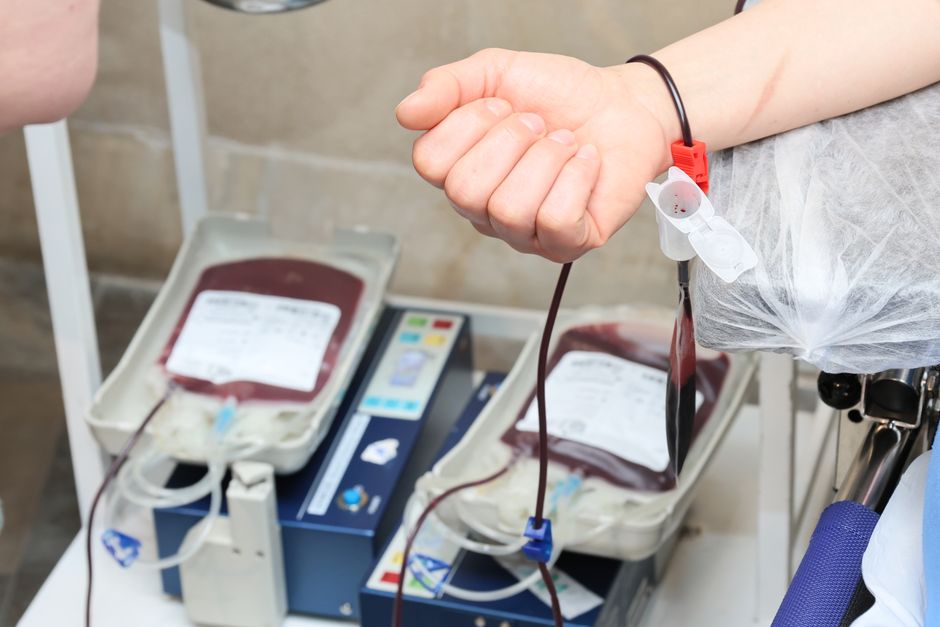
A red blood cell transfusion is a medical procedure where you receive donated red blood cells through an IV to replace blood you have lost or to treat severe anemia. This treatment can be life-saving in emergencies or for people with chronic blood disorders. While generally safe, it does carry risks including allergic reactions, infections, and rarely more serious complications like transfusion-related lung injury.
What exactly is a red blood cell transfusion?
A red blood cell transfusion puts healthy red blood cells from a donor into your bloodstream. Red blood cells carry oxygen from your lungs to every part of your body. When your count drops too low your organs and tissues do not get enough oxygen.
Donated blood is carefully tested and matched to your blood type. The actual process takes 1 to 4 hours. You are awake the whole time. A nurse monitors you for any reaction.
Blood banks separate whole blood into parts. Red blood cells are one part. Plasma and platelets are others. This lets doctors give you only what you need.
When is a red blood cell transfusion used?
Doctors use transfusions when your body cannot make enough red blood cells or when you have lost too many. The goal is always to give you just enough to stay safe without overusing donated blood.
Major blood loss is the most common reason. This happens during trauma, surgery, or childbirth. Losing a large amount of blood quickly drops your oxygen levels. Transfusion restores them fast.
Severe anemia is another reason. Anemia means you have too few red blood cells. It can come from kidney disease, cancer treatments, or chronic illnesses. Some people with anemia have symptoms like extreme fatigue, shortness of breath, and pale skin. When medications do not work transfusion helps.
Blood disorders like sickle cell disease or thalassemia also need transfusions. For sickle cell disease transfusions can reduce pain crises and prevent strokes. For thalassemia regular transfusions are a lifelong treatment.
Chemotherapy and radiation can damage bone marrow. Bone marrow makes red blood cells. When treatment stops production temporarily transfusions keep oxygen levels normal until marrow recovers.
What are the risks of a red blood cell transfusion?
Most transfusions go smoothly. But risks exist and knowing them matters. The most common are mild and temporary. Serious complications are rare.
Allergic reactions happen in about 1 to 3 percent of transfusions. You might get hives, itching, or a fever. Nurses can treat these with antihistamines or stop the transfusion if needed.
Febrile non-hemolytic reaction means a fever during or after transfusion. It happens when your immune system reacts to donor white blood cells. It is uncomfortable but not dangerous. Blood banks now remove most white blood cells from donations which lowers this risk.
Hemolytic reactions are more serious. Your immune system attacks the donor red blood cells because of a blood type mismatch. This can cause kidney damage, shock, or death. Modern testing has made this very rare. Hospitals check blood type twice before every transfusion.
Transfusion-related acute lung injury (TRALI) is a rare but dangerous condition. Donor antibodies attack the recipient’s lungs causing fluid buildup. It happens in about 1 in 5,000 to 10,000 transfusions. It is the leading cause of transfusion-related death.
Infections are possible but extremely rare in the United States. Donated blood is tested for HIV, hepatitis B, hepatitis C, syphilis, and other pathogens. The risk of HIV from a transfusion is about 1 in 1.5 million units. Bacterial contamination is slightly more common but still below 1 in 100,000 units.
Iron overload matters for people who need many transfusions over time. The body cannot easily remove excess iron from donor blood. Iron builds up in organs like the heart and liver. People on regular transfusions need chelation therapy to remove the extra iron.
Circulatory overload happens when the heart receives too much fluid too quickly. People with heart failure or kidney disease are at higher risk. Nurses give transfusions slowly and watch for signs of fluid buildup.




How do doctors decide if a transfusion is needed?
There is no single number that always means you need a transfusion. Doctors look at the whole picture. Your hemoglobin level is one factor. Hemoglobin is the protein in red blood cells that carries oxygen.
A normal hemoglobin range is 13.5 to 17.5 grams per deciliter for men and 12.0 to 15.5 for women. Many hospitals use a threshold of 7 to 8 g/dL for stable patients. For people with heart disease the threshold is often 8 to 10 g/dL.
But numbers are not everything. A young healthy person with a hemoglobin of 7 might feel fine and not need a transfusion. An older person with heart disease at the same level might be short of breath and need blood immediately.
Symptoms matter. Doctors consider fatigue, chest pain, shortness of breath, and how fast the blood count dropped. They also consider if the patient is actively bleeding. The trend is important too. A dropping count is more concerning than a stable low count.
Guidelines from medical organizations recommend a restrictive approach. This means giving transfusions only when clearly needed. Research consistently shows this is safer than giving blood freely. Patients do just as well with fewer transfusions and have fewer complications.
What happens during a red blood cell transfusion?
A nurse places a small IV line into a vein usually in your arm or hand. The bag of red blood cells hangs on a pole and flows through tubing into the IV. The nurse starts the flow slowly for the first 15 minutes to watch for any reaction.
Your vital signs are checked before the transfusion starts. The nurse checks your temperature, heart rate, blood pressure, and oxygen level. These are checked again during and after the transfusion.
The blood is stored in a refrigerator and must be given within a certain time after being removed. The nurse will not warm the blood unless specifically ordered. The whole process takes 1 to 4 hours depending on how much you need and how fast your body tolerates it.
You can eat, drink, and use the bathroom during a transfusion. You can read or watch TV. You cannot remove the IV until the transfusion is complete and the nurse confirms you are stable.
Can you refuse a blood transfusion?
Yes. You have the right to refuse any medical treatment including a transfusion. This is called informed refusal. Your doctor must explain the risks of refusing and document your decision.
Some religious groups like Jehovah’s Witnesses refuse blood transfusions based on their beliefs. Hospitals respect these decisions and have alternative treatments available. These include medications that stimulate red blood cell production and techniques to minimize blood loss during surgery.
In an emergency where you cannot speak for yourself doctors may give a transfusion to save your life. This depends on state laws and hospital policies. If you have a living will or advance directive that states your wishes it should be followed.
What are the alternatives to a red blood cell transfusion?
Several options exist depending on the situation. None replace blood exactly but they can reduce the need for transfusions.
Iron supplements help your body make more red blood cells. Oral iron pills are common. Intravenous iron works faster for people who cannot absorb oral iron. Iron helps most when the problem is iron deficiency anemia.
Erythropoietin stimulating agents are medications that tell your bone marrow to make more red blood cells. These are used for people with kidney disease or certain types of anemia from cancer treatment. They take days to weeks to work so they are not for emergencies.
Blood salvage during surgery collects blood lost during the operation. The machine filters and cleans the blood and returns it to your body. This works well for some types of surgery like heart or orthopedic procedures.
Volume expanders like saline or colloid solutions increase your blood volume without adding red blood cells. These help in emergencies where the main problem is low volume not low oxygen carrying capacity. They are temporary measures until your body makes more red cells or you receive a transfusion.
Frequently Asked Questions
How long does a red blood cell transfusion last?
The transfusion itself takes 1 to 4 hours depending on the amount of blood needed and how fast your body tolerates it. The red blood cells you receive survive in your body for about 30 to 60 days.
What is the most common side effect of a red blood cell transfusion?
The most common side effects are mild allergic reactions like hives, itching, or a low-grade fever. These occur in about 1 to 3 percent of transfusions and are usually treated with antihistamines.
Can a blood transfusion cause long-term problems?
For people who need many transfusions over time iron overload is the main long-term concern. This requires regular treatment with chelation therapy to remove excess iron from the body.
How is blood type matched before a transfusion?
Your blood is tested for A, B, AB, or O type and Rh factor positive or negative. A crossmatch test then mixes a small sample of your blood with donor blood to confirm compatibility. Hospitals check this information twice before any transfusion.
