
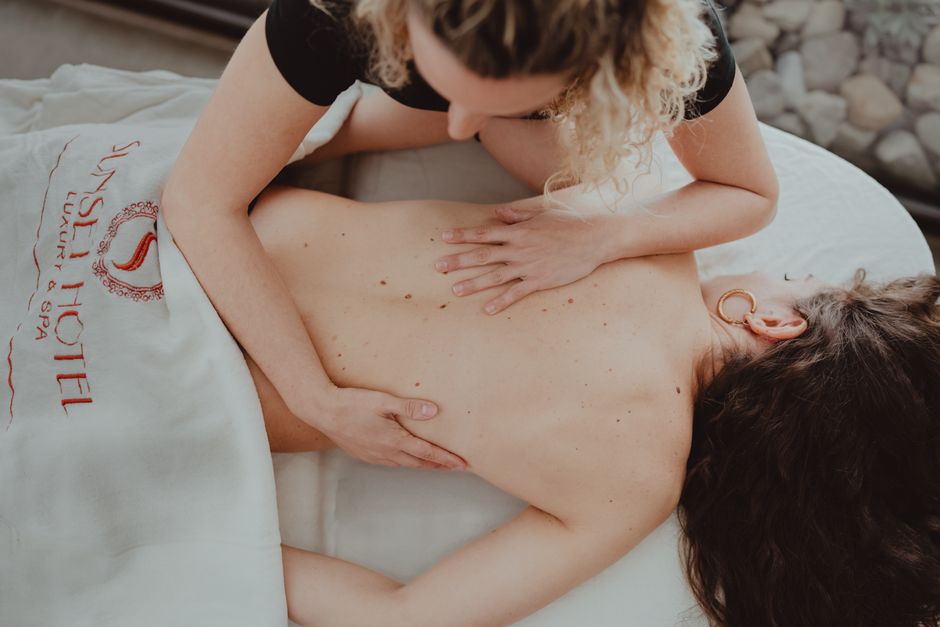
A full body skin exam is a head-to-toe check of your skin performed by a dermatologist. The doctor looks for skin cancer, precancerous growths, and other skin conditions. It is the standard method doctors use to find skin cancer early, when it is most treatable.
What Happens During A Full Body Skin Exam?
You will undress to your underwear and wear a medical gown. The dermatologist examines your skin from your scalp to the spaces between your toes. This includes your back, nails, palms, and the soles of your feet.
The doctor uses a dermatoscope, a handheld magnifying device with a light. It lets the doctor see structures in the skin that are not visible to the naked eye. The exam usually takes 10 to 15 minutes.
You will be asked to remove nail polish so the doctor can check your nail beds. Hair is parted in sections so the scalp is visible. The doctor may also check your eyelids, lips, and the inside of your mouth.
Why Do Doctors Look At Moles During A Skin Exam?
Moles are the main focus because most melanomas look like moles or develop from them. The doctor uses a system called the ABCDE rule to assess suspicious spots.
- A is for asymmetry — one half does not match the other.
- B is for border — edges are irregular or blurred.
- C is for color — multiple colors or uneven color.
- D is for diameter — larger than 6 millimeters, about the size of a pencil eraser.
- E is for evolving — changing in size, shape, or color.
This rule is a screening tool, not a diagnosis. Many normal moles are larger than 6 millimeters. Some melanomas are smaller. The ABCDE rule helps the doctor decide which spots need a closer look or a biopsy.
Doctors also look for the “ugly duckling” sign. This means a mole that looks completely different from the others on your body. It can be a warning sign even if it does not meet ABCDE criteria.
What Is A Biopsy And When Is It Needed?
A biopsy is the removal of a small piece of skin for laboratory testing. It is the only way to confirm whether a spot is cancerous. No scan or visual exam can replace this.
If the doctor sees a suspicious spot, they will numb the area with a local anesthetic. Then they remove all or part of the spot. The sample goes to a pathologist who examines it under a microscope.
Most biopsies are quick and cause minimal discomfort. You will get results within one to two weeks. Not every mole needs a biopsy. The doctor only biopsies spots that look concerning.





How Often Should You Get A Full Body Skin Exam?
There is no single schedule that fits everyone. People at average risk may not need an annual exam. People at higher risk may need one every 6 to 12 months.
Higher risk factors include a personal history of skin cancer, a family history of melanoma, many moles, atypical moles, or a history of severe sunburns. People with fair skin, light eyes, and light hair are also at higher risk.
Some dermatologists recommend annual exams for everyone over a certain age. Others screen only people with risk factors. The evidence does not support one universal schedule. Talk to your doctor about your personal risk profile.
Between exams, check your own skin monthly. Look for new spots or changes in existing ones. If you notice something new or changing, do not wait for your next scheduled exam.
What Are The Different Types Of Skin Cancer?
There are three main types of skin cancer. They differ in how they look, how they grow, and how serious they are.
Basal cell carcinoma is the most common type. It grows slowly and rarely spreads to other parts of the body. It often looks like a pearly bump, a pink growth, or a sore that does not heal. It can bleed easily.
Squamous cell carcinoma is the second most common type. It can spread if not treated early. It often looks like a scaly red patch, a firm bump, or a sore that crusts or bleeds.
Melanoma is the most dangerous type. It can spread to lymph nodes and internal organs. It often looks like a new mole or a change in an existing mole. Melanoma causes the majority of skin cancer deaths.
There are other rare skin cancers, but these three account for the vast majority of cases. Early detection matters most for melanoma because it is the most aggressive.
Does A Skin Exam Check For Other Conditions?
Yes. The exam is not only about cancer. The dermatologist also looks for signs of other skin conditions.
Eczema, psoriasis, and rosacea are commonly identified during these exams. Fungal infections, warts, and cysts are also easy to spot. The doctor may treat these conditions or recommend products to manage them.
Some skin findings can point to internal health problems. For example, certain rashes are linked to autoimmune diseases. Yellowish bumps can signal high cholesterol. Dark velvety patches on the neck or underarms can be a sign of insulin resistance.
This is not the main purpose of the exam, but it is a valuable side benefit. The skin often reflects what is happening inside the body.
What Should You Do Before A Full Body Skin Exam?
Remove nail polish from your fingers and toes. Do not wear makeup on the day of the exam. These products hide the skin and make the exam less thorough.
Bring a list of spots that concern you. Point them out to the doctor at the start of the exam. This ensures nothing gets missed.
Tell the doctor about any new or changing moles, sores that do not heal, or itchy or bleeding spots. Share your family history of skin cancer and your personal history of sunburns.
Do not use self-tanner for a few days before the exam. It can change the appearance of your skin and make it harder to evaluate. The same applies to heavy moisturizers or lotions.
What Happens After The Exam?
You will get dressed and discuss the findings with the doctor. If everything looks normal, you are done. The doctor will tell you when to come back based on your risk level.
If a biopsy was taken, you will get care instructions for the wound. Keep the area clean and watch for signs of infection. These include increasing redness, pain, swelling, or discharge.
You will receive biopsy results within one to two weeks. The office will call you or send a message through a patient portal. If the spot is cancerous, the doctor will discuss treatment options with you.
Treatment depends on the type and stage of the cancer. Options include surgical removal, topical creams, freezing, or radiation. Most skin cancers are cured when caught early.
Frequently Asked Questions
Does a full body skin exam hurt?
No, the exam itself is painless. You may feel slight discomfort only if a biopsy is needed, but the area is numbed first.
How long does a full body skin exam take?
Most exams take 10 to 15 minutes. It may take longer if you have many moles or if the doctor needs to biopsy a spot.
Do I need to take all my clothes off for a skin exam?
You undress to your underwear and wear a medical gown. The doctor examines all skin, including areas covered by underwear, so you will need to remove them during that part of the exam.
Can a dermatologist tell if a mole is cancer just by looking at it?
No. A visual exam can identify suspicious spots, but only a biopsy can confirm whether a mole is cancerous.
