
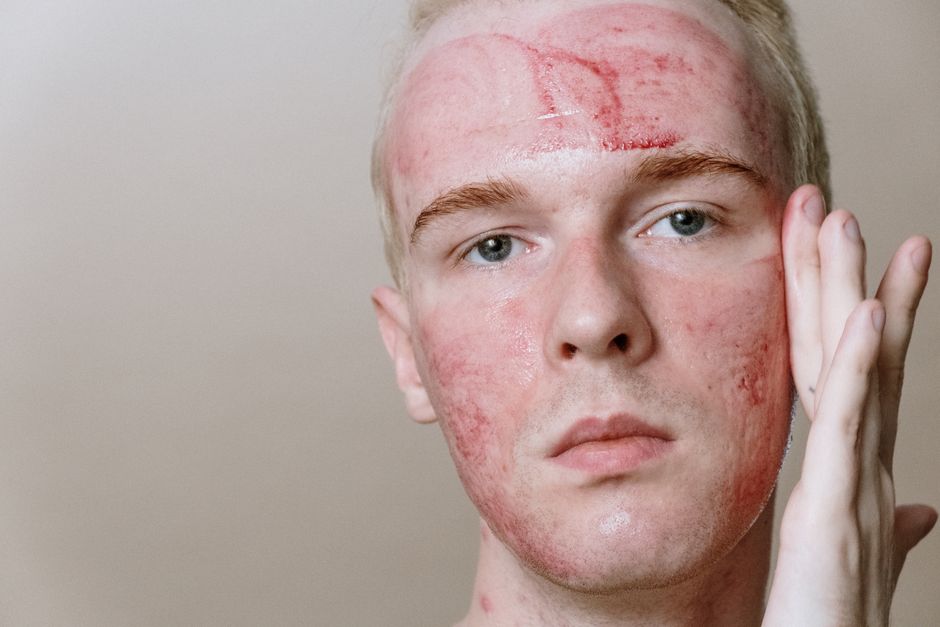
Acne is the most common skin condition in the United States, affecting up to 50 million people each year, according to the American Academy of Dermatology. Most mild breakouts respond to over-the-counter treatments. But there is a clear line where self-care stops being enough. You should see a dermatologist for acne if your breakouts are leaving scars or dark marks that persist, if you have deep painful nodules or cysts, if over-the-counter products have not worked after 6 to 8 weeks of consistent use, or if acne is affecting your mental health.
When Should You See A Dermatologist For Acne?
The short answer: sooner than most people think. Acne is a medical condition, not just a cosmetic inconvenience, and it can cause permanent scarring if it goes untreated for too long.
Here are the specific situations that warrant a dermatologist visit:
- Nodulocystic acne. Deep, painful bumps under the skin that never come to a head. These are the lesions most likely to scar.
- Scarring or dark spots. If you are already seeing indentations, pitted texture, or dark marks that linger for months, the damage is happening now.
- OTC failure. You have used benzoyl peroxide, salicylic acid, or adapalene consistently for 6 to 8 weeks with no meaningful improvement.
- Sudden severe onset. Acne that appears abruptly and aggressively, especially in adults who never had it before.
- Emotional impact. If acne is causing anxiety, depression, or social withdrawal, that alone is a valid reason to seek care.
- Signs of hormonal cause. Acne along the jawline and chin, worsening around your period, or accompanied by irregular periods or excess hair growth.
One point that often gets missed: waiting to see if acne “runs its course” is not a neutral choice. Scarring is permanent. Inflammation that is controlled early prevents damage that no treatment can fully reverse later.
What Counts as Mild, Moderate, and Severe Acne?
Dermatologists classify acne by the type and number of lesions, not by how it feels to you. This matters because treatment guidelines are built around these categories.
Mild acne means mostly blackheads and whiteheads (comedones) with a few small inflamed papules. It is usually limited to the face.
Moderate acne involves more papules and pustules, some inflammation, and may extend to the back, chest, or shoulders.
Severe acne is defined by the presence of nodules and cysts — deep, painful lesions that form under the skin. This type carries the highest risk of scarring.
An important clarification: you can have relatively few lesions and still have severe acne if those lesions are deep nodules. Counting pimples does not tell the full story. The type of lesion matters more than the number.
Why Does Waiting to See a Dermatologist Matter?
Acne scarring is largely preventable with timely treatment. Once a scar forms, no topical product will remove it. That is the core reason early intervention matters.
The mechanism is straightforward. Inflammatory acne damages the dermis — the deeper layer of skin. When that damage is deep enough, the skin heals with either too little collagen (causing indentations or “ice pick” scars) or too much collagen (causing raised keloid scars).
Post-inflammatory hyperpigmentation — the brown or dark marks left after a pimple heals — is different from true scarring. It can fade over months, though it fades faster with treatment. True scarring does not fade on its own.
Research published in the Journal of the American Academy of Dermatology has found that delays in treatment are associated with higher rates of scarring. The longer inflammation persists, the greater the risk.
What Treatments Can a Dermatologist Offer That You Cannot Get Over the Counter?
Prescription treatments work on mechanisms that OTC products cannot reach. This is not marketing — it reflects real differences in how the drugs work.
Topical retinoids like tretinoin, tazarotene, and adapalene (prescription strength) normalize how skin cells shed inside the follicle. They are among the most effective treatments for comedonal acne and are considered first-line therapy by most dermatologists.
Oral antibiotics such as doxycycline or minocycline reduce the bacteria involved in inflammation. They are typically used for moderate to severe inflammatory acne, and usually for a limited time to avoid antibiotic resistance.
Hormonal treatments — certain combined oral contraceptives and spironolactone — can be effective for women whose acne is driven by androgens. These are prescription-only and require medical supervision.
Isotretinoin is the most effective treatment for severe nodulocystic acne. It is also the most tightly regulated because of significant risks, including severe birth defects. It requires strict monitoring and pregnancy prevention.
Some clinicians also use procedures like chemical peels, laser therapy, or steroid injections into large cysts. The evidence for these varies by procedure. Steroid injections into individual cysts are widely used and generally effective for rapidly reducing a large inflamed lesion.
How Long Does It Take for Acne Treatment to Work?
Most acne treatments take 8 to 12 weeks to show meaningful improvement. This timeline is well established and applies to both prescription and OTC treatments.
This is one of the most common reasons people give up too early. A treatment that seems to be “not working” at week four may be working fine by week twelve. Retinoids in particular can cause an initial worsening of acne — sometimes called purging — before improvement begins.
If you have been on a prescription treatment for 12 weeks with no improvement, that is a conversation to have with your dermatologist. It does not necessarily mean the treatment failed. It may mean the dose needs adjusting or a different approach is needed.
When Is Acne a Sign of Something Else?
Most acne is straightforward. But certain patterns suggest an underlying condition that needs different treatment.
Acne that appears suddenly in adulthood, especially along the jawline, accompanied by irregular menstrual cycles, excess facial or body hair, or difficulty losing weight, may point to polycystic ovary syndrome (PCOS). PCOS is a hormonal disorder that affects how the ovaries function.
Acne that flares with certain medications — corticosteroids, lithium, some anticonvulsants — is a known drug side effect. If acne started after beginning a new medication, that is worth mentioning to your doctor.
Acne that appears in unusual locations or looks different from typical acne could also be rosacea, folliculitis, or a fungal infection. These conditions can look similar to acne but require completely different treatments. Using acne products on rosacea, for example, can make it worse.
This is one reason a proper diagnosis matters. Dermatologists can usually distinguish these conditions by visual examination, though sometimes a skin scraping or culture is needed.
Does Diet or Skincare Routine Affect Acne Enough to Avoid a Dermatologist?
Diet and skincare can influence acne, but they are not substitutes for medical treatment when treatment is needed.
The evidence on diet is mixed. Some studies suggest that high-glycemic diets — those rich in refined sugars and processed carbohydrates — may worsen acne. Research on dairy is less consistent. Some studies indicate a possible link between skim milk and acne, but the evidence is not strong enough to make firm recommendations.
What the evidence does not support: chocolate and greasy foods causing acne. That is a myth that has been repeated for decades without solid evidence behind it.
For skincare, the basics matter. Gentle cleansing twice daily, using non-comedogenic products, and not picking at lesions can help. But no cleanser will treat nodulocystic acne. If your acne is moderate to severe, a good routine supports treatment — it does not replace it.
Frequently Asked Questions
How do I know if my acne is severe enough to see a dermatologist?
If you have deep, painful nodules or cysts, any scarring, or acne that has not improved after 6 to 8 weeks of consistent over-the-counter treatment, you should see a dermatologist. Acne that causes significant emotional distress also warrants a visit.
Can a dermatologist help with mild acne?
Yes. A dermatologist can confirm the diagnosis, rule out conditions that look like acne, and prescribe treatments that work faster or more effectively than OTC options. Mild acne that is not responding to self-care is a valid reason to seek care.
How long should I try over-the-counter acne products before seeing a doctor?
Give OTC treatments 6 to 8 weeks of consistent use before deciding they are not working. If there is no improvement at all after that period, or if your acne is worsening, it is time to see a dermatologist.
Will acne go away on its own without treatment?
Mild acne often improves over time, but there is no reliable way to predict who will clear up and who will develop scarring. Moderate to severe acne rarely resolves without treatment and carries a higher risk of permanent scarring.
