
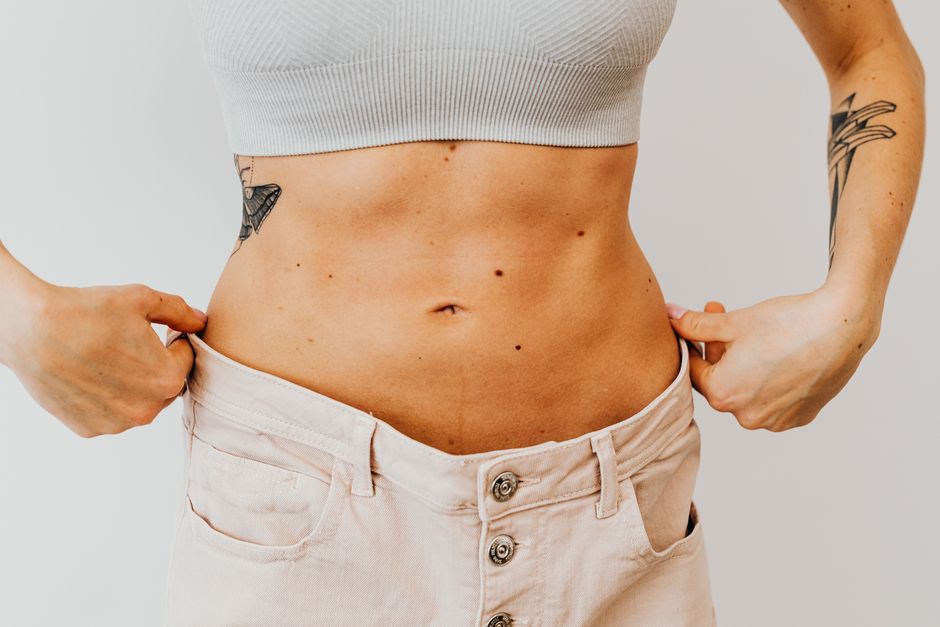
Loose skin happens when skin loses elasticity and cannot shrink back after weight loss, pregnancy, or aging. You cannot fully remove loose skin without surgery, but you can improve its appearance and firmness with strength training, hydration, and time. The most important factor is how long you had the excess weight and how much skin damage occurred, not how quickly you lost the weight.
Why Does Loose Skin Happen?
Your skin is the largest organ in your body. It stretches to accommodate weight gain, pregnancy, or muscle growth. When the volume underneath decreases, the skin should snap back. But it does not always do that.
Skin elasticity depends on two proteins: collagen and elastin. Collagen gives skin structure. Elastin allows it to stretch and return to shape. When skin stretches beyond its elastic limit for a long time, these fibers break down. The skin loses its ability to recoil.
Age matters too. Collagen production naturally declines as you get older. A 25-year-old who loses 50 pounds will likely see better skin retraction than a 55-year-old who loses the same amount. Genetics also play a role. Some people simply have more elastic skin than others.
How To Remove Loose Skin Without Surgery
No cream, device, or supplement can truly remove loose skin. The evidence for topical treatments is weak. What you can do is improve skin quality and muscle tone underneath, which makes loose skin less noticeable.
Strength training is the most effective non-surgical approach. Building muscle fills out the space under the skin. If you have loose skin on your arms, building bicep and tricep muscle reduces the appearance of sagging. The same applies to your thighs, abdomen, and glutes.
Muscle does not “stretch” the skin back into place. But it does provide volume that makes the skin appear firmer and smoother. This is a cosmetic improvement, not a structural one.
Hydration affects skin appearance. Dehydrated skin looks thinner and more wrinkled. Drinking enough water will not remove loose skin, but well-hydrated skin looks healthier and slightly plumper.
Moisturizers containing ingredients like hyaluronic acid or glycerin draw water into the outer layer of skin. This temporarily plumps the skin. The effect lasts only as long as you keep using the product. No moisturizer permanently changes skin elasticity.
Can Creams and Lotions Tighten Skin?
The market is full of creams claiming to tighten loose skin. Most contain collagen, elastin, or plant extracts. The reality is that these molecules are too large to penetrate the outer layer of skin deeply enough to rebuild structure.
Some research suggests that retinoid creams, derived from vitamin A, can stimulate collagen production. These are prescription-strength products like tretinoin. Over-the-counter retinol is much weaker. Even with prescription retinoids, the effect on loose skin after major weight loss is modest at best.
Collagen supplements are popular. Your body breaks down ingested collagen into amino acids and distributes them where needed. It does not send them directly to your skin. Some studies show small improvements in skin hydration and elasticity with collagen supplements, but results are inconsistent and no large trials confirm meaningful tightening of loose skin.





Does Exercise Tighten Loose Skin?
Exercise does not tighten skin directly. Skin is not muscle and does not respond to exercise the way muscle tissue does. But exercise changes what is underneath the skin.
When you lose weight through diet alone, you lose both fat and muscle. This can leave you with more loose skin than if you had preserved muscle mass. Strength training during weight loss helps maintain muscle. More muscle under the skin means less visible sagging.
Cardiovascular exercise improves blood flow. Better circulation delivers oxygen and nutrients to skin cells. This supports overall skin health but does not specifically tighten loose skin.
The key is to start strength training early in your weight loss journey, not after you have already lost the weight. Preserving muscle from the beginning gives you a better cosmetic result at the end.
How Long Does It Take for Skin to Tighten?
Skin retraction is a slow process. After significant weight loss, skin can continue to improve for up to 12 to 24 months. The first few months show the most noticeable change. After that, improvement slows considerably.
What you see at the two-year mark is likely your final result without surgery. If loose skin remains at that point, non-surgical methods will not change it meaningfully.
Several factors determine your final outcome:
- Your age at the time of weight loss
- How long you carried the excess weight
- The total amount of weight lost
- Your genetics and natural skin quality
- Whether you maintained muscle mass during weight loss
Weight loss of 50 pounds or less generally results in mild loose skin that improves with time. Weight loss of 100 pounds or more often leaves permanent excess skin, particularly around the abdomen, arms, and thighs.
What About Medical and Cosmetic Procedures?
Non-surgical devices claim to tighten skin using radiofrequency, ultrasound, or laser energy. These treatments heat the deeper layers of skin to stimulate collagen production. Some studies show modest improvements in skin laxity.
The results are subtle. These procedures work best for mild skin looseness, not for significant excess skin after major weight loss. You may need multiple sessions. Results are gradual and temporary for many people, lasting 6 to 12 months before maintenance treatments are needed.
Surgery remains the only method that physically removes excess skin. Procedures like tummy tuck, arm lift, thigh lift, and lower body lift cut away the extra skin and pull the remaining skin taut. These are major surgeries with significant recovery times and visible scars.
Surgery is not a casual decision. It carries risks including infection, bleeding, poor wound healing, and complications from anesthesia. Most surgeons recommend waiting until your weight has been stable for at least 6 to 12 months before considering skin removal surgery.
Does Weight Loss Speed Affect Loose Skin?
A common myth says that losing weight too quickly causes more loose skin than gradual weight loss. The evidence does not support this.
Research suggests that the total amount of weight lost matters more than the speed of loss. Slow weight loss does not give your skin more time to shrink. Skin retraction is not a process you can speed up or slow down by changing your weight loss rate.
However, rapid weight loss through very low-calorie diets can cause muscle loss along with fat loss. Losing muscle makes loose skin more visible. This is why strength training matters regardless of how fast you lose weight.
Lifestyle Factors That Affect Skin Health
Some lifestyle choices influence how well your skin can recover. Smoking damages collagen and accelerates skin aging. Quitting smoking is one of the most effective things you can do for your skin.
Sun damage breaks down collagen over time. Protecting your skin from excessive sun exposure helps preserve elasticity. This matters most for areas like your arms and chest that get regular sun exposure.
Nutrition plays a supporting role. Protein provides the building blocks your body needs to produce collagen. Vitamin C is required for collagen synthesis. A balanced diet with adequate protein and vegetables supports skin health, though it cannot reverse existing damage.
Weight fluctuations are hard on skin. Repeated cycles of gaining and losing weight stretch the skin multiple times. Each cycle causes additional collagen breakdown. Maintaining a stable weight after weight loss gives your skin the best chance to recover.
When Surgery Is the Realistic Option
For some people, loose skin is not just a cosmetic concern. Excess skin can cause skin irritation, rashes, and infections in the folds. It can interfere with physical activity and make it difficult to find comfortable clothing. In these cases, surgery may be medically justified.
Body contouring surgery after massive weight loss is common. Many people who lose 100 pounds or more choose to have excess skin removed. The results can be dramatic and life-changing.
But surgery is not for everyone. You should be at a stable weight. You should be in good overall health. You should have realistic expectations about scarring and recovery. And you should understand that surgery removes skin but does not prevent future weight gain from creating new loose skin.
Frequently Asked Questions
Can loose skin tighten naturally after weight loss?
Yes, some tightening happens naturally over 12 to 24 months after weight loss. The amount depends on your age, genetics, and how much weight you lost.
Does building muscle help with loose skin?
Building muscle fills out the space under loose skin, making it appear firmer and less noticeable. It does not tighten the skin itself but improves the overall appearance.
Are loose skin creams effective?
Most creams only temporarily hydrate and plump the outer skin layer. No topical product has been proven to significantly tighten loose skin after major weight loss.
How much weight loss causes loose skin?
Loose skin can appear after any significant weight loss, but it becomes more likely and more pronounced with losses greater than 50 pounds. Losses of 100 pounds or more often leave permanent excess skin.
