
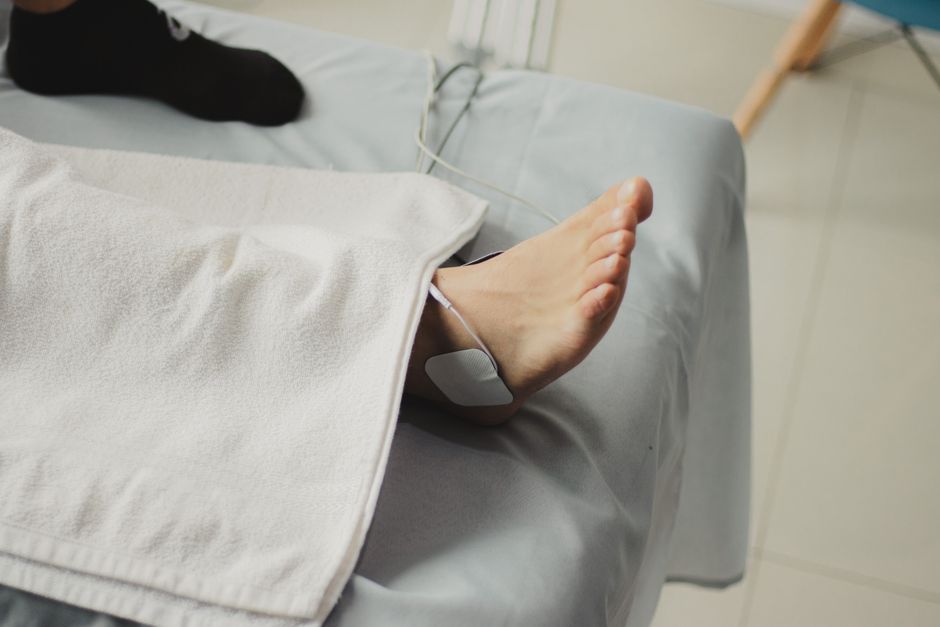
A calcaneal spur is a bony growth on the heel bone. The medical name for the heel bone is the calcaneus, which is where the spur forms. Here is the part that surprises most people: the spur itself is usually not the source of the pain. Many people have heel spurs and feel nothing at all. When the heel does hurt, the pain typically comes from the soft tissue around the bone, not from the bony point itself.
What Is A Calcaneal Spur And What Causes The Pain?
A calcaneal spur is a small, pointed deposit of calcium that builds up on the calcaneus, the large bone at the back of the foot that forms the heel. It usually forms on the underside of the heel, pointing forward toward the arch, or less often at the back where the Achilles tendon attaches.
The spur is not a sharp splinter poking into your foot. It is a smooth outgrowth of bone, and imaging studies have found that a large share of people who have heel spurs report no heel pain at all. That single fact reshapes how doctors think about this problem. The spur is often a sign of something else going on, not the cause of the discomfort.
So what actually hurts? In most cases of heel pain linked to spurs, the pain comes from plantar fasciitis — inflammation or tiny tears in the plantar fascia, the thick band of tissue that runs along the bottom of the foot from the heel to the toes. The fascia attaches to the heel bone right where spurs tend to form. When that attachment point is repeatedly strained, both the tissue and, over time, the bone can react.
How Does A Heel Spur Actually Form?
Bone responds to stress by remodeling itself. This is a normal, lifelong process. When a tendon or ligament pulls on a bone repeatedly, the bone can lay down extra calcium at the attachment site to reinforce it. That reinforcement, over months or years, can harden into a spur.
The plantar fascia is under constant tension. Every time you stand, walk, or run, it stretches and absorbs force. If that tension stays high and repetitive, the heel bone may respond by building a small bony projection at the point of pull. The same logic applies at the back of the heel, where the Achilles tendon attaches.
This is why spurs are often described as a response to long-term mechanical stress rather than a sudden event. They develop gradually. A person rarely notices the moment a spur forms, because the bone change itself is painless.
What Causes The Pain If Not The Spur?
The pain in most heel-spur cases comes from inflamed or damaged soft tissue near the spur, not the spur itself. The plantar fascia is the usual culprit. When it is overloaded, small tears form at its attachment to the heel, and the tissue becomes irritated and swollen.
This produces the classic symptom: sharp pain under the heel with the first steps in the morning, or after sitting for a while. The fascia tightens when you rest, then stretches abruptly when you stand, which is why those first steps hurt most. The pain often eases after a few minutes of walking as the tissue warms up, then may return after prolonged activity.
Other structures can also be involved. The heel has a fat pad that cushions the bone, and nerves can become compressed in the area. So “heel pain” is not one condition. It is a set of conditions that can look similar but have different causes. This matters, because the right treatment depends on which tissue is actually irritated.




Who Is More Likely To Develop Heel Spurs?
Heel spurs are more common in people whose feet absorb repeated or prolonged stress. Established risk factors include:
- Being middle-aged or older — spurs become more common with age
- Carrying extra body weight, which increases load on the heel
- Standing or walking on hard surfaces for long periods
- Wearing shoes with poor arch support or worn-out cushioning
- Having flat feet or high arches, which can change how force travels through the foot
- Activities that involve a lot of running or jumping
- Diabetes, which is associated with heel spurs and related foot changes
These factors overlap heavily with the risk factors for plantar fasciitis, which makes sense. The same mechanical forces that strain the fascia also encourage bone to form at the attachment point.
One clarification worth making: having a risk factor does not mean you will develop a spur, and having a spur does not mean you will have pain. The two are related but not the same thing.
How Are Heel Spurs Diagnosed?
Heel spurs are usually found on an X-ray, sometimes by accident during imaging for another reason. On an X-ray, a spur shows up as a small bony projection from the heel bone.
Here is the important clinical point: finding a spur on an X-ray does not prove it is causing your pain. Because so many people have painless spurs, doctors rely more on your symptoms and a physical exam than on the image alone. They will ask when the pain is worst, what makes it better or worse, and where exactly it hurts. They may press on specific points of the heel and check your foot’s structure and movement.
In some cases, other imaging such as ultrasound or MRI may be used to look at the soft tissues, especially if the diagnosis is unclear or if treatment is not helping. But for most people, the history and exam tell the story.
What Helps With Heel Pain?
Most heel pain from plantar fasciitis improves with conservative care over time, though recovery can be slow and varies a lot from person to person. Because the spur is rarely the pain source, treatment focuses on the soft tissue and on reducing the load on the heel.
Approaches that clinicians commonly recommend include:
- Stretching the plantar fascia and calf muscles, which is a mainstay of treatment
- Supportive footwear with good arch support and cushioning
- Heel inserts or orthotics, which some clinicians recommend to reduce strain
- Resting from activities that aggravate the pain
- Ice to ease discomfort after activity
- Weight management, when relevant, to lower load on the heel
Other options exist, including physical therapy, night splints, and in some cases injections or procedures. The evidence for different treatments varies. Some approaches are well supported, while others are used in practice with less strong trial backing. If pain is persistent or severe, a doctor or a foot specialist can help sort through what is likely to help in your case.
What does not make sense is treating the spur as the enemy. Surgically removing a spur is uncommon, and it is not a first-line answer, because the bone is usually not what hurts.
Can Heel Spurs Be Prevented?
You cannot fully control whether bone forms at the heel, but you can reduce the mechanical stress that drives both spurs and the pain often blamed on them. Sensible steps include wearing shoes that support your feet, replacing worn-out footwear, maintaining a healthy weight, and avoiding sudden large increases in activity.
If you have flat feet or high arches, properly fitted support may help change how force moves through your heel. And if you spend long hours on your feet, cushioning and periodic rest can lower the cumulative load.
None of this guarantees you will avoid a spur. But it targets the underlying stress that the bone and soft tissue are responding to. That is a more useful goal than trying to prevent a bony change that often causes no problems at all.
Frequently Asked Questions
Is a heel spur the same thing as plantar fasciitis?
No. A heel spur is a bony growth on the heel bone, while plantar fasciitis is inflammation or strain of the tissue that runs along the bottom of the foot. They often occur together, but they are two different conditions.
Does a heel spur always cause pain?
No. Many people have heel spurs and feel no pain at all, which is why doctors do not assume a spur seen on an X-ray is the cause of heel discomfort.
Can a heel spur go away on its own?
The bony spur itself usually does not disappear, but the pain linked to the surrounding tissue often improves with conservative care over time. Recovery can be slow and varies from person to person.
When should I see a doctor for heel pain?
See a doctor if the pain is severe, keeps getting worse, or does not improve with basic self-care such as rest, stretching, and supportive shoes. A proper exam can identify which tissue is actually causing the pain.
