
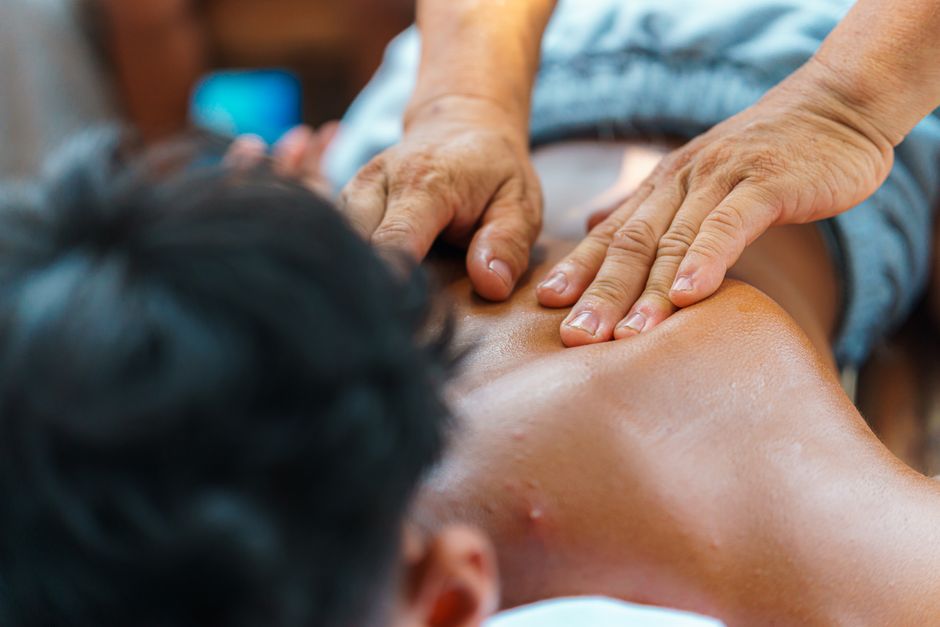
If you have ever stood in a pharmacy aisle staring at a shelf of CBD creams, you are not alone. Back pain sends millions of Americans looking for relief every year, and topical CBD products have become one of the most popular over-the-counter options. The short answer: some early studies suggest CBD applied to the skin may reduce inflammation and pain signaling, but the evidence for back pain specifically is thin, and no large human trial has confirmed that these creams work better than a placebo.
That does not mean they are useless. It means the science is still catching up to the shelves. Here is what researchers actually know, what remains unproven, and how to think about CBD cream if you are considering it for back pain.
Does CBD Cream Help With Back Pain What To Know
CBD, or cannabidiol, is one of many compounds found in the cannabis plant. Unlike THC, it does not produce a high. When you rub a CBD cream on your back, the idea is that the compound interacts with receptors in your skin and underlying tissue rather than traveling through your bloodstream to your brain.
That distinction matters. Most CBD creams sold online and in stores contain very little CBD that actually crosses the skin barrier. The stratum corneum, the outermost layer of your skin, is designed to keep things out. Some CBD does penetrate, but how much, how deep, and whether it reaches inflamed muscle or joint tissue is not well established.
What researchers have found is that CBD interacts with several receptors in the body, including CB1 and CB2 receptors that are part of the endocannabinoid system. This system plays a role in regulating pain perception and inflammation. In laboratory studies, CBD has shown anti-inflammatory effects on isolated cells and animal tissue. Whether those effects translate to meaningful pain relief when you rub a cream on your lower back is a different question.
A small number of human studies have looked at topical CBD for pain. Most have been small, short, and focused on conditions like arthritis or nerve pain rather than back pain specifically. Some participants reported reduced pain. Others did not. The studies were not designed to prove cause and effect, and several lacked a placebo control, which makes it hard to know whether the cream helped or whether people felt better for other reasons.
No large, randomized, placebo-controlled trial has confirmed that topical CBD reduces back pain. That is the honest bottom line. If you try it and feel better, that experience is real. But it is not yet backed by the kind of evidence doctors rely on when they recommend a treatment.
What Does the Research Actually Show About Topical CBD?
Research on topical CBD is in its early stages. Most published studies are small, and many are funded by companies that sell CBD products, which is a conflict of interest worth knowing about.
Some studies suggest that topical CBD may help with localized pain, such as joint pain from arthritis. A few small trials have reported modest reductions in pain scores. But the studies varied widely in how much CBD they used, what type of product they applied, and how long they followed participants. That makes it hard to draw firm conclusions.
For back pain specifically, the evidence is even thinner. Back pain is not one condition. It can come from muscles, discs, joints, nerves, or a combination. A cream applied to the skin is unlikely to reach a herniated disc or a pinched nerve. It might affect superficial muscle tissue or local inflammation, but that is a different target.
One important point: the placebo effect is strong in pain research. If you expect a cream to help, you may feel less pain even if the cream contains nothing active. This is not a sign of weakness. It is how the brain processes pain. It also means that personal experience, while valid, is not proof that the product itself is doing the work.
How Do You Use CBD Cream for Back Pain?
There are no established clinical guidelines for using CBD cream for back pain. No standard dose exists. No official recommendation tells you how much to apply or how often. That is not a dodge. It is simply where the evidence stands.
If you decide to try a CBD cream, here are some practical points to keep in mind. These are not medical recommendations. They are common-sense considerations based on how topical products generally work.
- Start with a small amount on a small area of skin to check for irritation.
- Follow the product label for application instructions, since concentrations vary widely.
- Do not apply to broken skin, rashes, or wounds.
- Wash your hands after applying unless your hands are the treated area.
- Keep the cream away from your eyes and mucous membranes.
Some people apply CBD cream two or three times a day. Others use it only when pain flares. Without research to guide timing, you are essentially experimenting on yourself. That is not ideal, but it is the current reality.
If you are taking other medications, especially blood thinners, talk to your doctor before using CBD products. Even topical CBD can enter the bloodstream in small amounts, and CBD can interact with certain drugs. The research on these interactions is still developing.





What Are the Risks and Limitations of CBD Cream?
Topical CBD is generally well tolerated. The most common side effects are skin irritation, redness, or dryness at the application site. These are usually mild and go away when you stop using the product.
But there are real limitations beyond side effects. The FDA does not regulate CBD products the way it regulates medications. That means the label may not match what is in the bottle. Some products have been found to contain less CBD than advertised, more THC than allowed, or contaminants like pesticides or heavy metals.
There is also the question of cost. CBD creams are often expensive, and insurance does not cover them. If you are spending money on a product with unproven benefits, that is a trade-off worth considering.
And then there is the bigger picture. Back pain is often treatable with approaches that have much stronger evidence behind them. Physical therapy, exercise, weight management, and over-the-counter pain relievers like ibuprofen or acetaminophen have been studied extensively. For some people, these approaches work well. For others, they do not. But they are backed by decades of research, not a handful of small trials.
If your back pain is severe, persistent, or accompanied by numbness, weakness, or loss of bladder or bowel control, see a doctor promptly. Those can be signs of a serious condition that a cream will not fix.
How Does CBD Cream Compare to Other Back Pain Treatments?
When you put CBD cream side by side with other options, the evidence gap becomes clear. The table below compares several common approaches to back pain. The goal is not to tell you what to choose. It is to show where the research stands.
| Treatment | Evidence for Back Pain | How It Works |
|---|---|---|
| Topical CBD | Limited; no large trials | May interact with local pain and inflammation receptors |
| Oral NSAIDs (ibuprofen, naproxen) | Strong; widely studied | Reduce inflammation throughout the body |
| Acetaminophen | Moderate; mixed results for back pain | Reduces pain perception |
| Physical therapy | Strong; recommended in guidelines | Strengthens muscles, improves movement |
| Topical menthol or capsaicin | Moderate; some evidence for pain relief | Creates warming or cooling sensation that distracts from pain |
| Heat or cold therapy | Moderate; short-term relief | Relaxes muscles or numbs tissue |
Notice that CBD cream sits at the bottom in terms of evidence. That does not mean it cannot help. It means we do not yet know if it helps more than a placebo. The other treatments listed have been studied in large trials and are recommended in clinical guidelines for certain types of back pain.
Some people use CBD cream alongside other treatments. There is no strong evidence that combining them is harmful, but there is also no evidence that it adds benefit. If you are already doing physical therapy or taking medication, adding a CBD cream may not change your outcome.
Should You Try CBD Cream for Back Pain?
That is a personal decision. No one can tell you for certain whether it will work for you. The evidence does not support a confident yes or no.
If you are curious and can afford it, trying a CBD cream is unlikely to cause harm for most people. Just keep your expectations realistic. It may help a little. It may do nothing. It may help because you expect it to help.
If you are looking for a treatment with strong evidence behind it, talk to your doctor about physical therapy, exercise, or other approaches that have been studied more thoroughly. Those options are not glamorous, but they have the research to back them up.
And if you do try CBD cream, pay attention to what happens. Keep a simple log of your pain before and after. That will not prove anything scientifically, but it will help you decide whether the product is worth your money.
Frequently Asked Questions
Does CBD cream really work for back pain?
Some small studies suggest topical CBD may reduce localized pain, but no large trial has confirmed it works for back pain specifically. The evidence is limited and mixed.
How long does CBD cream take to work for back pain?
There is no established timeline because no clinical guidelines exist for this use. Some people report feeling effects within 30 minutes, while others notice nothing at all.
Is CBD cream safe to use every day?
Topical CBD is generally well tolerated, with skin irritation being the most common side effect. However, long-term safety data for daily use are lacking, and product quality varies widely.
Can CBD cream interact with other medications?
CBD can interact with certain drugs, including blood thinners, even when applied to the skin. Talk to your doctor before using CBD cream if you take prescription medications.
