
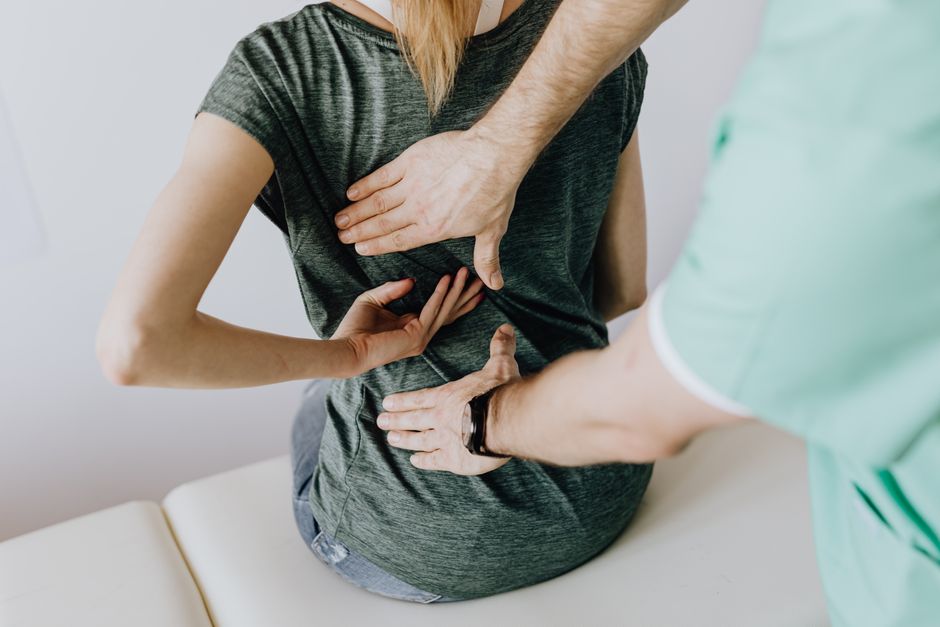
Most back pain isn’t caused by something serious. It’s caused by muscles, joints, and discs that have been loaded the wrong way for too long — and that means the fix is usually mechanical, not medical. For the majority of people with ordinary low back pain, the most effective approach combines staying active, targeted strengthening and stretching, and paying attention to how you sit, stand, and lift. Rest beyond a day or two tends to make things worse, not better.
This isn’t a claim that all back pain is simple. Some back pain has specific causes that need a doctor. But for the common kind — the kind that shows up after too much sitting, an awkward lift, or a slow buildup of stiffness — the evidence points in a clear direction.
What Actually Causes Most Back Pain?
Structures in the back don’t fail randomly. They get overloaded.
The spine is a stack of bones (vertebrae) separated by discs that act as shock absorbers. Muscles and ligaments hold the whole thing together and control movement. When one part of that system is weak, tight, or forced to work in a bad position repeatedly, strain builds up.
That’s why the most common triggers are unremarkable:
- Sitting for long stretches without moving
- Lifting with your back instead of your legs
- A sudden increase in activity your body isn’t ready for
- Weak core and hip muscles that leave the spine unsupported
- Stress and poor sleep, which lower your pain tolerance
In many cases, imaging doesn’t explain the pain. A large share of adults with no back pain at all show disc bulges and joint changes on MRI. This is one of the most useful — and most overlooked — facts in back care. A scan finding doesn’t always mean it’s the source of your pain, which is why treatment usually focuses on function rather than pictures.
Why Rest Usually Makes Back Pain Worse
Bed rest beyond a short period works against you. This runs counter to what many people were told decades ago, but the evidence has shifted.
When you lie still, muscles weaken and stiffen. Discs and joints get less of the movement they need to stay healthy. Confidence drops, and fear of moving grows — which itself predicts a slower recovery.
Current clinical guidance generally favors staying active and returning to normal movement as comfort allows. That doesn’t mean pushing through sharp pain. It means gentle movement, walking, and light daily activity rather than lying flat waiting for it to pass.
If pain is severe or you can’t move normally, that’s a reason to see a clinician — not a reason to self-prescribe a week in bed.
How To Stop Back Pain With Exercises That Target the Right Muscles
The exercises that help most are the ones that build support around the spine and restore movement. Not the ones that look impressive.
Two categories matter. First, strengthening the muscles that stabilize the trunk — the deep abdominal muscles, the muscles along the spine, and the glutes. Second, stretching the muscles that get tight and pull the pelvis out of balance, mainly the hip flexors and hamstrings.
Strengthening exercises
- Bird-dog: On hands and knees, extend one arm and the opposite leg. Keep your back flat. This trains stability without loading the spine heavily.
- Glute bridge: Lie on your back, knees bent, and lift your hips. This works the glutes and lower back support muscles.
- Dead bug: On your back, extend opposite arm and leg while keeping your lower back pressed down. Good for deep core control.
- Partial curl or plank variations: Build abdominal strength without the strain of full sit-ups.
Stretching exercises
- Knee-to-chest: Lie on your back and gently pull one knee toward your chest. Hold briefly, switch sides.
- Cat-cow: On hands and knees, alternate arching and rounding your back. This keeps the spine moving through its range.
- Hip flexor stretch: A half-kneeling position, gently pressing the hips forward.
- Hamstring stretch: Loosens the back of the thighs, which can pull on the pelvis when tight.
Do these gently and stop if pain sharpens. The goal is consistent, moderate effort — not a single hard session. Many people find that a few minutes most days works better than a long session once a week.
If you have a diagnosed condition, recent injury, or pain that shoots down your leg, get guidance from a clinician or physical therapist before starting. Exercise is powerful, but the right exercise depends on what’s actually going on.





Does Posture Really Matter for Back Pain?
Posture matters, but not in the rigid way it’s often described. There is no single “perfect” posture that everyone must hold at all times.
What the evidence does support is that staying in any one position for too long is hard on the back. The problem isn’t slouching by itself. It’s holding still.
So the practical advice is less about forcing a military-straight spine and more about changing position regularly:
- Stand up and move every 30 minutes or so if you sit for work
- Adjust your chair so your feet rest flat and your knees are roughly level with your hips
- Keep your screen near eye level so you’re not craning your neck
- Support your lower back with a small cushion or the chair’s curve
- Avoid cradling a phone between your ear and shoulder
Good posture is really about variety and support, not stiffness. A person who shifts positions often will usually fare better than one who holds a “correct” pose until they ache.
How To Lift and Move Without Triggering Pain
Most acute flare-ups follow a specific movement. Learning a few habits lowers your risk.
- Bend at the knees and hips, not the waist, when picking something up
- Keep the load close to your body
- Avoid twisting while lifting — turn your whole body instead
- Push heavy objects rather than pulling them
- Ask for help with anything awkward or heavy
These habits reduce the load on the lower back. They won’t prevent every episode, but they cut down on the mechanical triggers that cause many of them.
When Back Pain Needs a Doctor
Most back pain improves on its own within a few weeks. Some signs mean you should seek care promptly rather than manage it at home.
Get medical attention if you have:
- Pain that follows a fall or accident
- Numbness or weakness in your legs
- Loss of bladder or bowel control
- Pain that wakes you at night or doesn’t improve at all over weeks
- Unexplained weight loss along with the pain
- A history of cancer
Loss of bladder or bowel control combined with leg weakness is a medical emergency and needs immediate care. These situations are uncommon, but they matter far more than any exercise routine.
For everyone else, the message is steady: keep moving, build support around the spine, and don’t treat rest as a cure.
What About Heat, Ice, and Medication?
Heat and ice are widely used and generally considered low-risk for comfort. Heat tends to relax tight muscles; ice may help with a fresh injury. The evidence for either as a true treatment is limited, but many people find them soothing.
Over-the-counter pain relievers are commonly used for short-term relief. They can ease pain but don’t address the underlying mechanical issue, and they carry their own risks with long-term use. Some clinicians recommend them for short periods; they are not a substitute for movement and strengthening.
Nothing here is a prescription. If you’re unsure what’s right for you, talk to a pharmacist or clinician.
The Bottom Line on Stopping Back Pain
Ordinary back pain usually responds to movement, not rest. Strengthening the muscles that support the spine, stretching what’s tight, changing position often, and lifting with care form the core of most people’s recovery. Posture helps when it means variety and support, not rigid stiffness.
Progress is often gradual. Consistency beats intensity. And when warning signs appear, seeing a clinician is the right move — not a failure of self-care.
Frequently Asked Questions
What is the fastest way to stop back pain?
For most ordinary back pain, staying gently active and avoiding prolonged rest helps more than lying down. If pain is severe or comes with numbness or weakness, see a doctor instead of self-treating.
What exercises are best for lower back pain?
Exercises that build core and glute strength — like bird-dog, glute bridges, and dead bugs — along with gentle stretching of the hips and hamstrings are commonly recommended. The right choice depends on your specific situation, so get guidance if you have a diagnosed condition.
Does good posture really stop back pain?
Posture helps mainly by reducing how long you stay in one position, not by forcing a single “correct” pose. Changing position regularly and supporting your lower back tends to matter more than holding a rigid stance.
Should I rest or keep moving with back pain?
Current guidance generally favors staying active and returning to normal movement as comfort allows, rather than prolonged bed rest. Rest beyond a day or two tends to weaken muscles and slow recovery.
