
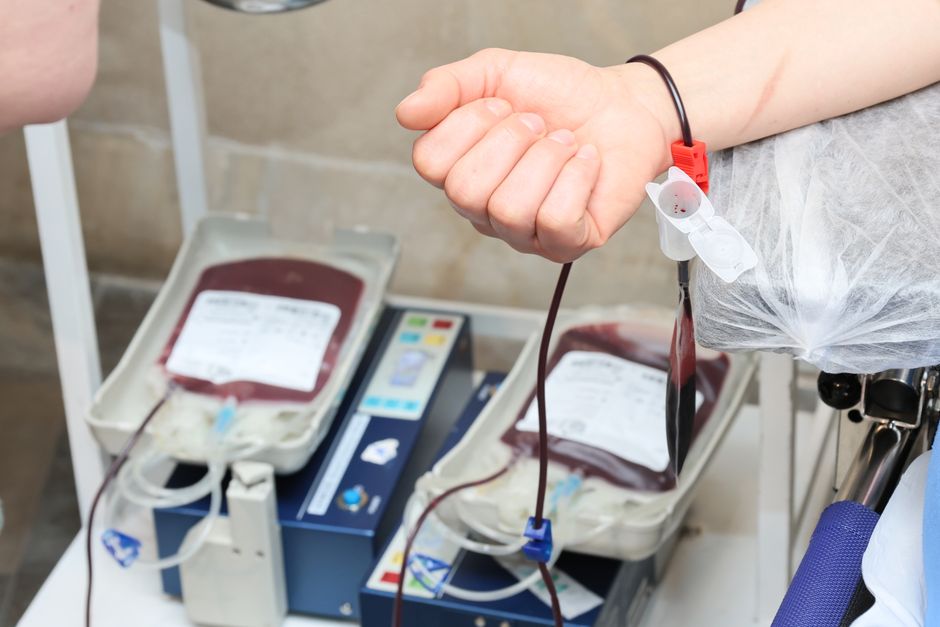
A blood transfusion is a medical procedure in which donated blood or blood components are given to a person through a vein. It is used to replace blood lost through injury or surgery, to treat certain types of anemia, and to support people whose bodies do not make enough of one or more blood components on their own. The procedure is common, well established, and in some situations life-saving.
Blood is not a single substance. It is a mixture of red cells, white cells, platelets, and plasma, and each part does a different job. Doctors can transfuse whole blood, but in modern practice they almost always transfuse only the specific component a patient needs.
What Is A Blood Transfusion?
A transfusion is the transfer of blood or a blood component from a donor into a recipient’s bloodstream, usually through an intravenous (IV) line.
The four main components that can be transfused are:
- Red blood cells carry oxygen from your lungs to your tissues. They are given to treat anemia or significant blood loss.
- Platelets help blood clot. They are given when platelet counts are dangerously low or when platelets are not working properly.
- Plasma is the liquid part of blood and contains clotting factors. It is used in certain bleeding and clotting disorders.
- Cryoprecipitate is a concentrated product made from plasma, containing specific clotting proteins.
Most transfusions today are “component” transfusions. Giving only what the patient needs reduces waste and lowers the chance of reactions.
Why Would Someone Need A Blood Transfusion?
People need transfusions for many reasons, but the underlying problem usually falls into one of three categories: losing blood, not making enough blood, or having blood that does not work correctly.
Common situations include:
- Major surgery or trauma with heavy blood loss
- Severe anemia from cancer treatment, kidney disease, or other causes
- Bleeding disorders or low platelet counts
- Childbirth complications with significant bleeding
- Certain inherited blood conditions, such as sickle cell disease or thalassemia
Not everyone with a low blood count needs a transfusion. Doctors weigh symptoms, lab values, the underlying cause, and the patient’s overall health. A number on a lab report by itself rarely decides the question.
How Is A Blood Transfusion Done?
A transfusion happens in a hospital or clinic, but it is not usually an emergency event. For many patients it is a planned procedure done in a comfortable setting while they rest.
The steps are straightforward. A nurse or doctor inserts an IV line, usually in the arm. The blood product is connected to the line and given slowly at first, while staff watch closely for any reaction. If everything looks fine, the rate may be increased. A typical red cell transfusion takes about two to four hours, though this varies with the patient and the product.
Vital signs — blood pressure, heart rate, temperature — are checked before, during, and after the transfusion. Most people feel nothing unusual during the process. Some feel a little cold, since the blood product is stored cool.
Afterward, the IV is removed and the patient is monitored for a short time. Many people go home the same day.



Is A Blood Transfusion Safe?
Transfusion is one of the most heavily regulated procedures in medicine, and serious complications are uncommon. But “safe” does not mean “risk-free,” and it is honest to say that.
The most common reactions are mild and treatable:
- Febrile reactions — fever or chills, usually from the recipient’s immune system reacting to donor white cells
- Allergic reactions — hives or itching, usually mild
- Fluid overload — too much volume for the heart or kidneys to handle, more likely in people with heart or kidney disease
More serious reactions are rare. They include acute hemolytic reactions (when the immune system attacks the transfused red cells), transfusion-related acute lung injury, and severe allergic reactions. Blood banks use careful matching and screening to make these events uncommon.
Infectious disease transmission is a real but very small risk. Donated blood in the United States is tested for HIV, hepatitis B and C, syphilis, and other pathogens. The window between infection and a positive test has narrowed greatly with modern testing, but no test is perfect. The risk of HIV transmission through transfusion in the U.S. is estimated to be on the order of one in two million units, though exact figures vary by year and reporting source.
There is also a longer-term consideration: repeated transfusions can cause iron to build up in the body, which matters most for people who receive many transfusions over years, such as those with thalassemia or sickle cell disease. Doctors monitor iron levels in these patients.
What Are The Alternatives To A Blood Transfusion?
Transfusions are not always the only option. In some situations, doctors can treat the underlying problem without giving blood.
Iron supplements or intravenous iron can correct iron-deficiency anemia. Erythropoiesis-stimulating agents — medications that prompt the body to make more red cells — are used in certain kidney disease and cancer settings, though their use is limited by safety concerns in some patients. Medications that stop bleeding, such as tranexamic acid, are used in surgery and trauma. Cell salvage, where a patient’s own blood is collected and returned during surgery, avoids donor exposure entirely.
Some patients decline transfusion for religious or personal reasons and plan ahead with their doctors using these alternatives. This is called “bloodless medicine” and is practiced at a number of hospitals.
Not every situation has a substitute. In massive hemorrhage, a transfusion is often the only way to keep a person alive.
How Is Donated Blood Matched To A Patient?
Blood matching is more than checking A, B, and O. It involves two separate systems: ABO and Rh, plus a broader compatibility check.
ABO refers to the A and B antigens on red blood cells. If a person receives blood with an antigen their immune system sees as foreign, the immune system can attack the transfused cells. That is why type O blood is often called the “universal donor” for red cells — it lacks A and B antigens. Type AB plasma is the universal donor for plasma, for a different reason.
Rh refers to the D antigen. People who have it are Rh-positive; those who do not are Rh-negative. Rh-negative patients generally should not receive Rh-positive red cells, especially women who may become pregnant, because Rh incompatibility can harm a fetus in a future pregnancy.
Before transfusion, a “type and screen” and often a “crossmatch” are performed. The crossmatch mixes a sample of the patient’s plasma with the donor unit to check for reactions. This step catches incompatibilities beyond ABO and Rh.
What Should You Expect After A Transfusion?
Most people feel better within hours to days, depending on why they needed blood. Someone who was short of breath from anemia may notice easier breathing. Someone recovering from surgery may have more energy once their blood count improves.
Side effects can appear during or shortly after the transfusion. Tell staff right away if you feel feverish, chilled, itchy, short of breath, or generally unwell. Most reactions are handled easily when caught early.
Delayed reactions can occur days to weeks later. These include a slow drop in red cell count (delayed hemolytic reaction) or a delayed allergic response. These are uncommon but real, and they are a reason to keep follow-up appointments after a transfusion.
If you received a transfusion and later develop new symptoms — fever, dark urine, unusual tiredness, or yellowing of the skin or eyes — contact your doctor. These can be signs of a delayed reaction or another problem that needs attention.
Frequently Asked Questions
How long does a blood transfusion take?
A typical red blood cell transfusion takes about two to four hours, though the time varies with the patient and the product. Platelet and plasma transfusions are often faster.
Can you get a disease from a blood transfusion?
The risk is very small because donated blood is screened for HIV, hepatitis B and C, syphilis, and other pathogens. No test is perfect, but modern screening has made transmission of these infections rare.
What does it feel like to get a blood transfusion?
Most people feel nothing unusual, though some feel slightly cold because the blood product is stored cool. Any fever, chills, itching, or shortness of breath should be reported to staff right away.
Do you need a blood transfusion after every surgery?
No. Most surgeries do not require a transfusion. Doctors decide based on how much blood was lost, the patient’s blood count, symptoms, and overall health.
