
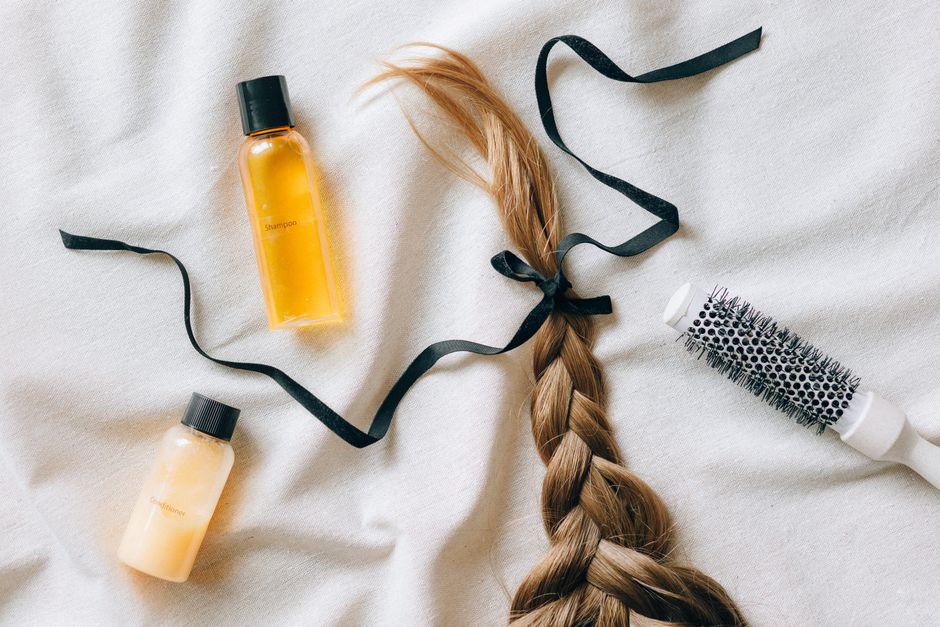
The short answer is that no single shampoo ingredient is proven to cause permanent hair loss in healthy people. The ingredient that gets the most blame is sodium lauryl sulfate (SLS), but research does not support the idea that SLS in shampoo makes your hair fall out. What SLS can do is irritate a sensitive scalp, and an irritated scalp can sometimes lead to temporary shedding. The real story is more complicated than a single villain ingredient.
What Ingredient in Shampoo Is Linked to Hair Loss?
The ingredient most often accused of causing hair loss is sodium lauryl sulfate, or SLS. You will also see sodium laureth sulfate (SLES) mentioned. These are detergents that create the lather people expect from shampoo. The concern comes from the fact that SLS can strip natural oils from the scalp and hair.
Some people report that SLS dries out their scalp. A dry, flaky, or itchy scalp can lead to inflammation. When the scalp is inflamed, hair growth can slow down temporarily. This is not the same as permanent hair loss. Once the irritation stops, hair usually grows back.
There is a widespread claim that SLS is a “carcinogen” or that it causes hair follicle death. Neither is supported by clinical evidence. The American Cancer Society has stated that SLS is not known to cause cancer in humans. The idea that SLS directly kills hair follicles is simply not backed by research.
Another ingredient that gets attention is formaldehyde-releasing preservatives like DMDM hydantoin. Some people claim these cause hair loss. The science here is also weak. The FDA allows these preservatives in low amounts. If you have a contact allergy to formaldehyde, you might get scalp irritation. That irritation could lead to shedding. But for most people, these ingredients are safe.
What Does Research on Shampoo Ingredients and Hair Loss Actually Show?
Research published in the International Journal of Trichology has looked at how shampoos affect hair. The studies consistently find that temporary hair shedding is more often linked to how the scalp reacts to a product — not a specific chemical. If your scalp gets red, itchy, or painful from a shampoo, you may shed more hair than usual for a few weeks.
One study from 2015 in the Journal of the American Academy of Dermatology tested common shampoo ingredients on human skin cells. SLS did cause some cell irritation at high concentrations. But the concentration in shampoo is typically low enough that most people do not have a problem.
The strongest evidence links hair loss to androgenetic alopecia — a genetic condition — not shampoo ingredients. The American Academy of Dermatology states that most hair loss in men and women is hereditary. No shampoo can reverse or cause genetic hair loss.
What about “natural” shampoos? Some people switch to sulfate-free shampoos and report less hair loss. This is likely because their scalp was irritated by SLS, not because the SLS was destroying hair follicles. The improvement comes from reduced irritation, not from stopping follicle damage.
Can Shampoo Ingredients Cause Temporary Hair Shedding?
Yes, but only in specific situations. Temporary shedding is called telogen effluvium. It happens when something stresses the body or scalp. A harsh shampoo ingredient can be that stressor for some people.
If you have a contact allergy to a preservative or fragrance in shampoo, your scalp may become inflamed. Inflammation can push hair follicles into a resting phase. Those hairs will fall out about three months later. This looks like hair loss, but it is temporary. Once you stop using the irritating product, hair grows back within six months.
This is why some people swear a certain shampoo “made my hair fall out.” It probably did — but only because their scalp was reacting badly. For someone with a non-sensitive scalp, the same shampoo would cause no shedding at all.
| Ingredient | Known Effect | Evidence for Hair Loss |
|---|---|---|
| Sodium Lauryl Sulfate (SLS) | Can irritate sensitive scalps | Weak — no direct link to follicle damage |
| DMDM Hydantoin | Can cause allergic reaction in some people | Weak — only linked to shedding via irritation |
| Fragrance | Common allergen | Weak — only if you have a contact allergy |
| Parabens | Preservative, mimics estrogen weakly | None — no clinical evidence of hair loss |


What Shampoo Ingredients Actually Help Prevent Hair Loss?
Some ingredients are backed by evidence for supporting hair health. Ketoconazole is one. It is an antifungal ingredient found in dandruff shampoos like Nizoral. Research shows ketoconazole can reduce scalp inflammation and may help with hair regrowth in people with androgenetic alopecia. A 2013 study in Dermatology found ketoconazole 2% shampoo was as effective as minoxidil 2% for some men.
Caffeine is another ingredient with some evidence. A 2020 study in Skin Pharmacology and Physiology found that caffeine applied to the scalp could stimulate hair follicles in a lab setting. Whether this translates to real-world hair growth is less clear. Some people report benefit, but the evidence is moderate at best.
Biotin and niacin are common in hair growth shampoos. Biotin deficiency can cause hair thinning, but deficiency is rare. Niacin (vitamin B3) can improve blood flow to the scalp. Neither is a proven treatment for hair loss in people who are not deficient.
What about minoxidil? That is the only FDA-approved ingredient for hair regrowth. It is not a shampoo ingredient. It is a topical treatment you apply to the scalp. No shampoo contains enough minoxidil to work.
What Should You Look for in a Shampoo if You Are Worried About Hair Loss?
If you are losing hair, the first step is to see a dermatologist. They can tell you if it is genetic, stress-related, or caused by a medical condition like thyroid disease or iron deficiency. No shampoo change will fix those.
If you want to avoid potential irritation, look for shampoos labeled “sulfate-free.” These use milder cleansers like sodium cocoyl isethionate or decyl glucoside. They do not lather as much, but they clean the hair without stripping the scalp.
Look for shampoos that contain ketoconazole if you have dandruff or a flaky scalp. Dandruff can cause itching and inflammation, which can lead to shedding. Treating the dandruff can stop that cycle.
Also consider a shampoo with zinc pyrithione or salicylic acid. These treat scalp conditions that might be causing shedding. Again, they do not treat genetic hair loss — they treat the scalp environment.
- Avoid shampoos with strong fragrances if you have sensitive skin.
- Choose sulfate-free formulas if your scalp feels dry or tight after washing.
- Use a gentle shampoo and do not wash more than every other day unless you have an oily scalp.
- Do not scrub aggressively. Rubbing the scalp hard can worsen irritation.
Common Misconceptions About Shampoo and Hair Loss
One of the most persistent myths is that “sulfates cause baldness.” This is simply not true. Sulfates can be drying, and dry scalps can shed hair. But sulfates do not attack hair follicles or cause permanent baldness. The claim has been repeated so often on social media that many people accept it as fact. The evidence does not support it.
Another myth is that “parabens in shampoo cause hair loss.” Parabens are preservatives that prevent bacteria growth. Some studies have shown that parabens can weakly mimic estrogen in the body. But there is no clinical evidence that parabens in shampoo cause hair loss. The FDA considers parabens safe at the levels used in cosmetics.
Some people believe that “silicones in shampoo clog follicles and cause hair loss.” Silicones like dimethicone coat the hair shaft to reduce frizz. They do not penetrate the scalp or clog follicles. If you do not rinse thoroughly, buildup can make hair look flat, but it does not make hair fall out.
A final myth is that “all-natural shampoos are always better for hair.” Natural does not mean gentler. Some natural ingredients like essential oils can be strong irritants. Tea tree oil, for example, can cause contact dermatitis in some people. The best shampoo is the one that does not irritate your scalp — whether it is natural or not.
Frequently Asked Questions
Does sodium lauryl sulfate in shampoo cause hair loss?
No. SLS can irritate a sensitive scalp, which may lead to temporary shedding, but it does not cause permanent hair loss or damage hair follicles.
Can switching to sulfate-free shampoo stop hair loss?
If your hair loss was caused by scalp irritation from sulfates, switching may help. If your hair loss is genetic, it will not make a difference.
Is DMDM hydantoin dangerous for hair?
For most people, no. It can cause an allergic reaction in some individuals, leading to scalp irritation and temporary shedding, but it is not a known cause of permanent hair loss.
What shampoo ingredient is best for hair regrowth?
Ketoconazole is the ingredient with the strongest evidence for supporting hair regrowth, particularly in people with scalp inflammation or dandruff.
