
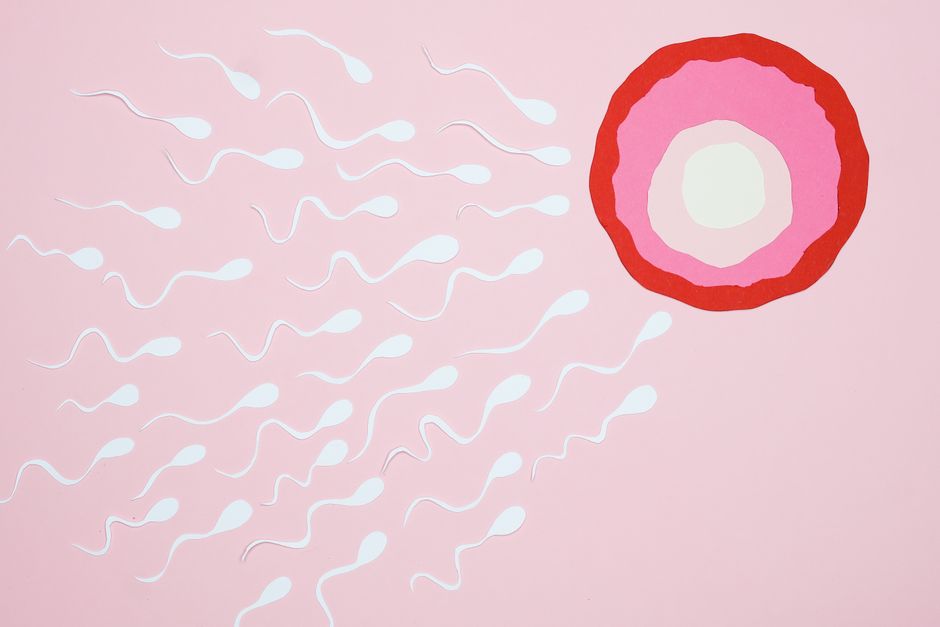
Ovulation happens when a mature egg is released from an ovary, and it is controlled by a precise chain of hormones. Anything that induces ovulation works by influencing that chain — either by helping the brain send stronger signals to the ovaries, or by acting directly on the ovaries themselves. Medical options are well established and can be quite effective. Natural approaches are a different story: some have modest supporting evidence, and many do not.
What Actually Triggers Ovulation in the Body?
Ovulation is the end result of a hormonal conversation between three parts of the body: the hypothalamus, the pituitary gland, and the ovaries.
The hypothalamus releases gonadotropin-releasing hormone (GnRH). This signals the pituitary to release two hormones — follicle-stimulating hormone (FSH) and luteinizing hormone (LH). FSH prompts follicles in the ovaries to grow. As a follicle matures, it produces estrogen. When estrogen rises high enough and stays elevated for long enough, it triggers a sharp surge of LH. That LH surge is what causes the follicle to rupture and release the egg, usually about 24 to 36 hours after the surge begins.
If any link in this chain is disrupted, ovulation can fail or become irregular. That is why treatments target different points along the pathway. Some act on the brain. Others act on the ovaries directly.
One detail worth knowing: regular menstrual cycles are not proof that ovulation is occurring. A cycle can look normal on a calendar while being anovulatory. This is one reason ovulation tracking matters more than cycle counting alone.
What Medical Treatments Induce Ovulation?
Prescription ovulation induction medications are the most reliable way to induce ovulation. They are used for conditions such as polycystic ovary syndrome (PCOS), hypothalamic dysfunction, and unexplained infertility. All of them require a prescription and medical monitoring.
The main categories are:
- Letrozole — an aromatase inhibitor. It reduces estrogen production, which prompts the pituitary to release more FSH. It is commonly used as a first-line treatment for ovulation induction in PCOS.
- Clomiphene citrate — a selective estrogen receptor modulator. It blocks estrogen receptors in the brain, which also triggers more FSH and LH release. It has been used for decades.
- Gonadotropins — injectable forms of FSH, sometimes with LH. These act directly on the ovaries and are used when oral medications do not work or for certain fertility treatments.
- Metformin — not an ovulation drug itself, but sometimes prescribed for PCOS because improving insulin sensitivity can help restore ovulation in some women.
- Pulsatile GnRH — used in specific cases of hypothalamic dysfunction, delivered in pulses to mimic the body’s natural rhythm.
These medications carry real risks, including multiple pregnancy and ovarian hyperstimulation syndrome (OHSS), which is why monitoring with ultrasound and sometimes blood tests is standard practice. The evidence supporting letrozole and clomiphene for ovulation induction is strong and long-standing. Gonadotropins are effective but require closer monitoring because of the higher risk of OHSS and multiples.
Which medication is appropriate depends on why ovulation is not happening. PCOS, low body weight, thyroid disorders, and high prolactin levels all call for different approaches. This is not a decision to make without a clinician.
Can Natural Approaches Induce Ovulation?
Some natural approaches have evidence behind them. Others do not. It is worth separating the two.
Weight and metabolic factors. Body weight affects ovulation through several mechanisms. Significant excess weight is associated with insulin resistance, which can disrupt the hormonal signals that trigger ovulation. Weight loss in women with obesity and PCOS has been shown in some studies to restore ovulation, though results vary and the effect is not guaranteed. On the other end, very low body weight or excessive exercise can suppress GnRH release and stop ovulation entirely. In that case, restoring adequate energy intake is often what allows ovulation to resume.
PCOS-specific interventions. For women with PCOS, improving insulin sensitivity appears to help. Some research suggests that lifestyle changes — diet quality, regular movement, sleep — can improve ovulation rates in PCOS, though the effect sizes in studies are modest and inconsistent. Inositol supplements have been studied for PCOS, and some trials suggest they may support ovulation, but the evidence is not strong enough to call them established. No clinical guidelines currently recommend inositol as a first-line treatment.
What does not have solid evidence. A long list of supplements and herbs are marketed for ovulation. Vitex (chasteberry), maca, red clover, and various “fertility blends” are commonly promoted. For most of these, no large human trials have confirmed that they induce ovulation. Some may affect hormone levels in ways that are not well understood, which is a concern rather than a benefit. Herbal products are not required to meet the same evidence standards as medications, and their contents are not always what the label says.
The honest position: natural approaches can help in specific situations — mainly when weight, energy balance, or metabolic health is the underlying issue. They are not a reliable substitute for medical ovulation induction when the cause is something else.


How Do You Know If You Are Ovulating?
If you are trying to conceive or investigating irregular cycles, tracking ovulation can tell you whether the natural or medical approach is working.
Methods that can detect or suggest ovulation include:
- LH urine tests — detect the LH surge, which precedes ovulation. These are widely used and reasonably reliable for many women, though they can be less accurate in PCOS.
- Basal body temperature — rises slightly after ovulation due to progesterone. It confirms that ovulation happened, but only in hindsight.
- Cervical mucus changes — becoming clearer and more stretchy near ovulation. Useful as a secondary sign.
- Mid-luteal progesterone blood test — a progesterone level measured about a week after suspected ovulation is a standard clinical way to confirm it occurred.
- Ultrasound monitoring — used in fertility treatment to track follicle growth and time intercourse or procedures.
No single method is perfect. Combining signs gives a clearer picture. If cycles are irregular or ovulation is not detected over several months, that is a reason to see a clinician rather than to keep trying supplements.
When Should You See a Doctor About Ovulation?
Ovulation problems are common and often treatable. The question is when to stop managing it yourself.
Seek medical evaluation if:
- Your cycles are consistently shorter than 21 days or longer than 35 days.
- You have not conceived after 12 months of trying (or 6 months if you are 35 or older).
- You have PCOS, thyroid disease, or high prolactin, or you suspect any of these.
- You have had no period for three months or more without pregnancy.
- You are experiencing signs of very low body weight, disordered eating, or excessive exercise alongside missed periods.
These timelines reflect general clinical guidance for when to investigate. They are not rigid rules, and a doctor may recommend earlier evaluation based on your history.
One clarification that matters: ovulation induction medications are not the same as fertility treatments like IVF. They are often a first step, and for some women they are enough on their own. For others, they are part of a broader plan. The right path depends on the cause, your age, and other health factors.
What About Lifestyle Factors That Support Ovulation?
Lifestyle does not “induce” ovulation in the way a medication does, but it can remove obstacles that are blocking it.
Sleep, stress, and thyroid function all interact with the reproductive hormone system. Chronic severe stress can suppress GnRH release. Untreated thyroid disorders can disrupt ovulation. These are not minor details — they are part of the picture.
What the evidence supports reasonably well:
- Maintaining a body weight that is neither very high nor very low.
- Managing blood sugar and insulin through diet and activity, especially with PCOS.
- Getting enough sleep and managing chronic stress.
- Avoiding excessive alcohol and not smoking.
What the evidence does not support: the idea that a specific food, tea, or supplement reliably induces ovulation on its own. No clinical evidence currently confirms that any single dietary change will trigger ovulation in someone who is not ovulating for medical reasons.
The most useful natural step is usually to identify and address the underlying cause — whether that is weight, insulin resistance, thyroid function, or energy balance — with a clinician’s help.
Frequently Asked Questions
What is the most effective way to induce ovulation?
Prescription medications such as letrozole and clomiphene are the most effective and best-studied options for inducing ovulation. They require a prescription and monitoring, and which one is appropriate depends on the underlying cause.
Can you induce ovulation naturally without medication?
Natural approaches can help in specific situations, mainly when weight, insulin resistance, or energy balance is the underlying issue. They are not a reliable substitute for medication when the cause is something else, and no supplement has strong evidence for inducing ovulation on its own.
How long does it take for ovulation induction to work?
Response varies by medication, dose, and cause. Some women ovulate within the first treatment cycle, while others need dose adjustments or several cycles. A clinician can track response with ultrasound or blood tests.
Does PCOS stop you from ovulating completely?
PCOS often causes irregular or absent ovulation, but it does not always stop it entirely. Many women with PCOS ovulate occasionally, and ovulation induction treatment is commonly effective for restoring regular ovulation.
