
The air you breathe at home and in your neighborhood shapes your health more than you might think. Improving air quality indoors starts with ventilation and source control, while outdoor improvements depend on reducing emissions and supporting green spaces. Both matter because the average person spends most of their time indoors, yet outdoor pollution directly influences the air that enters your home.
What Improves Air Quality Indoors And Outdoors?
Indoor air quality improves most with three actions: removing pollution sources, ventilating with fresh outdoor air, and filtering the air that circulates. Outdoors, air quality improves when emissions from vehicles, industry, and power generation decline, and when vegetation helps absorb pollutants. The most effective strategy combines both approaches — cleaner outdoor air means cleaner indoor air, because homes continuously exchange air with the outside.
Many people assume expensive air purifiers are the answer. They help, but they are not the first step. The first step is always identifying what is polluting your air in the first place.
What Are the Main Indoor Air Pollutants?
Indoor air contains a mix of particles and gases. Some come from outside, like vehicle exhaust and pollen. Others are generated inside your home.
Common indoor sources include:
- Cooking fumes, especially from frying and grilling
- Tobacco smoke and vaping residue
- Cleaning products that release volatile organic compounds (VOCs)
- Building materials and new furniture that off-gas formaldehyde
- Dust mites, pet dander, and mold spores
- Gas stoves that emit nitrogen dioxide and carbon monoxide
- Candles, incense, and air fresheners
Particulate matter — especially fine particles called PM2.5 — is the most concerning. These particles are small enough to reach deep into the lungs and enter the bloodstream. Studies have linked long-term exposure to PM2.5 with heart disease, respiratory illness, and reduced life expectancy.
Carbon monoxide deserves special attention. It is colorless and odorless, and high levels can be fatal. Every home should have a carbon monoxide detector, particularly if you use gas appliances or an attached garage.
How Does Ventilation Improve Indoor Air?
Ventilation is the simplest and most effective way to lower indoor pollutant levels. When you open windows and doors, you dilute indoor pollutants with outdoor air. Even on days when outdoor air quality is moderate, the exchange is usually beneficial because indoor air often has higher concentrations of pollutants than outdoor air.
Exhaust fans in kitchens and bathrooms remove pollutants at their source. Running the kitchen vent while cooking — and for several minutes after — captures smoke and gases before they spread. Bathroom fans remove humidity that fuels mold growth.
If outdoor air quality is poor, such as during wildfire season or high-smog days, keep windows closed and rely on mechanical ventilation with filtration instead. This is where a well-maintained HVAC system becomes valuable.





Do Air Purifiers Actually Work?
Air purifiers with HEPA filters effectively remove airborne particles. HEPA — high-efficiency particulate air — filters capture at least 99.97% of particles at a specific test size. They remove dust, pollen, pet dander, smoke particles, and some bacteria and viruses.
But air purifiers have limits. HEPA filters do not remove gases like formaldehyde, nitrogen dioxide, or carbon monoxide. For gases, you need an activated carbon filter, which many purifiers include as a secondary layer.
Size matters. A small purifier in a large room will not clean the air effectively. Manufacturers provide a recommended room size for each unit. Match the purifier to the room where you spend the most time — usually the bedroom.
Placement matters too. Air purifiers work best when placed away from walls and obstructions, allowing air to circulate freely through the intake and outlet.
One common mistake is running a purifier on low and expecting results. Run it continuously. Air pollution is not a one-time event; it accumulates constantly from cooking, cleaning, and everyday activity.
How Do Houseplants Affect Indoor Air Quality?
Houseplants are popular for air purification, but the evidence is more modest than marketing suggests. A well-known NASA study from the 1980s found that certain plants remove VOCs from sealed chambers. However, those conditions do not reflect real homes.
Follow-up research has questioned whether houseplants meaningfully improve air quality in normal living spaces. To match the purification rate measured in laboratory studies, you would need dozens of plants per square meter — far more than any typical home holds.
That said, houseplants are not useless. They add humidity, reduce stress, and some species absorb low levels of VOCs. But do not rely on plants as your primary air-cleaning strategy. Ventilation and filtration are far more effective.
If you keep plants, be careful with soil moisture. Overwatering promotes mold growth in the soil, which can worsen indoor air quality rather than improve it.
What Reduces Outdoor Air Pollution?
Outdoor air pollution comes primarily from burning fossil fuels. Vehicles, power plants, industrial facilities, and residential heating all contribute. Agriculture and wildfires add significant amounts of particulate matter and other pollutants.
Reducing outdoor pollution requires systemic change, but individual actions still matter. Driving less, using public transit, walking, or biking reduces vehicle emissions. Maintaining your car properly — especially tire pressure and engine health — improves fuel efficiency and lowers emissions.
Supporting clean energy policies matters at a community level. Electricity generated from solar, wind, and nuclear sources produces far less air pollution than coal or natural gas. When you choose renewable energy for your home, you reduce demand for fossil fuels.
Wood burning is a major contributor to outdoor particulate pollution in many regions. Wood stoves and fireplaces produce high levels of PM2.5, especially during winter inversions. If you use wood heat, ensure the stove is EPA-certified and burn only dry, seasoned wood. Consider alternatives like heat pumps or gas inserts.
Lawn equipment is an underappreciated source. Gas-powered mowers, leaf blowers, and trimmers emit significant pollutants per hour of operation — often more than a modern car. Electric or manual equipment eliminates these emissions entirely.
How Do Green Spaces Improve Outdoor Air?
Trees and vegetation improve air quality in several ways. Leaves capture particulate matter on their surfaces, and some trees absorb gaseous pollutants like nitrogen dioxide and sulfur dioxide. Trees also release oxygen and cool the air through shade and evaporation.
Urban tree canopies reduce the urban heat island effect, which lowers ground-level ozone formation. Ozone forms when sunlight reacts with nitrogen oxides and VOCs — a reaction that accelerates at higher temperatures.
But green spaces are not a complete solution. Trees cannot keep pace with heavy industrial or traffic emissions. A single tree removes a small fraction of what one car emits in a year. Vegetation helps, but emission reduction remains the primary strategy.
Community gardens and parks provide additional benefits. They replace paved surfaces that absorb heat and reduce the distance people need to travel for recreation, which may encourage walking over driving.
How Do You Know If Your Air Quality Is Bad?
You cannot always see or smell air pollution. Some of the most dangerous pollutants are invisible and odorless. Monitoring is the only reliable way to know what is in your air.
For outdoor air, the Air Quality Index (AQI) is the standard measure. It ranges from 0 to 500, with higher values indicating worse pollution. An AQI below 50 is considered good; above 150 is unhealthy for sensitive groups; above 300 is hazardous for everyone. You can check your local AQI through weather apps or the Environmental Protection Agency’s website.
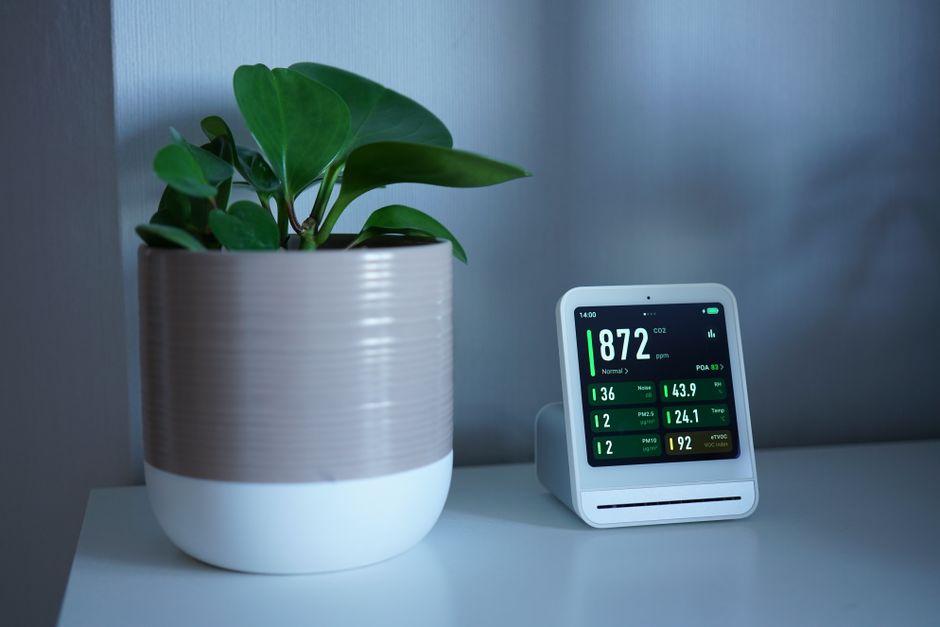
For indoor air, consumer monitors can measure PM2.5, carbon dioxide, and some VOCs. These devices vary in accuracy, but even an imperfect monitor can reveal patterns — such as spikes during cooking or after cleaning — that help you adjust habits.
Carbon dioxide monitors are particularly useful. Indoor CO2 levels reflect how well a space is ventilated. Levels above 1,000 parts per million suggest poor ventilation, and levels above 2,000 ppm indicate a need for immediate fresh air.
What Are the Health Benefits of Cleaner Air?
Cleaner air produces measurable health improvements. Studies consistently link reduced particulate pollution with lower rates of heart attacks, strokes, and respiratory infections. Children and older adults show the most dramatic benefits because their lungs are more vulnerable.
Within weeks of reducing indoor pollutant exposure, many people notice fewer allergy symptoms, better sleep, and fewer headaches. These improvements are not placebo effects — they reflect the body’s reduced inflammatory burden.
Long-term benefits are harder to see but more significant. Decades of research show that communities with cleaner air have lower rates of lung cancer, chronic obstructive pulmonary disease, and cardiovascular mortality. Every reduction in exposure compounds over a lifetime.
Frequently Asked Questions
Do air purifiers remove viruses and bacteria?
HEPA filters capture airborne viruses and bacteria that are attached to particles. They reduce concentration but do not sterilize the air, and they are not a substitute for vaccination or hand hygiene.
How often should I change my air purifier filter?
Most manufacturers recommend replacing HEPA filters every 6 to 12 months depending on usage and air quality. Follow the specific guidance for your unit, and check filters more often if you smoke, cook frequently, or live in a high-pollution area.
Is it safe to open windows when outdoor air quality is poor?
No. When the outdoor AQI is above 100, keep windows closed and use air conditioning or a purifier with a HEPA filter instead. Brief ventilation may still help, but check the AQI before deciding.
Can baking soda or charcoal bags absorb indoor pollutants?
Activated charcoal absorbs some odors and VOCs in small enclosed spaces, but its effect in a whole room is minimal. Baking soda neutralizes odors but does not remove particulate matter or gases in meaningful amounts.
