
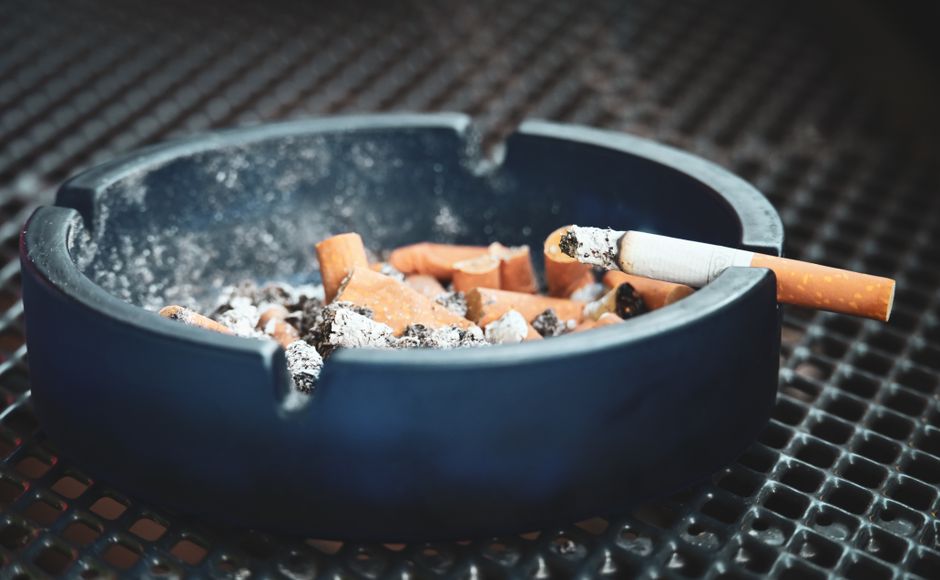
Cigarette smoke is a mixture of thousands of chemicals, and none of that is good to breathe in. Whether you are trying to quit smoking yourself or protecting your family from secondhand smoke, the goal is the same: create air that is free of smoke. The most effective way to stop cigarette smoke is to remove the source. That means quitting smoking, or ensuring all smoking happens outdoors, away from doors and windows. For indoor air, a combination of ventilation and air purification can reduce, but not eliminate, the lingering particles and gases.
Why Is Cigarette Smoke So Hard to Get Rid Of?
Smoke does not just disappear when the cigarette is out. It leaves behind residue called thirdhand smoke. This residue clings to walls, furniture, carpets, and clothing. It can react with other chemicals in the air and form new pollutants. This is why a room can still smell like smoke days after someone smoked in it.
The smoke itself is made of gases and tiny solid particles. The particles are small enough to get deep into your lungs. The gases, like carbon monoxide and formaldehyde, mix easily with the air. You cannot see them, but you can smell them. Removing all of this requires more than just opening a window.
What Is the Most Effective Way to Stop Cigarette Smoke Indoors?
The only fully effective method is to not smoke indoors at all. No air purifier or fan can remove every trace of smoke. If you live with a smoker, the clearest rule is that smoking happens outside, away from entry points. This is the single most important step you can take.
For outdoor smoking, make it a habit to stand at least several feet from doors and windows. Smoke can drift back inside quickly. Close windows and doors behind the smoker. This prevents the smoke from traveling directly into the living space.
If smoking must happen indoors, restrict it to one room with an exhaust fan that vents directly outside. Even then, the smoke will still settle on surfaces. You are reducing exposure, not eliminating it.
Does an Air Purifier Stop Cigarette Smoke?
Air purifiers can help, but they have limits. A purifier with a HEPA filter can capture the solid particles in smoke. HEPA filters are designed to trap particles as small as 0.3 microns. Smoke particles fall within this range. However, HEPA filters do not remove gases like carbon monoxide or formaldehyde.
For gases, you need a purifier with an activated carbon filter. These filters absorb some of the volatile organic compounds in smoke. Look for a purifier that has both a HEPA filter and a substantial carbon filter. Many cheap purifiers have only a thin carbon layer that is not effective.
Also check the Clean Air Delivery Rate, or CADR. This number tells you how fast the purifier cleans the air. For smoke, you want a high CADR rating. A purifier that is too small for the room will not keep up with the smoke. You also need to run the purifier continuously, not just when someone is smoking.
Even with a good purifier, you are still dealing with the residue. The purifier cleans the air while it runs. It does not clean your couch or your curtains. Those surfaces will continue to release smoke chemicals back into the air.





Does Opening a Window Help Stop Cigarette Smoke?
Opening a window helps with fresh air, but it does not fully remove smoke. Ventilation dilutes the smoke in the room. It lowers the concentration of harmful chemicals. That is helpful, but it is not the same as removal.
For ventilation to work well, you need cross-ventilation. Open windows on opposite sides of the room to create a draft. A single open window will not move enough air. A fan placed in the window, blowing outward, can push smoke out faster. This is more effective than a fan blowing into the room, which can circulate the smoke.
Still, ventilation does nothing for the particles that settle on surfaces. Once the smoke touches a wall or a piece of fabric, it stays there. Ventilation only helps with the smoke that is still in the air.
How Do You Clean Smoke Residue From a Room?
If a room has been smoked in, cleaning is essential. The residue is sticky and clings to surfaces. Standard household cleaners can help, but they need to be used thoroughly.
Start with the hard surfaces. Wipe down walls, window sills, and furniture with a mixture of vinegar and water or a commercial cleaner. Pay attention to light fixtures and ceiling fans, where residue collects. Wash all fabrics, including curtains, couch covers, and bedding. If the smell remains in carpets, you may need a professional steam cleaning.
Do not forget the air ducts. Smoke residue can settle inside HVAC systems. When the system runs, it can blow the smell back into the room. Duct cleaning may be necessary in homes where someone smoked heavily for years.
After cleaning, you may still notice a smell. This is common. The residue can be deeply embedded in porous materials like drywall and wood. In severe cases, the only real fix is to repaint with a sealing primer and replace carpets and padding.
How To Stop Cigarette Smoke From Entering Your Home
If your neighbor smokes or someone smokes outside your window, the smoke can still come in. Check for gaps around windows and doors. Weather stripping can seal these gaps. Caulk any cracks in the walls or around pipes.
Do not rely on a window screen to block smoke. Screens do nothing for smoke particles. Keep windows closed if smoke is coming in from outside. If you need fresh air, open windows only when the smoke has cleared.
Some people use exhaust fans in kitchens or bathrooms to create positive pressure inside the home. This means the air pressure inside is slightly higher than outside. It can help push outside air away. This is not a perfect solution, but it can reduce the amount of smoke drifting in.
Can You Stop Cigarette Smoke in a Car?
A car is a small, enclosed space. Smoke lingers in the fabric of the seats and the headliner. The best method is to never smoke in a car. If you buy a used car that smells of smoke, you have a difficult cleaning job.
Start by replacing the cabin air filter. This filter cleans the air that comes into the car. If it is saturated with smoke, it will keep releasing the smell. Then thoroughly clean all surfaces with a strong automotive cleaner. Use an ozone generator with caution. Ozone can break down some smoke odors, but it is a lung irritant. No one should be in the car while an ozone generator is running, and the car needs to air out completely afterward.
Does Quitting Smoking Stop the Smoke Problem Fast?
Quitting smoking is the only way to fully stop cigarette smoke at the source. The air in your home improves immediately when you stop smoking indoors. The smell of fresh smoke disappears right away. The deeper residue smell takes time and effort to remove.
Your body also recovers quickly in some ways. Within hours of your last cigarette, your heart rate and blood pressure start to drop. Within weeks, your circulation improves. The long-term risks, like lung cancer and heart disease, decrease the longer you stay quit. The benefits are real and they start immediately.
If you are trying to quit, know that the evidence for success is strongest with a combination of counseling and medication. Nicotine replacement therapy, like patches or gum, can help with withdrawal. Prescription medications can also help. Talk to your doctor about what is right for you.
Frequently Asked Questions
What is the fastest way to clear cigarette smoke from a room?
Open windows on opposite sides of the room and place a fan in one window blowing outward to create a strong draft.
Run a HEPA air purifier with a carbon filter continuously to capture particles and some gases.
Do air purifiers completely remove cigarette smoke?
No air purifier completely removes all cigarette smoke.
They reduce particles and some odors, but they do not remove gases like carbon monoxide or clean residue on surfaces.
How long does cigarette smoke stay in a room?
The visible smoke clears in minutes with ventilation, but the smell and residue can last for months.
Thirdhand smoke clings to fabrics, walls, and furniture and continues to release chemicals over time.
Is it safe to smoke in another room if the door is closed?
No, it is not safe.
Smoke travels through vents, under doors, and through electrical outlets, so it still reaches other parts of the home.
