
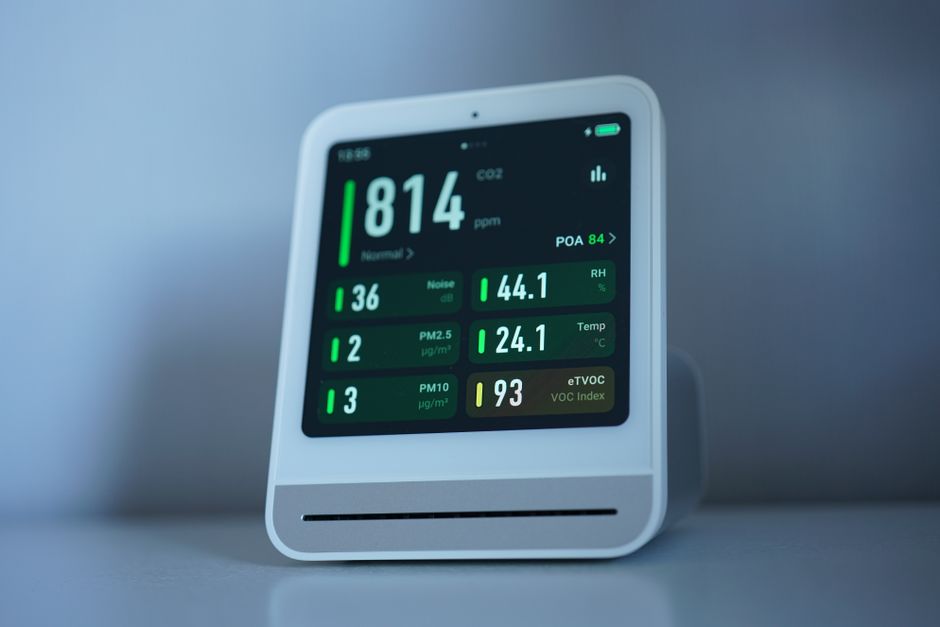
Most people notice discomfort when indoor relative humidity climbs above 60% or drops below 30%. Between roughly 30% and 50% relative humidity, the majority of adults feel comfortable at normal room temperatures. Outside that band, the body struggles to regulate temperature and moisture, and discomfort sets in quickly for many people.
Relative humidity is the amount of water vapor in the air compared to the maximum it could hold at that temperature. It is measured as a percentage. That number matters more for how you feel than most people realize — and it affects your skin, breathing, sleep, and even how easily viruses spread.
What Humidity Level Is Uncomfortable?
Discomfort generally begins above 60% relative humidity and below 30%. The range of 30% to 50% is where most people feel best indoors. This is the same range the U.S. Environmental Protection Agency recommends for indoor environments.
Above 60%, sweat does not evaporate efficiently. The body relies on evaporation to cool itself, and when the air is already loaded with moisture, that process slows down. You feel sticky, overheated, and sluggish even if the temperature itself has not changed.
Below 30%, the opposite problem occurs. Dry air pulls moisture from your skin, eyes, and respiratory tract. You may notice chapped lips, dry eyes, a scratchy throat, and static electricity. These are not minor annoyances — they are signs the environment is stressing your body’s moisture barriers.
The exact point where discomfort starts varies from person to person. Age, clothing, activity level, and personal sensitivity all play a role. But the general boundaries of 30% and 60% hold up well across most indoor settings.
Why Does High Humidity Make You Feel So Uncomfortable?
High humidity interferes with your body’s primary cooling system. When you get hot, sweat glands release moisture onto your skin. As that moisture evaporates, it carries heat away with it. This is how the body stays cool.
When the air is already saturated with water vapor, evaporation slows. Sweat stays on your skin instead of evaporating. You keep producing sweat, but it does not cool you effectively. The result is a feeling of being overheated and clammy at the same time.
This is why the heat index matters. The heat index combines temperature and humidity to estimate how hot it actually feels. At 90°F with 70% humidity, the heat index is well above 100°F. The actual air temperature has not changed, but your body experiences it as far more dangerous.
High indoor humidity also creates conditions where dust mites thrive. Dust mites are microscopic organisms that live in bedding, upholstery, and carpet. They absorb moisture from the air. When indoor humidity stays above 50%, dust mite populations tend to grow. For people with dust mite allergies, this can mean more sneezing, congestion, and asthma symptoms.
Mold is another concern. Mold growth generally requires sustained humidity above 60% or the presence of liquid water. Keeping indoor humidity below 60% is one of the main strategies for limiting mold growth in buildings.
What Happens When the Air Is Too Dry?
Low humidity dries out the mucous membranes that line your nose, throat, and airways. These membranes are part of your body’s first line of defense against infection. They trap particles and pathogens before they reach deeper into your lungs.
When those membranes dry out, they can crack and become less effective. Some research suggests that dry indoor air may make people more susceptible to respiratory infections, though the evidence is not entirely consistent. What is clear is that many people experience more nasal irritation, nosebleeds, and sore throats in dry environments.
Dry air also affects your skin. The outer layer of skin depends on moisture to stay flexible and intact. When the air pulls moisture from your skin faster than your body can replace it, you get dryness, flaking, and itching. For people with eczema or psoriasis, dry air can trigger flares.
Sleep quality can suffer too. Dry air can irritate the throat and nasal passages overnight, leading to coughing or congestion that disrupts rest. Some people find that using a humidifier in the bedroom during winter helps, though the evidence for broad sleep improvement is limited.





How Do Temperature and Humidity Work Together?
Humidity and temperature are not independent. Warm air can hold more moisture than cold air. That means the same absolute amount of water vapor produces a higher relative humidity reading in cool air than in warm air.
This is why your home may feel damp in summer and dry in winter even if the actual moisture content has not changed dramatically. Cold outdoor air holds little moisture. When that air comes inside and gets heated, its relative humidity drops. This is why indoor humidity often falls below 30% during winter in cold climates.
The relationship also explains why a 75°F room at 65% humidity feels worse than a 78°F room at 40% humidity. The first environment hinders sweat evaporation. The second allows it. Temperature alone does not tell you how comfortable a space will feel.
What Are the Signs Your Indoor Humidity Is Off?
Your body and your home both give clues. You do not need a meter to notice something is wrong, though a hygrometer — an inexpensive device that measures humidity — can confirm it.
Signs of humidity that is too high include:
- Condensation on windows, especially in winter
- Musty or damp smells in rooms
- Peeling paint or warped wood
- Clammy skin that does not dry after showering or light activity
- Frequent sneezing or allergy symptoms indoors
Signs of humidity that is too low include:
- Static shocks when touching doorknobs or other people
- Cracked or chapped skin and lips
- Nosebleeds, especially in winter
- Dry, irritated eyes
- Wood floors or furniture developing gaps or cracks
If you notice several of these signs, checking your indoor humidity with a hygrometer is a reasonable next step. These devices are widely available and cost little.
Does Humidity Affect Sleep and Breathing?
Both high and low humidity can interfere with sleep. High humidity makes it harder for your body to shed heat overnight, which can lead to restless sleep and night sweats. Low humidity dries out your airway, which can cause coughing, congestion, and throat irritation.
For people with asthma or allergies, humidity levels matter even more. High humidity supports dust mites and mold, both common triggers. Low humidity can irritate already-sensitive airways. Many clinicians suggest aiming for the 30% to 50% range for people with respiratory conditions, though individual responses vary.
Breathing dry air for extended periods can also make it harder for your nose and throat to clear mucus and trapped particles. This is one reason some people feel more prone to colds and sinus issues in winter, when indoor air tends to be driest.
How Can You Manage Indoor Humidity?
Keeping indoor humidity between 30% and 50% is the goal. How you get there depends on whether your problem is too much moisture or too little.
If humidity is too high:
- Use a dehumidifier, especially in basements and bathrooms
- Run exhaust fans when cooking, showering, or doing laundry
- Fix leaks and address any water intrusion promptly
- Improve ventilation in closed rooms
If humidity is too low:
- Use a humidifier, particularly in bedrooms during winter
- Keep interior doors open to allow air circulation
- Avoid overheating your home, which further lowers relative humidity
Humidifiers require regular cleaning. Without it, they can become a source of mold and bacteria that get released into the air. This is a real concern, not a minor one. Follow the manufacturer’s cleaning instructions.
For people with asthma or mold allergies, a doctor can offer guidance on what humidity range is safest for their specific situation. There is no single number that works for everyone, but 30% to 50% is a reasonable target for most homes.
Does Humidity Affect How Viruses Spread?
There is evidence that indoor humidity influences the spread of some respiratory viruses. Research has found that influenza viruses tend to survive longer in dry air, and that low indoor humidity may be associated with increased flu transmission in winter months. The exact mechanisms are still being studied.
This does not mean that raising humidity prevents illness. It means that dry air may create conditions that favor certain viruses. Keeping indoor humidity in a moderate range is one of several factors that may support respiratory health, alongside handwashing, vaccination, and ventilation.
Some studies also suggest that dry air impairs the mucus-clearing function of the airways, which could make it easier for viruses to take hold. Again, this is an area of ongoing research, and no single humidity level has been proven to prevent infection.
Frequently Asked Questions
What humidity level is uncomfortable for sleeping?
Humidity above 60% or below 30% tends to disrupt sleep for many people. High humidity interferes with the body’s ability to cool down overnight, while low humidity dries out the airways and throat.
Is 70% humidity too high indoors?
Yes, 70% indoor humidity is generally considered too high. At that level, mold and dust mites are more likely to thrive, and most people will feel clammy and overheated.
What is a comfortable humidity level for a house?
A range of 30% to 50% relative humidity is generally comfortable and is the range the EPA recommends for indoor spaces. Within that band, most people do not notice the humidity at all.
Can low humidity make you sick?
Low humidity does not directly cause illness, but it can dry out the mucous membranes in your nose and throat that help filter out pathogens. Some research suggests dry air may make it easier for certain respiratory viruses to spread.
