
Astigmatism cannot be reversed. No exercise, diet, or eye drop changes the curved shape of your cornea or lens, and that curve is what causes astigmatism. What medical care can do is correct it, sometimes completely, with glasses, contact lenses, or surgery. In some cases, surgery can also reduce the underlying irregular shape itself.
What Is Astigmatism and Why Does It Happen?
Astigmatism is a problem with the shape of the eye’s focusing surfaces. A perfectly round cornea bends light evenly in all directions. An astigmatic cornea is more oval, like the back of a spoon. That uneven curve sends light to more than one point on the retina instead of one sharp point.
The result is blurred or distorted vision at all distances, not just up close or far away. Many people describe it as a slight ghosting or shadowing of letters. It often shows up alongside nearsightedness or farsightedness.
Most astigmatism is corneal — caused by the shape of the clear front window of the eye. A smaller share is lenticular, caused by the shape of the lens inside the eye. Both are usually present from birth and stay fairly stable through life. A separate type, called irregular astigmatism, follows injury, surgery, or a condition that thins and distorts the cornea. That type behaves differently and needs different care.
Astigmatism is common. It is not a disease you catch or a sign that you did something wrong. It is largely a matter of how the eye was built.
Can You Reverse Astigmatism Naturally?
No. There is no natural method that reverses astigmatism, and claims that suggest otherwise are not supported by evidence.
The eye’s cornea is a fixed piece of tissue. Eye exercises move the muscles around the eye and change how the eyes team together, but they do not reshape the cornea. No study has confirmed that eye exercises, vision training, or “eye yoga” change the curve of the cornea or reduce a measured astigmatism prescription.
This is where a common mix-up happens. Vision therapy is a real and useful treatment — but for a different problem. It helps with eye coordination, focusing, and tracking issues, which are brain-and-muscle skills. Astigmatism is a physical shape issue. Training one does not fix the other.
The same applies to diet, supplements, and lifestyle. No nutrient reshapes the cornea. A healthy diet supports eye health in general, but it will not reverse a refractive error.
What actually helps is correction. Glasses and contact lenses do not reverse astigmatism either, but they bend light in a way that compensates for the uneven curve. With the right prescription, vision can be sharp and clear.
How Do Glasses and Contacts Correct Astigmatism?
Glasses and contacts correct astigmatism by adding a specific curve to the lens that cancels out the eye’s uneven curve. This is the most common and most reliable approach.
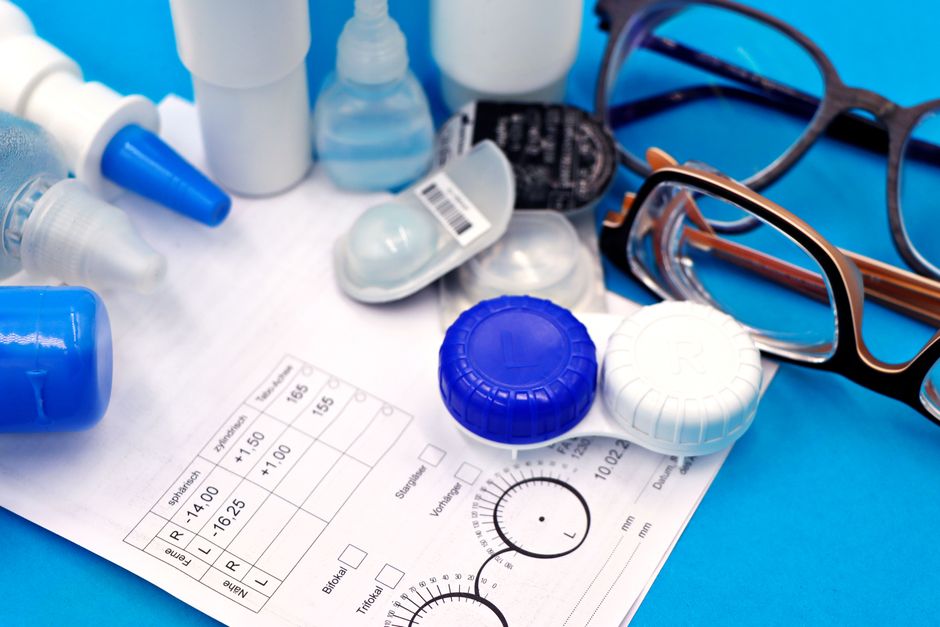
Glasses for astigmatism use a lens called a toric lens. It has different focusing power in different directions, matched to your eye. This is why an astigmatism prescription has extra numbers beyond the basic sphere value. The cylinder number describes the amount of astigmatism, and the axis number describes its direction, measured in degrees. Your eye doctor sets both.
Contact lenses for astigmatism are also toric. Soft toric lenses are widely used and comfortable for many people. They are designed to stay in one orientation on the eye so the correction lines up correctly. Rigid gas permeable lenses are another option and can be helpful for irregular astigmatism, where soft lenses may not fit or correct well.
Neither glasses nor contacts change the eye itself. Take them off and the astigmatism is still there. But they can give you clear vision for as long as you wear them, and that is usually the goal.



Can Surgery Permanently Reduce Astigmatism?
Yes. Certain eye surgeries can reduce or eliminate astigmatism by reshaping the cornea. This is the closest thing to a true reversal, because the change is made to the tissue itself.
Laser vision correction — procedures such as LASIK and PRK — can reshape the cornea to correct astigmatism, often at the same time as nearsightedness or farsightedness. For suitable candidates, this can reduce or remove the need for glasses or contacts. Results vary by person, prescription, and eye health, and some people still need a mild prescription afterward.
Astigmatic keratotomy and limbal relaxing incisions are techniques that make small cuts in the cornea to relax its curve. They are often used during cataract surgery to reduce existing astigmatism.
Toric intraocular lenses are another route. During cataract surgery, the cloudy natural lens is removed and replaced. A toric lens can correct astigmatism at the same time.
Candidacy matters. Surgery is not right for everyone. Thin corneas, certain eye diseases, and unstable prescriptions can rule it out. A full eye exam and a conversation with an eye surgeon are the only way to know what is realistic for a given person. No surgery is risk-free, and outcomes are not guaranteed.
What About Ortho-K and Specialty Lenses?
Orthokeratology, often called ortho-K, uses specially fitted rigid lenses worn overnight. They temporarily reshape the cornea so vision is clearer during the day without glasses or contacts.
The effect is temporary. Stop wearing the lenses and the cornea returns to its original shape, usually within days. Ortho-K is used mainly to manage nearsightedness and is sometimes used for astigmatism. It is not a cure, and it requires careful fitting and follow-up. Wearing these lenses without proper medical supervision carries a risk of serious eye infection.
Scleral lenses are large rigid lenses that rest on the white of the eye and vault over the cornea. They are often used for irregular astigmatism, where the cornea’s surface is uneven. They can provide clear vision when other options do not, but they are a correction, not a reversal.
Is Astigmatism in Children Different?
Yes, and the timing matters. Astigmatism in children is common and often present from birth. In many cases it is mild and does not need treatment. When it is significant, though, it needs to be addressed early.
The reason is brain development. A child’s visual system is still learning to see, roughly through the early school years. If one or both eyes send a blurry image during that window, the brain may not develop normal vision in that eye. This is called amblyopia, or lazy eye. It can become permanent if not treated in time.
Because of this, eye exams for children matter. A child with astigmatism may not complain, because they do not know their vision is unusual. Signs can include squinting, eye rubbing, sitting very close to screens, or trouble at school. Glasses can correct the vision and help the visual system develop normally. In some cases, patching or other treatment is added for amblyopia.
Correcting a child’s astigmatism with glasses does not reverse the shape of the eye. But it can prevent a lasting vision problem, which is the more important goal.
What Does Not Work, and Why It Matters
A lot of products and programs promise to reverse astigmatism. It is worth being clear about which ones have no evidence behind them.
- Eye exercises and vision training aimed at “fixing” astigmatism — no evidence they change the cornea.
- Supplements and special diets marketed for astigmatism — no evidence they reshape the eye.
- Pinhole glasses — they can sharpen vision slightly while worn by limiting light, but they do not correct or reverse astigmatism.
- Devices or apps claiming to retrain the eye’s shape — no clinical evidence supports this.
The risk is not just wasted money. Delaying real correction, especially in a child, can allow a treatable vision problem to become permanent. Getting a proper eye exam is the safer path.
What Is Medically Possible for Astigmatism?
Here is the honest summary. Astigmatism cannot be reversed by natural means. It can be corrected, and in some cases surgically reduced or removed. The table below lays out the main options and what each one actually does.
| Option | What it does | Permanent? |
|---|---|---|
| Glasses (toric lenses) | Corrects vision while worn | No |
| Contact lenses (toric, rigid, scleral) | Corrects vision while worn | No |
| Ortho-K | Temporarily reshapes the cornea | No |
| Laser surgery (LASIK, PRK) | Reshapes the cornea | Usually lasting, varies by person |
| Astigmatic keratotomy / limbal relaxing incisions | Relaxes the cornea’s curve | Usually lasting, varies by person |
| Toric intraocular lens | Replaces the lens and corrects astigmatism | Lasting |
If your goal is to see clearly, correction usually gets you there. If your goal is to reduce the astigmatism itself, surgery is the only route, and it depends on whether you are a good candidate.
Frequently Asked Questions
Can astigmatism be reversed without surgery?
No. Astigmatism cannot be reversed without surgery, because no non-surgical method changes the shape of the cornea or lens. Glasses and contacts correct vision but do not change the eye itself.
Do eye exercises fix astigmatism?
No. Eye exercises do not change the shape of the cornea, so they do not fix astigmatism. Vision therapy helps with eye coordination and focusing skills, which are different problems.
Can LASIK permanently fix astigmatism?
LASIK can reduce or eliminate astigmatism for many suitable candidates by reshaping the cornea, and the change is usually lasting. Results vary, and some people still need a mild prescription afterward.
Is astigmatism in children curable?
The shape of the eye is not reversed, but astigmatism in children can be fully corrected with glasses. Early correction matters because it helps prevent a permanent vision problem called amblyopia.
