
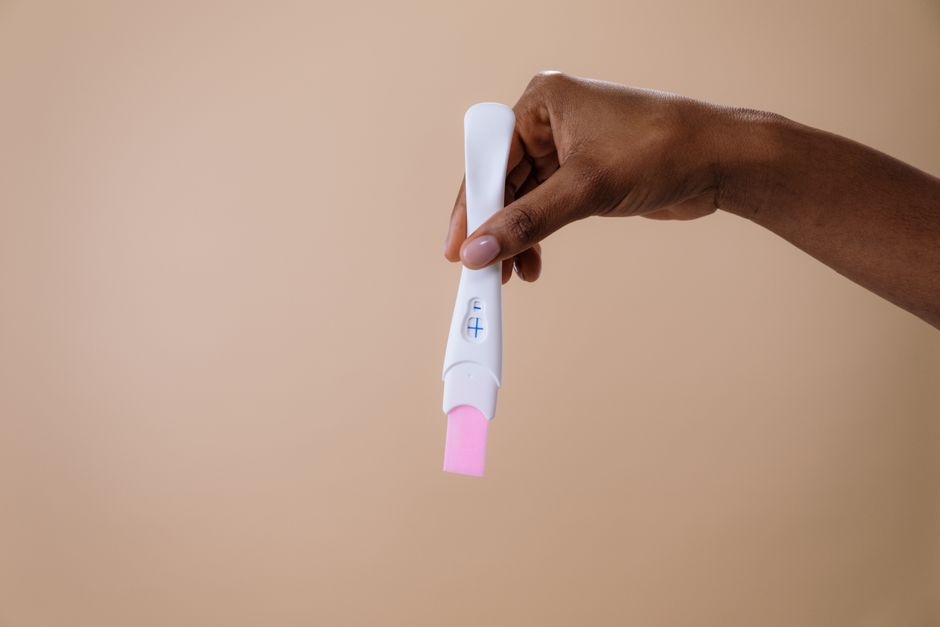
If you test too early for pregnancy, you will most likely get a negative result — even if you are actually pregnant. That is not a sign that something is wrong. It simply means your body has not yet produced enough of the hormone hCG for the test to detect it. The test is not broken and your body is not failing. The timing is just off.
Most home pregnancy tests are designed to detect human chorionic gonadotropin (hCG), a hormone the body starts making after a fertilized egg implants in the uterus. Implantation does not happen right after sex. It takes time. If you test before that process is far enough along, there is nothing for the test to find yet.
How Do Pregnancy Tests Actually Work?
Home pregnancy tests work by detecting hCG in your urine. This hormone is produced by cells that will eventually form the placenta. It is not present in meaningful amounts unless a fertilized egg has implanted and started to grow.
The test strip contains antibodies that bind to hCG. When hCG is present in your urine at a high enough level, it triggers a visible line or a digital “Pregnant” result. When it is not present at that level, the result is negative.
There is a threshold built into every test. Most standard home tests are designed to detect hCG at concentrations around 20 to 25 milli-international units per milliliter (mIU/mL) in urine. Some tests claim sensitivity as low as 10 mIU/mL. That number matters because it determines how early the test can work.
If your urine hCG level is below the test’s detection threshold, the result will be negative — regardless of whether you are pregnant. This is the core reason early testing leads to false negatives.
What Happens If You Test Too Early For Pregnancy?
You get a negative result that does not reflect your actual status. This is called a false negative. The test is working as designed, but the hormone level is simply too low to register.
Here is what is happening biologically. After ovulation, if an egg is fertilized, it travels through the fallopian tube toward the uterus. This journey takes several days. Once it reaches the uterus, it needs to implant into the uterine lining. Implantation typically occurs about 6 to 12 days after ovulation, though the range can vary.
Before implantation, there is no hCG being produced at all. After implantation, hCG levels begin to rise. In early pregnancy, hCG levels generally double approximately every 48 to 72 hours. But they start from a very low number. It takes time for that number to climb high enough for a home test to detect it.
This means that even if fertilization has occurred, testing a few days after ovulation will almost certainly give you a negative result. The hormone simply is not there yet in detectable amounts.
Some people test early, get a negative, and assume they are not pregnant. Then they test again a week later and get a positive. Nothing changed except the timing. The hCG level had time to rise.
How Soon Can You Test Accurately?
The most reliable approach is to wait until the first day of a missed period. By that point, if you are pregnant, hCG levels are usually high enough for most home tests to detect.
Some tests are marketed as being able to detect pregnancy several days before a missed period. These tests are more sensitive, meaning they can pick up lower levels of hCG. But even with a sensitive test, testing too early increases the chance of a false negative.
The reason is straightforward. The timing of implantation varies from person to person. Even if you know exactly when you ovulated, you cannot know exactly when implantation will occur. If implantation happens later than average, your hCG level will be lower than expected at any given point.
Research on early pregnancy detection has shown that the proportion of accurate results improves significantly with each day closer to the missed period. Testing four or five days before a missed period may detect some pregnancies, but it will miss others that would be detected just a few days later.
If you want the highest chance of an accurate result from a home test, wait until the day your period is due. If you cannot wait, understand that a negative result before that day does not rule out pregnancy.



Can You Get a False Positive If You Test Early?
False positives from early testing are uncommon but not impossible. The more likely issue with early testing is a false negative.
A false positive means the test says you are pregnant when you are not. This can happen for a few reasons. Some medications containing hCG, such as certain fertility treatments, can cause a positive result. A very early miscarriage, sometimes called a chemical pregnancy, can also produce a brief positive followed by a negative. In that case, the test was accurate — it detected hCG from a pregnancy that did not continue.
Testing too early does not cause false positives. It causes false negatives. The distinction matters because people often worry that an early positive is “wrong.” Usually, it is not. It is detecting a real pregnancy that may or may not progress.
Does Testing Too Early Cause Any Harm?
Testing too early does not harm you or a potential pregnancy. There is no physical risk from taking a pregnancy test at any point in your cycle.
The harm is emotional and practical. A false negative can cause unnecessary confusion, anxiety, or relief that later reverses. It can also delay important decisions — like stopping certain medications, avoiding alcohol, or seeking prenatal care — if you believe you are not pregnant when you actually are.
From a medical standpoint, the main concern is not the test itself. It is what you do with an inaccurate result. If you tested early and got a negative but still suspect you might be pregnant, the right move is to test again in a few days. Do not assume the first result is final.
What Should You Do If You Tested Too Early?
Wait a few days and test again. If your period has not started, use a home test with first-morning urine, which tends to have the highest concentration of hCG. If the result is still negative and your period remains absent, see a healthcare provider.
A blood test can detect hCG earlier than a urine test. Blood tests can measure very low levels of hCG, sometimes as early as 6 to 8 days after ovulation. But even blood tests have limits. If hCG has not started rising yet, no test can detect it.
If you are undergoing fertility treatment or have a history of early pregnancy loss, your provider may recommend specific testing timelines. Follow their guidance rather than relying on home test instructions alone.
If you are not sure when you ovulated, the uncertainty is even greater. Many people assume they ovulated on day 14 of their cycle, but ovulation timing varies. Stress, illness, travel, and other factors can shift it. If you ovulated later than you thought, your hCG level will be lower than expected at any given test date.
Why Do Some Tests Claim to Work So Early?
Test manufacturers use sensitivity claims to market their products. A test that can detect 10 mIU/mL is more sensitive than one that detects 25 mIU/mL. But sensitivity is not the same as accuracy in real life.
A test can be sensitive enough to detect low levels of hCG and still give a negative result if your hCG is below that threshold on the day you test. The claim “early detection” does not mean “detects all pregnancies early.” It means the test can detect some pregnancies earlier than less sensitive tests.
There is also the issue of how you use the test. Testing with diluted urine — after drinking a lot of water, for example — can lower the hCG concentration below the detection threshold even if you are pregnant. First-morning urine is more concentrated and generally gives the most reliable result for early testing.
Frequently Asked Questions
Can I be pregnant and still get a negative test?
Yes. A negative test result can occur if you test before your hCG level is high enough for the test to detect. Waiting a few days and testing again usually gives a more accurate result.
How many days after ovulation should I test?
Most home tests are most accurate on or after the first day of a missed period. Testing earlier than that increases the chance of a false negative because hCG may not have risen to detectable levels yet.
Does a faint line on a pregnancy test mean I tested too early?
A faint line usually means hCG is present but at a low level, which can happen in early pregnancy. It does not necessarily mean you tested too early, but testing again in a couple of days can help confirm whether the level is rising.
Can testing too early cause a miscarriage?
No. Taking a pregnancy test at any time cannot cause a miscarriage. The test only measures hormones in your urine and does not affect your body or a pregnancy.
