
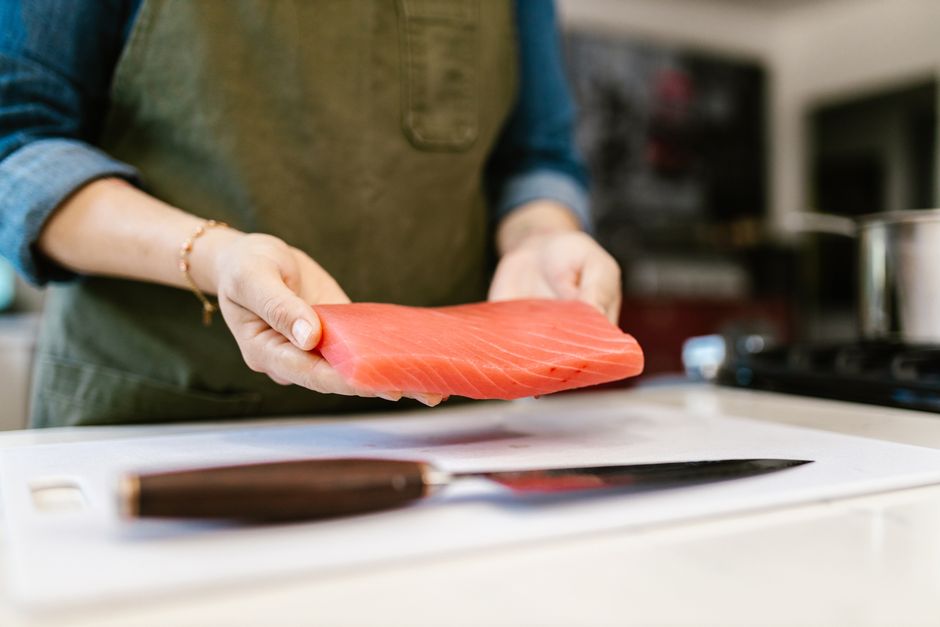
Eating bad salmon can cause food poisoning within hours. Symptoms like nausea, vomiting, stomach cramps, and diarrhea are common. Most people recover without medical treatment, but severe cases can lead to dehydration or hospitalization. The type of bacteria or toxin in the salmon determines how sick you get and how fast symptoms appear.
How Can You Tell If Salmon Has Gone Bad?
Your senses are the best tools for spotting bad salmon. Fresh salmon should smell like the ocean or have no strong odor at all. If it smells sour, ammonia-like, or fishy in an unpleasant way, it is likely spoiled.
The texture also changes. Fresh salmon feels firm and moist. Bad salmon feels slimy, sticky, or mushy to the touch. This sliminess comes from bacteria multiplying on the surface. Color can be misleading though. Salmon naturally fades from bright pink to pale as it ages, but color alone is not a reliable sign of safety.
Research from the USDA Food Safety and Inspection Service states that spoilage bacteria grow rapidly between 40°F and 140°F. If salmon has been left at room temperature for more than two hours, bacteria levels can reach dangerous levels even if the fish still looks and smells fine.
What Bacteria and Toxins Cause Illness from Bad Salmon?
Several different pathogens can contaminate salmon. The most common include Salmonella, Vibrio parahaemolyticus, and Listeria monocytogenes. Each causes a slightly different illness pattern.
Salmonella infection causes diarrhea, fever, and stomach cramps 6 to 72 hours after eating. Vibrio parahaemolyticus is often linked to raw or undercooked seafood and causes watery diarrhea and abdominal pain within 24 hours. Listeria is more dangerous for pregnant women, older adults, and people with weak immune systems. It can cause severe illness and even miscarriage.
There is also histamine poisoning, also called scombroid poisoning. This happens when fish is not kept cold enough after being caught. Bacteria convert an amino acid in the fish into histamine. Cooking does not destroy histamine. Symptoms include flushing, headache, burning mouth, and hives within minutes to a few hours. The CDC reports that scombroid poisoning is one of the most common fish-related illnesses in the United States.
What Happens If You Eat Bad Salmon?
Most people develop symptoms within 1 to 24 hours after eating. The severity depends on the type of contamination, how much you ate, and your overall health. A healthy adult may have mild diarrhea and nausea that resolves in 24 to 48 hours. A young child or older adult may need medical care.
Dehydration is the most common complication. Vomiting and diarrhea cause fluid loss faster than you can replace it by drinking. Signs of dehydration include dry mouth, dark urine, dizziness, and feeling very thirsty. Severe dehydration can require IV fluids in a hospital.
Some infections can spread beyond the gut. Salmonella can enter the bloodstream and cause bacteremia, which is a serious condition requiring antibiotics. Listeria can cause meningitis in vulnerable people. These outcomes are rare but real. According to the Food and Drug Administration, about 1 in 25 cases of foodborne illness leads to hospitalization.




How Long Does Food Poisoning from Salmon Last?
Most cases of salmon food poisoning last 1 to 3 days. Symptoms usually peak within the first 12 hours and then gradually improve. Viral infections like norovirus — which can also contaminate seafood — may cause symptoms for 48 to 72 hours.
Bacterial infections sometimes last longer. Salmonella diarrhea can persist for 7 days in some people. Campylobacter, another bacteria found in undercooked seafood, can cause symptoms for up to a week. If symptoms last longer than 3 days or include high fever over 101.5°F, blood in stool, or inability to keep fluids down, you should see a doctor.
A table comparing common pathogens helps clarify the differences:
| Pathogen | Onset Time | Duration | Key Symptoms |
|---|---|---|---|
| Salmonella | 6–72 hours | 4–7 days | Diarrhea, fever, cramps |
| Vibrio parahaemolyticus | 4–24 hours | 2–3 days | Watery diarrhea, nausea |
| Listeria | 1–4 weeks | Variable | Fever, muscle aches, confusion |
| Histamine poisoning | Minutes–2 hours | 4–6 hours | Flushing, headache, rash |
What Should You Do If You Ate Bad Salmon?
If you realize the salmon was bad after eating it, do not try to make yourself vomit. That can cause more harm. Instead, focus on staying hydrated. Drink small amounts of clear fluids like water, broth, or an electrolyte solution frequently. Avoid dairy, caffeine, and alcohol because they can worsen diarrhea.
Rest is important. Your body needs energy to fight the infection. Eat bland foods like crackers, toast, or rice when you feel ready. The BRAT diet — bananas, rice, applesauce, toast — is often recommended for upset stomachs, though evidence for its effectiveness is limited. What matters most is replacing lost fluids and giving your gut a break.
- Drink 8 to 10 cups of fluid per day if you have diarrhea
- Use oral rehydration salts if available
- Avoid anti-diarrhea medications if you have a fever or bloody stool
- Monitor for signs of dehydration
- Seek medical help if symptoms are severe or last more than 3 days
Do not take antibiotics on your own. Most food poisoning is viral or caused by bacteria that do not require antibiotics. Taking the wrong antibiotic can make things worse. Let a doctor decide if medication is needed.
How Can You Prevent Eating Bad Salmon?
Prevention starts at the store. Buy salmon from a reputable source. It should be displayed on ice or kept in a refrigerated case at 40°F or below. Whole fish should have clear eyes, bright red gills, and shiny skin. Fillets should look moist but not wet.
Get salmon home quickly. The USDA recommends refrigerating raw fish within two hours of purchase, or within one hour if the temperature outside is above 90°F. Store it in the coldest part of your refrigerator, ideally at 32°F to 38°F. Use raw salmon within 1 to 2 days, or freeze it immediately if you plan to keep it longer.
Cook salmon to an internal temperature of 145°F. Use a food thermometer to check the thickest part. The flesh should be opaque and flake easily with a fork. If you are eating raw salmon in sushi or poke, make sure it has been previously frozen to kill parasites. The FDA recommends freezing fish at -4°F for at least 7 days for raw consumption.
Leftover cooked salmon should be refrigerated within two hours and eaten within 3 to 4 days. Reheat it to 165°F. Do not leave cooked salmon at room temperature for more than two hours total, including time spent serving and eating.
Common Misconceptions About Bad Salmon
One widespread myth is that cooking bad salmon makes it safe. This is not true. Cooking kills bacteria, but it does not destroy the toxins some bacteria produce. Histamine, for example, is heat-stable. If salmon has already spoiled, cooking it will not prevent histamine poisoning.
Another myth is that lemon juice or vinegar kills bacteria in raw fish. Acidic marinades do not kill pathogens like Salmonella or Vibrio at the concentrations used in cooking. Only proper cooking or freezing at the right temperatures for the right duration can make raw fish safe.
Some people believe that salmon with a strong fishy smell is just “strong tasting” fish. In reality, a strong fishy odor is a sign of spoilage. Fresh salmon should not smell fishy at all. If it does, bacteria are already breaking down the fish tissue.
Finally, many think that if they ate bad salmon and feel fine, they are in the clear. Some foodborne illnesses have incubation periods of days or even weeks. Listeria symptoms can appear up to 70 days after exposure. Feeling fine immediately does not guarantee you will not get sick later.
Frequently Asked Questions
Can you get sick from salmon that smells fine?
Yes. Some bacteria do not produce noticeable odors until they reach very high levels. Pathogens like Salmonella and Listeria can be present without changing the smell, taste, or appearance of the fish.
How fast does salmon food poisoning start?
Symptoms can begin as quickly as 30 minutes after eating if histamine is the cause. Bacterial infections usually take 4 to 72 hours to appear. The onset time depends on the specific pathogen involved.
Is it safe to eat salmon that has been in the fridge for a week?
No. Raw salmon should be used within 1 to 2 days of refrigeration. Cooked salmon lasts 3 to 4 days. After that, the risk of bacterial growth and spoilage increases significantly even if the fish still looks okay.
Can you freeze salmon to kill bacteria?
Freezing stops bacterial growth but does not kill most bacteria. It does kill parasites, which is why sushi-grade fish is frozen. To kill bacteria, you must cook the salmon to 145°F.
