
Healthy fats are essential for your body to function properly. They help your brain work, support hormone production, and help your body absorb certain vitamins. The healthiest sources are unsaturated fats from plants and fatty fish, while you should limit saturated fats from animal products and avoid trans fats entirely.
What Are the Main Types of Dietary Fat?
All fats are not created equal. Each type affects your body differently, so it helps to know what you are actually eating.
Unsaturated fats are liquid at room temperature. These are the fats that most research links to better heart health. They come in two main forms: monounsaturated and polyunsaturated fats. Olive oil, avocados, and nuts are rich in monounsaturated fats. Polyunsaturated fats include omega-3 and omega-6 fatty acids, which your body cannot make on its own.
Saturated fats are solid at room temperature. Butter, lard, and the fat on red meat are common examples. Coconut oil and palm oil are also high in saturated fat despite being plant-based. Eating too much saturated fat can raise LDL cholesterol, which increases heart disease risk.
Trans fats are the ones to avoid completely. Most trans fats are artificially created when liquid oils are hydrogenated to make them solid. They raise bad cholesterol and lower good cholesterol at the same time. Many countries have banned artificial trans fats, and most major food companies have removed them, but they can still appear in some processed foods.
What Foods Are Healthy Fats?
Some foods are so rich in beneficial fats that they deserve regular spots on your plate. These are the top sources worth knowing about.
Avocados are one of the most concentrated sources of monounsaturated fat in the produce aisle. A medium avocado contains about 15 grams of fat, mostly monounsaturated. They also provide fiber and potassium.
Olive oil, especially extra virgin olive oil, is a staple of the Mediterranean diet. Research consistently links this diet to lower rates of heart disease. The fat in olive oil is mostly monounsaturated, and it also contains polyphenols that act as antioxidants.
Fatty fish like salmon, sardines, mackerel, and trout provide the long-chain omega-3 fats EPA and DHA. These fats reduce inflammation and support brain and eye health. The American Heart Association recommends eating fish, especially fatty fish, at least twice a week.
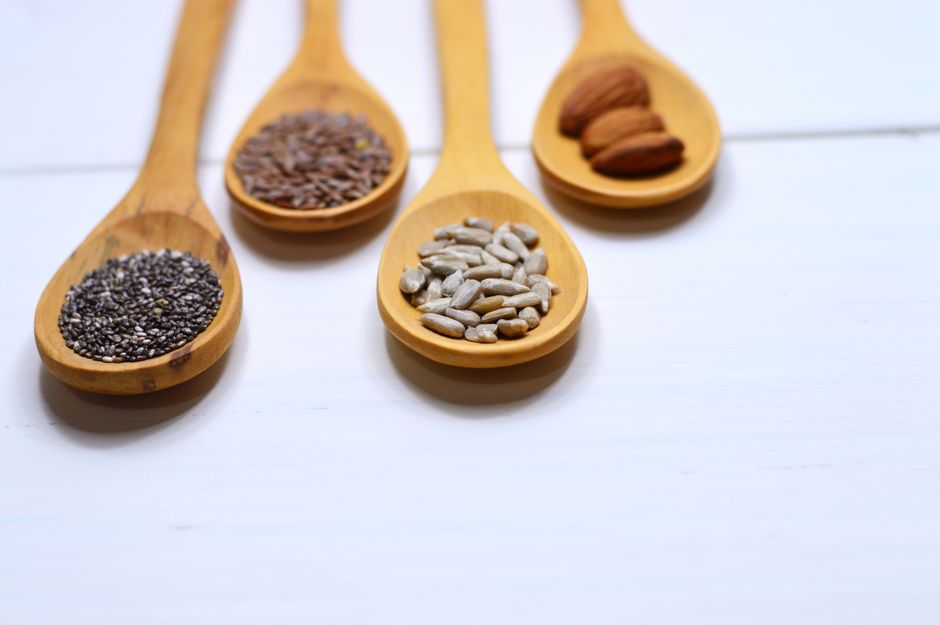
Nuts and seeds pack a lot of nutrition into a small package. Walnuts are notable for their plant-based omega-3 content. Chia seeds and flaxseeds also provide plant omega-3s, though your body converts these less efficiently than the omega-3s in fish. Almonds, cashews, and pistachios offer mostly monounsaturated fats.
Dark chocolate with a high cocoa content contains healthy fats from cocoa butter. Look for chocolate with at least 70 percent cocoa to limit added sugar.
Why Does Your Body Need Fat at All?
Fat is not just a storage form of energy. It plays several critical roles that no other nutrient can replace.
Your brain is about 60 percent fat. The myelin sheath that insulates your nerve cells is made of fat. Omega-3 fatty acids, particularly DHA, are structural components of brain cell membranes. Some research suggests that higher omega-3 intake is linked to better cognitive function as you age, though this remains an area of active study.
Fat is required to absorb the fat-soluble vitamins A, D, E, and K. These vitamins cannot enter your bloodstream without dietary fat. A salad with olive oil dressing delivers more vitamin A and E than the same salad without dressing. This is one reason very low-fat diets can lead to nutrient deficiencies.
Fats also help regulate inflammation and blood clotting. Omega-3 fats are generally anti-inflammatory, while omega-6 fats are more neutral when consumed in balance. The typical Western diet contains far more omega-6 than omega-3, and some researchers believe this imbalance contributes to chronic inflammation.





How Much Fat Should You Eat Daily?
There is no single number that works for everyone, but dietary guidelines offer a clear range.
The Dietary Guidelines for Americans recommend that total fat make up 20 to 35 percent of your daily calories. On a 2,000-calorie diet, that equals roughly 44 to 78 grams of fat per day. Most of this should come from unsaturated sources.
Saturated fat is the main area to limit. Guidelines recommend keeping saturated fat below 10 percent of daily calories. For a 2,000-calorie diet, that is about 22 grams or less. If you have high cholesterol or other heart disease risk factors, your doctor may suggest a lower target.
Trans fat should be as close to zero as possible. There is no safe level of artificial trans fat.
These numbers are general guidance, not a prescription. Athletes, pregnant women, and people with certain medical conditions may need different amounts. A registered dietitian can help you tailor fat intake to your specific needs.
Which Cooking Oils Are Best for High Heat?
Not all oils handle heat the same way. When oil gets too hot, it breaks down and can form harmful compounds.
The smoke point is the temperature at which an oil starts to smoke and degrade. Oils with higher smoke points are better for frying and searing. Oils with lower smoke points are better for dressings and low-heat cooking.
Avocado oil has one of the highest smoke points, around 500°F. It is excellent for high-heat cooking and has a neutral flavor. It is mostly monounsaturated fat.
Extra virgin olive oil has a moderate smoke point around 375°F. Contrary to what some people believe, it is stable enough for most home cooking, including sautéing and roasting. The idea that olive oil becomes toxic when heated is not supported by evidence.
Canola oil has a higher smoke point around 400°F and is low in saturated fat. It is a reasonable everyday cooking oil, though it is more processed than olive oil.
Coconut oil is about 82 percent saturated fat. Despite its popularity in wellness circles, it raises LDL cholesterol similarly to butter. The American Heart Association advises against using it regularly. If you enjoy the flavor, using it occasionally is fine, but it should not replace unsaturated oils.
Are Low-Fat and Fat-Free Foods Healthier?
Not necessarily. When manufacturers remove fat from a product, they often replace it with sugar, refined carbohydrates, or additives to improve taste and texture.
This can make the product worse for you. Fat slows digestion and helps you feel full. A low-fat yogurt with added sugar can spike your blood sugar faster than the full-fat version. Research has not shown that low-fat diets are better for weight loss than moderate-fat diets.
The quality of the food matters more than its fat content. A handful of almonds is a better snack than a fat-free granola bar loaded with sugar. Whole foods that naturally contain fat are generally healthier than processed foods engineered to be low-fat.
Can Healthy Fats Help You Lose Weight?
Fat is more calorie-dense than protein or carbohydrates. One gram of fat contains 9 calories, while protein and carbohydrates contain 4 calories per gram. Eating too much of any fat, even the healthy kind, can lead to weight gain.
But fat also promotes satiety. Meals that include fat keep you full longer than meals that are purely carbohydrates. This can help some people eat fewer calories overall throughout the day.
Some research suggests that Mediterranean-style diets rich in olive oil and nuts lead to sustainable weight loss, but the effect is modest. The key is replacing refined carbohydrates and processed foods with whole foods that contain healthy fats, not adding extra fat on top of your current diet.
Frequently Asked Questions
Is peanut butter a healthy fat?
Yes, peanut butter is healthy in moderation. It contains mostly monounsaturated fats, but it is also calorie-dense, so portion control matters.
Are eggs considered a healthy fat source?
Eggs are a good source of protein and fat, and the yolk contains most of the fat. Current evidence suggests that eating eggs in moderation does not increase heart disease risk for most healthy people.
Which fat is better, butter or olive oil?
Olive oil is healthier than butter. Olive oil is mostly monounsaturated fat, while butter is high in saturated fat, which can raise LDL cholesterol.
Can you eat too many healthy fats?
Yes, all fats contain 9 calories per gram, so eating too much of any fat can lead to weight gain. Healthy fats should replace other foods in your diet, not be added on top of them.
