
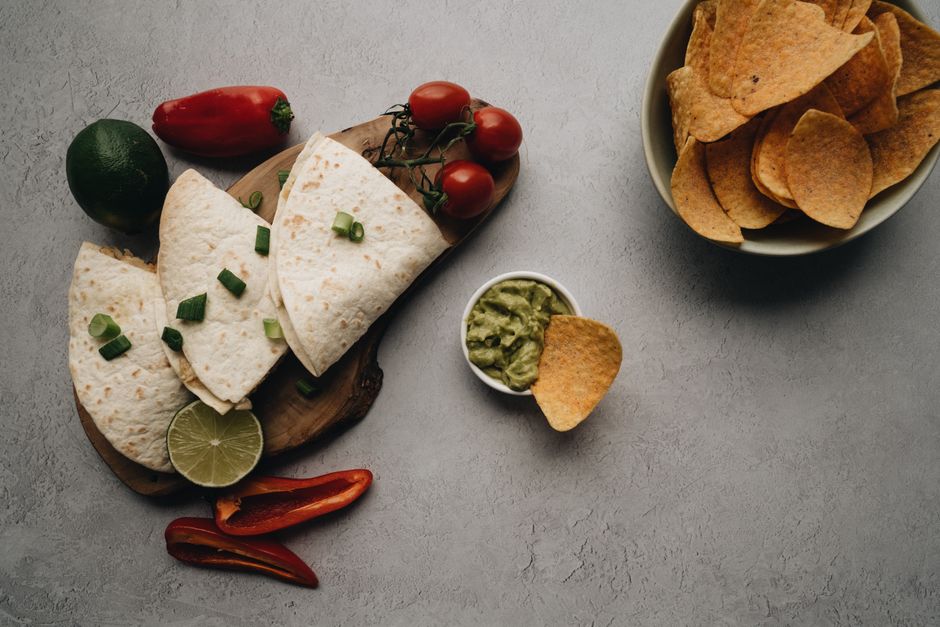
A Chipotle quesadilla can fit into a healthy diet, but it is not the lowest-calorie or highest-protein option on the menu. The standard chicken quesadilla with cheese and flour tortilla contains roughly 700-900 calories and about 40-45 grams of protein, depending on portion sizes and add-ons. Whether it is “healthy” depends entirely on what you add to it and how it fits into your daily calorie and nutrition needs.
What Is Actually in a Chipotle Quesadilla?
The quesadilla is a flour tortilla folded with cheese and your choice of protein, then grilled. You can order chicken, steak, barbacoa, carnitas, sofritas, or tofu. The base quesadilla comes with cheese and your protein only.
Everything else is an add-on. Sides like rice, beans, guacamole, sour cream, and salsa are not included automatically. This matters because the calorie count changes dramatically based on what you add.
A plain chicken quesadilla is a different meal than one loaded with rice, beans, guacamole, and sour cream. The base version is relatively simple. The loaded version approaches a full day’s calories for many people.
Is A Chipotle Quesadilla Healthy Calories Protein?
The short answer: it is a reasonable protein source but a calorie-dense one. The flour tortilla alone contributes roughly 300 calories before anything goes inside it. Cheese adds another 200-300 calories depending on portion. Your protein adds 150-200 calories.
So the base quesadilla sits around 700-800 calories with roughly 40-45 grams of protein. That is a substantial meal. For comparison, many adults need 1,800-2,400 calories per day. One quesadilla can represent one-third to nearly half of that.
The protein content is solid. Chicken and steak both provide complete protein with all essential amino acids. A quesadilla with chicken gives you about 40 grams of protein, which covers a large portion of the daily recommendation for most adults.
Calorie Breakdown by Protein Choice
Your protein choice changes the numbers. Here is how the options compare for a standard quesadilla with cheese:
- Chicken: about 700-750 calories, 40-45g protein
- Steak: about 750-800 calories, 38-42g protein
- Barbacoa: about 750-800 calories, 38-40g protein
- Carnitas: about 800-850 calories, 35-38g protein
- Sofritas (tofu): about 700-750 calories, 25-30g protein
These are estimates based on standard Chipotle portioning. Actual amounts vary because employees portion by hand. The differences between chicken, steak, and barbacoa are small. Carnitas tends to be slightly higher in calories due to higher fat content.
Sofritas is the notable outlier. It has significantly less protein than the meat options. If protein is your goal, choose chicken or steak.




What Happens When You Add Sides?
This is where the quesadilla goes from reasonable to excessive. Each add-on adds meaningful calories:
- White rice: about 185 calories per serving
- Black beans: about 130 calories per serving
- Guacamole: about 230 calories per serving
- Sour cream: about 110 calories per serving
- Queso: about 120 calories per serving
- Salsa: 15-80 calories depending on type
Add rice, beans, guacamole, and sour cream to a chicken quesadilla and you are looking at 1,300-1,500 calories. That is a large meal by any standard. For many people, that represents most of their daily calorie needs.
The protein does increase with beans and rice. Adding both pushes protein to roughly 50-55 grams. But the calorie cost is high relative to the protein gained.
How Does It Compare to Other Chipotle Options?
The quesadilla is not the most efficient protein-per-calorie choice at Chipotle. A chicken burrito bowl with rice, beans, and fajita vegetables typically comes in around 600-700 calories with 40-45 grams of protein.
That is fewer calories for similar protein. The difference comes down to the tortilla and cheese. The quesadilla’s flour tortilla and extra cheese add calories without adding much protein.
A chicken burrito bowl with double chicken gives you roughly 55-60 grams of protein at about 700-800 calories. That outperforms the quesadilla on both metrics.
However, the quesadilla has one advantage. It is a more satisfying format for some people. The grilled tortilla and melted cheese make it feel more like a treat than a salad or bowl. If that helps you stick to your overall nutrition plan, it can still work.
Sodium and Fat Considerations
Protein and calories are not the whole picture. The quesadilla is also high in sodium and saturated fat.
A standard chicken quesadilla contains roughly 1,200-1,500 mg of sodium. The American Heart Association recommends limiting sodium to 2,300 mg per day, with an ideal limit of 1,500 mg for most adults. One quesadilla can put you most of the way there.
Cheese and the flour tortilla are the main sodium sources. The grilled chicken itself is also seasoned with salt. If you have high blood pressure or are watching sodium for any reason, this is worth factoring in.
Saturated fat is also notable. The cheese contributes roughly 15-20 grams of saturated fat in a standard quesadilla. Dietary guidelines suggest keeping saturated fat below 10% of daily calories. For a 2,000-calorie diet, that is about 22 grams per day. One quesadilla nearly hits that limit.
How to Make a Chipotle Quesadilla Healthier
If you want the quesadilla experience with better numbers, you have options. They involve trade-offs, but they work.
Ask for light cheese. This cuts calories and saturated fat meaningfully. The quesadilla still holds together and still tastes good, just with less cheese.
Choose chicken or steak over carnitas. The difference is modest but real. Chicken gives you the best protein-to-calorie ratio.
Skip the sides that come with the quesadilla meal. The default quesadilla comes with three sides on the side. If you order a la carte, you control exactly what goes in.
Add fajita vegetables. They add fiber and volume for very few calories. They also make the quesadilla more filling without adding much fat or sodium.
Consider getting the quesadilla and eating only half. The portion is large. Splitting it or saving half for later turns one high-calorie meal into two reasonable ones.
Is It Healthy for Weight Loss?
For weight loss, the quesadilla is a challenging choice but not impossible. The base chicken quesadilla at roughly 700-750 calories is a large meal that can fit into a calorie deficit if you eat lightly the rest of the day.
The problem is the add-ons. Most people do not order the plain quesadilla. They add sides, guacamole, and sour cream. That pushes the meal past 1,200 calories, which makes weight loss difficult for many people.
If weight loss is your goal, the burrito bowl is almost always the better choice. You get similar protein for fewer calories. You also get more vegetables and fiber, which help with satiety.
That said, strict calorie counting is not the only way to lose weight. If a quesadilla satisfies a craving and prevents you from eating a much larger meal later, it can be part of a sustainable plan. The key is knowing what you are actually eating.
Frequently Asked Questions
How many calories are in a Chipotle chicken quesadilla?
A standard chicken quesadilla with cheese and flour tortilla contains roughly 700-750 calories. Adding sides like rice, beans, guacamole, or sour cream increases that to 1,200 calories or more.
Is the Chipotle quesadilla high in protein?
Yes, a chicken or steak quesadilla provides about 40-45 grams of protein. That covers a substantial portion of the daily protein recommendation for most adults.
What is the healthiest protein choice for a Chipotle quesadilla?
Chicken offers the best balance of protein to calories. Steak is similar. Carnitas has slightly more calories and fat. Sofritas has significantly less protein.
Can I eat a Chipotle quesadilla on a weight loss diet?
Yes, if you eat only the base quesadilla and account for the calories in your daily total. Adding sides quickly makes it a 1,200-1,500 calorie meal, which is harder to fit into a deficit.
