
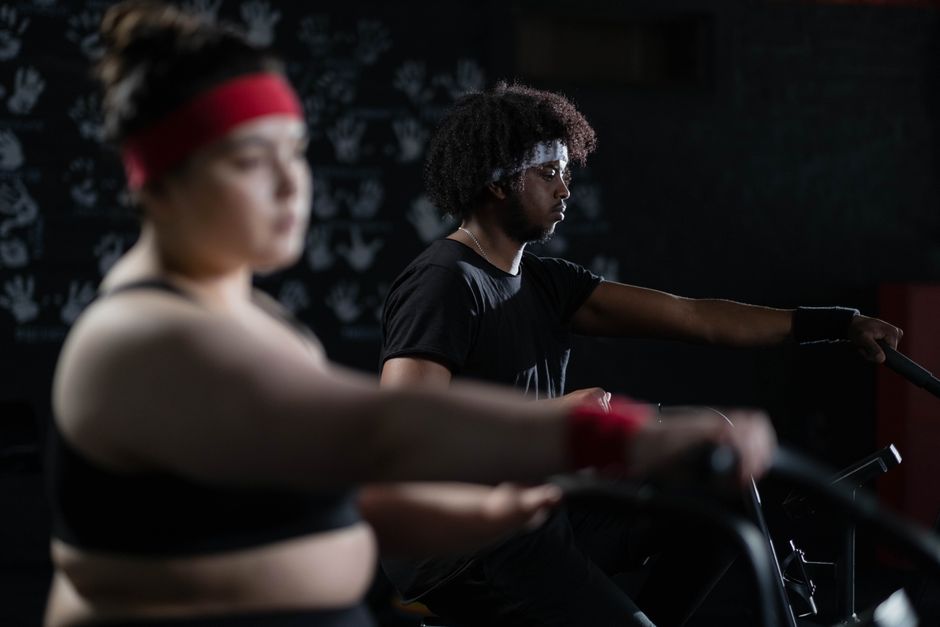
No exercise machine can target belly fat specifically. Spot reduction is a myth, and the research has been clear on this for years. When you exercise, your body draws energy from fat stores throughout your body, not just the area you are working. So the real question is not which machine targets your midsection, but which machine burns the most total calories and engages the most muscle mass. Based on that measure, the machines that involve your whole body—like the rowing machine, the elliptical with moving handles, and the stair climber—come out ahead of machines that isolate one area, like the seated leg press or the abdominal crunch machine.
Why Spot Reduction Does Not Work
Your body stores fat in fat cells. When you exercise, your muscles release hormones that signal those fat cells to release fatty acids for energy. But that signal is systemic. It circulates through your bloodstream and reaches fat cells all over your body. It does not preferentially target the fat cells sitting right next to the working muscle.
Studies have confirmed this repeatedly. Research on abdominal exercises has shown that doing hundreds of crunches over several weeks does not reduce belly fat more than doing no abdominal work at all. The fat loss that did occur in these studies was distributed across the whole body, driven by the calorie deficit, not by the specific exercise performed.
What this means practically is that a machine that works your arms, legs, and core will burn more fat overall than a machine that only works your abs. Total calorie burn is what drives fat loss. Where that fat comes off is largely determined by genetics, hormones, and age—not by which machine you choose.
Which Machines Burn the Most Calories
If you want to reduce belly fat, your priority should be total calorie expenditure. Here is how the common gym machines compare for a 155-pound person exercising at a moderate to vigorous pace for 30 minutes.
- Rowing machine: Roughly 260–315 calories. Uses the legs, back, arms, and core in every stroke.
- Stair climber: Roughly 260–310 calories. Heavy leg engagement and steady cardiovascular demand.
- Elliptical with moving handles: Roughly 235–275 calories. Engages both upper and lower body.
- Treadmill (no incline): Roughly 230–295 calories depending on speed. Mostly lower body.
- Treadmill (incline walk): Roughly 270–330 calories at a steep incline and brisk pace.
- Stationary bike: Roughly 210–260 calories. Primarily lower body.
- Seated ab crunch machine: Roughly 30–60 calories. Minimal energy demand.
The rowing machine stands out because it demands effort from nearly every major muscle group. More muscle mass working means more oxygen consumed, which means more calories burned per minute. The stair climber is also excellent because climbing stairs is a high-effort activity that keeps your heart rate elevated.
The seated ab machine is the opposite. It isolates your abdominal muscles but requires very little energy. You could spend 20 minutes on it and burn fewer calories than a single minute of vigorous rowing.
What the Research Says About Cardio and Belly Fat
Research consistently shows that moderate to vigorous aerobic exercise reduces visceral fat—the fat stored deep inside the abdomen around your organs. Visceral fat is the more dangerous type of belly fat because it is linked to higher risks of heart disease, type 2 diabetes, and metabolic syndrome.
Some studies indicate that high-intensity interval training, or HIIT, may reduce visceral fat more efficiently than steady-state cardio in the same amount of time. HIIT involves short bursts of near-maximal effort followed by brief recovery periods. On a machine, that might look like 30 seconds of sprinting on a rower followed by 60 seconds of easy pace, repeated for 15 to 20 minutes.
That does not mean steady-state cardio is useless. A 45-minute moderate session on the stair climber burns more total calories than a 15-minute HIIT session. If your goal is fat loss, the total calorie deficit over the week matters more than the intensity of any single workout. The best approach for most people is a mix of both.
-
 How to Burn Belly Fat Exercise? A Simple Guide That Helps
 -
How to Get Rid of Belly Fat Exercise? What Actually Works
-
How to Lose Belly Fat Exercise Fast? Easy Steps to Follow
-
Does Plank Exercise Burn Belly Fat? The Short Answer
-
Japanese Water Ritual for Weight Loss. Nagano Tonic Reviews & Ingredients.




The Exercise Machine That Burns the Most Belly Fat
The exercise machine that burns the most belly fat is the one you will actually use consistently at an intensity that challenges you. That answer sounds simple, but it is the honest one. A rowing machine burns more calories per minute than a recumbent bike when both are used vigorously. But if you hate rowing and skip your workouts, the bike wins by default.
If you want a more specific answer, the rowing machine is the strongest candidate. It engages roughly 85 percent of your muscles with each stroke. It demands coordinated effort from your legs, core, back, and arms. It is also easy on the joints because it is low impact.
The stair climber is a close second. It keeps your legs working continuously against gravity, which drives your heart rate up quickly. Many people find it harder to slack off on the stair climber because the machine forces you to keep stepping.
The treadmill with incline walking deserves mention too. Walking on a steep incline elevates your heart rate substantially while being gentler on the body than running. It is a practical option for people who find high-impact exercise uncomfortable.
What matters most is that you are working hard enough to breathe heavily but still speak in short sentences. That level of effort, sustained for 30 to 45 minutes several times per week, is what creates the calorie deficit needed to lose belly fat.
Strength Training and Muscle Mass Matter
Cardio machines get most of the attention when people talk about fat loss, but strength training deserves a place in the conversation. Muscle tissue is metabolically active. It burns more calories at rest than fat tissue does. Building or preserving muscle raises your resting metabolic rate, which means you burn more calories throughout the day even when you are not exercising.
This matters for belly fat specifically because of how the body responds to calorie restriction. When you cut calories to lose weight, you lose both fat and muscle. Strength training helps preserve the muscle so that a larger share of the weight you lose is fat.
The research on this is well established. Studies have found that combining aerobic exercise with resistance training is more effective for fat loss than aerobic exercise alone. Some studies also indicate that resistance training is associated with lower amounts of visceral fat, independent of total weight loss.
You do not need to choose between cardio and strength. A balanced routine includes both. Use the rowing machine or stair climber for cardiovascular conditioning, and add weight training exercises like squats, deadlifts, and presses on other days. If you only have 30 minutes, split it—15 minutes of intervals on a machine and 15 minutes of compound strength movements.
How Nutrition Determines Your Results
Exercise is half of the equation. The other half is what you eat. No machine can outwork a diet that consistently provides more calories than your body burns. This is a thermodynamic reality, not an opinion.
A single slice of cheesecake can contain 400 to 500 calories. Burning that off requires roughly 45 to 60 minutes of vigorous rowing or stair climbing. It is far easier to avoid the extra calories than to burn them off afterward.
For reducing belly fat specifically, protein intake deserves attention. Higher protein diets help preserve muscle during weight loss and increase satiety, which makes it easier to maintain a calorie deficit. A common guideline is 0.7 to 1 gram of protein per pound of body weight per day for people actively trying to lose fat while preserving muscle.
Sleep also plays a role that many people underestimate. Poor sleep is associated with higher levels of the hunger hormone ghrelin and lower levels of the satiety hormone leptin. Studies have found that people who sleep fewer than six hours per night tend to carry more visceral fat. Prioritizing seven to nine hours of sleep supports your fat loss efforts in ways that no exercise machine can replicate.
Practical Workout Plans to Get Started
If you are new to exercise or returning after a break, start with three sessions per week. Consistency matters far more than intensity in the first month.
A simple beginner plan on the rowing machine looks like this: warm up with easy rowing for 5 minutes, then row at a moderate pace for 20 minutes, aiming for a steady rhythm. Finish with 5 minutes of easy rowing to cool down. Do this three times per week for two weeks. Then increase to 25 minutes of moderate rowing, or add short intervals.
For the stair climber, start with 10 minutes at a manageable pace and add 2 to 3 minutes each week until you reach 30 minutes. If the machine has adjustable speed settings, keep the speed steady and focus on maintaining good posture rather than gripping the handles tightly. Leaning on the handles reduces the work your legs do and lowers the calorie burn.
For people with more experience, interval training is an efficient option. On the rower, try 30 seconds of hard effort followed by 90 seconds of easy rowing. Repeat that cycle 8 to 10 times. The whole workout takes about 20 minutes and produces a significant calorie burn in a short window.
Whatever machine you choose, pay attention to form. On the rower, push with your legs first, then lean back slightly, then pull with your arms. Reverse the sequence on the way back. On the elliptical, stand tall and engage your core rather than slouching over the console. Proper form prevents injury and ensures the intended muscles are doing the work.
Frequently Asked Questions
Can I lose belly fat by doing ab exercises on a machine?
No. Ab exercises strengthen the muscles under the fat, but they do not selectively burn the fat covering those muscles. Fat loss requires a calorie deficit from diet and full-body exercise.
Is the treadmill or the elliptical better for losing belly fat?
The treadmill burns slightly more calories at the same perceived effort, especially with incline. The elliptical is lower impact, so it may be a better choice if you have joint pain and can sustain longer sessions.
How often should I use a cardio machine to see belly fat reduction?
Most research supports 150 to 300 minutes of moderate-intensity aerobic exercise per week for weight loss. Combined with a calorie deficit, this level of activity typically produces measurable fat loss over 8 to 12 weeks.
Does using the rowing machine hurt your lower back?
Rowing with poor form can strain the lower back. With proper technique—pushing with the legs before pulling with the arms and keeping your back straight—rowing is generally safe and is often recommended for people with back issues because it is low impact.
