
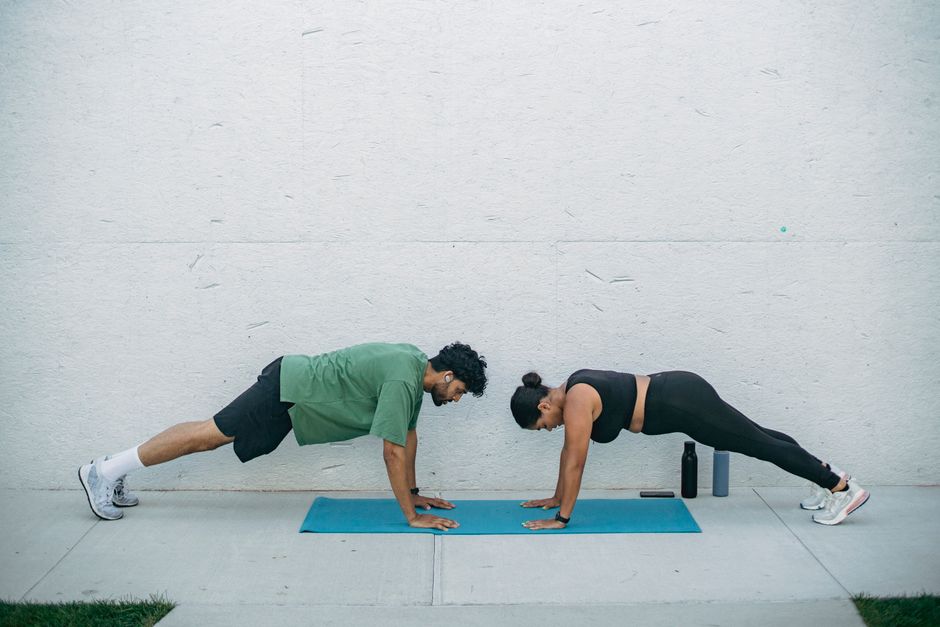
Plank exercise burn belly fat is a question with a clear answer: no, doing planks alone will not burn belly fat. Spot reduction — the idea that exercising one body part burns fat there — is a myth that research has repeatedly disproven. Planks strengthen your core muscles, but they do not selectively remove fat from your midsection. Fat loss happens from your whole body at once, and it depends mostly on your overall calorie balance, not on which exercises you do.
Why Planks Do Not Target Belly Fat Directly
Your body stores fat in fat cells throughout your body. When you exercise, your muscles use energy from fat stores all over, not just from the area being worked. The idea that working a specific muscle burns the fat sitting on top of it has been studied and found to be false.
Studies have looked at this directly. Participants who did abdominal exercises over several weeks did lose fat, but the fat loss was spread across their whole body. Their belly fat did not decrease more than fat in other areas. The muscle underneath grew stronger, but the layer of fat on top stayed the same relative to the rest of the body.
This is because of how your body decides where to pull fat from. Your hormones and genetics largely determine fat distribution. For many people, belly fat is the last place the body releases fat from. That is frustrating, but no exercise can override that system.
What Planks Actually Do for Your Body
Planks are an isometric exercise. That means you hold a position without moving. They primarily work your transversus abdominis, the deepest layer of your abdominal wall, along with your obliques, rectus abdominis, and muscles in your back and shoulders.
A stronger core has real benefits. It improves posture, helps protect your lower back during daily activities, and can improve performance in other exercises. If you have ever felt lower back pain during lifting or even long periods of standing, a stronger core often helps.
But strength and visible abs are different things. You can have a very strong core and still have a layer of fat covering it. The six-pack look is not a fitness achievement. It is a body-fat percentage achievement. You cannot plank your way to a visible six-pack if your body fat is above a certain level.
How Many Calories Does a Plank Actually Burn?
Planks burn calories, but not many. A person weighing about 155 pounds might burn roughly 3 to 4 calories per minute holding a plank. That is less than walking at a moderate pace.
Compare that to other exercises:
- Running at a 10-minute mile pace burns about 11 to 12 calories per minute
- Cycling at a moderate pace burns about 8 to 10 calories per minute
- Jumping rope burns about 12 to 15 calories per minute
- Planking burns about 3 to 4 calories per minute
A 60-second plank burns roughly 3 to 4 calories. A pound of body fat equals about 3,500 calories. To lose one pound of fat from planking alone, you would need to hold a plank for about 15 hours. That is not a practical fat-loss strategy.
Planks are a strength exercise, not a cardio exercise. They build muscle endurance and stability, but they do not raise your heart rate enough or long enough to create significant calorie burn.




What Actually Burns Belly Fat
Belly fat responds to the same rules as fat everywhere else: you need a calorie deficit. That means consuming fewer calories than your body uses each day. When that happens, your body pulls from fat stores, including abdominal fat.
Exercise helps create that deficit, but the type matters. Cardiovascular exercise burns more calories per minute than strength training. Brisk walking, running, swimming, cycling, and rowing all burn substantial calories. High-intensity interval training, or HIIT, has been shown in some studies to be particularly effective at reducing abdominal fat.
Resistance training also matters, but not because it spot-reduces. Building muscle increases your resting metabolic rate. Muscle tissue burns more calories at rest than fat tissue does. Over time, having more muscle makes it easier to maintain a calorie deficit.
Diet is the biggest factor. You cannot out-exercise a poor diet. Reducing refined carbohydrates, sugary drinks, and highly processed foods while increasing protein, vegetables, and fiber is the most reliable approach. The specific diet you choose matters less than whether you can maintain it.
How to Use Planks in a Fat-Loss Routine
Planks belong in a fat-loss program, just not as the main driver. Use them for what they are good at: building core strength and stability.
A practical approach is to include planks two to three times per week. Hold each plank for 30 to 60 seconds, and do 2 to 3 sets. You can add variations like side planks or plank with shoulder taps to challenge different core muscles.
Pair that with a separate fat-loss strategy:
- Do 150 to 300 minutes of moderate cardio per week, or 75 to 150 minutes of vigorous cardio
- Include full-body resistance training two to three times per week
- Track your food intake for a few weeks to understand your actual calorie intake
- Aim for a modest calorie deficit of 300 to 500 calories per day
This combination works because each piece fills a different role. Cardio burns calories now. Resistance training preserves muscle and raises your metabolic rate. Diet controls the calorie side of the equation. Planks strengthen the core that supports all of it.
The Role of Genetics in Belly Fat
Genetics play a significant role in where you store fat and how easily you lose it from specific areas. Some people naturally carry more fat in their abdomen. Others store it in their hips, thighs, or arms.
You cannot change where your body prefers to store fat. What you can change is your overall body fat percentage. As you lose body fat, you will eventually lose belly fat too. It may come off last, but it will come off if you stay consistent.
There is also a distinction between subcutaneous fat and visceral fat. Subcutaneous fat is the soft fat just under your skin. Visceral fat sits deeper, around your organs, and is more metabolically harmful. Visceral fat responds well to exercise and calorie restriction. In fact, visceral fat is often the first fat to mobilize during weight loss.
So while planks do not spot-reduce subcutaneous belly fat, an overall fat-loss program that includes exercise will reduce visceral fat. That is a genuine health benefit beyond appearance.
Common Plank Mistakes That Reduce Effectiveness
Proper form matters. A poorly done plank is not just ineffective. It can strain your lower back or shoulders.
The most common mistake is letting your hips sag. This puts pressure on the lumbar spine and reduces core activation. Another common mistake is pushing your hips too high, which turns the exercise into a partial yoga pose and takes tension off the core.
Here is how to set up a proper plank:
- Place your forearms on the floor, elbows directly under your shoulders
- Extend your legs behind you, balancing on your toes
- Keep your body in a straight line from head to heels
- Squeeze your glutes and abs to maintain the line
- Breathe steadily. Do not hold your breath
A 20-second plank with perfect form is more valuable than a 60-second plank with sagging hips. Quality beats duration. If you cannot hold good form for 30 seconds, start with shorter holds and build up over several weeks.
How Long Until You See Changes
If you add planks to your routine, you will likely notice core strength improvements within a few weeks. Holding a plank for longer or feeling more stable during other exercises are early signs of progress.
Visible changes in belly fat take longer. A safe rate of fat loss is about 1 to 2 pounds per week. At that rate, visible changes in your midsection typically appear within 4 to 8 weeks, depending on your starting point and genetics.
If you are already at a healthy body fat percentage, you may see definition sooner. If you have more fat to lose, it will take longer. There is no reliable way to speed up the process beyond maintaining a consistent calorie deficit.
Be wary of any product or program that promises quick belly fat loss. No supplement, cream, or device has been shown to selectively remove abdominal fat. The evidence simply does not support those claims.
Frequently Asked Questions
How many calories does a 1-minute plank burn?
A 1-minute plank burns roughly 3 to 4 calories for a person weighing about 155 pounds. That is far too few to create meaningful fat loss on its own.
Can planks alone give you a six-pack?
No. Planks build core strength, but visible abs depend on having a low enough body fat percentage. You need a calorie deficit and overall fat loss to see abdominal definition.
What is the best exercise to burn belly fat?
There is no single best exercise. A combination of cardio, full-body resistance training, and a calorie-controlled diet is the most evidence-based approach to reducing belly fat.
How often should I do planks to strengthen my core?
Two to three times per week is enough for core strength gains. Hold each plank for 30 to 60 seconds with proper form, and allow a rest day between sessions.
