
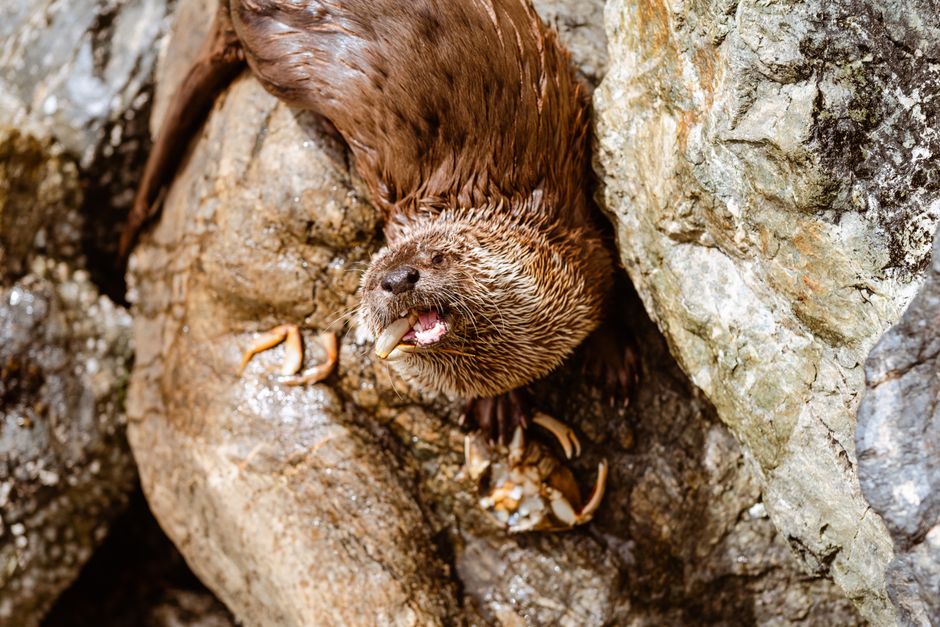
Crabs are eaten by a long list of predators in both water and on land. In the ocean, that includes octopuses, sea otters, large fish like cod and grouper, sea turtles, and even other crabs. On land and in the shallow zone where water meets shore, birds such as herons and gulls, raccoons, otters, and people are the main threats. A crab’s hard shell helps, but it does not make them safe.
The key to understanding who eats crabs is that crabs are not one animal. There are thousands of species. Some live their whole lives in deep water. Some live on beaches and in marshes. Some live in fresh water. Each group faces a different set of predators, and each has different defenses.
What Eats Crabs in the Ocean?
Octopuses are among the most effective crab hunters in the sea. An octopus can pull a crab apart with its arms, and its beak can crack through shell. Some octopus species are a major source of crab deaths in coastal waters.
Sea otters are another major predator. In places like the Pacific coast of North America, otters eat large numbers of crabs and other shellfish. Their appetite for crabs and urchins is one reason they matter so much to the health of kelp forests.
Large fish also eat crabs, especially young ones. Cod, grouper, wolffish, and many bottom-feeding fish crush or swallow crabs whole. Because crabs start life as tiny larvae floating in open water, fish can eat enormous numbers of them before they ever reach the seabed.
Sea turtles, especially loggerheads, eat crabs as part of a diet built around hard-shelled prey. So do some sharks and rays, which crush crabs with flat, plate-like teeth.
Crabs also eat each other. Larger crabs, including some species we think of as food, will eat smaller crabs without hesitation. This is one of the biggest sources of crab death in crowded waters.
What Eats Crabs on Land and at the Shore?
Birds are the most visible land predators of crabs. Herons, egrets, gulls, crows, and ravens all eat crabs. So do some raptors and shorebirds that hunt in the zone between high and low tide.
Mammals do a lot of the work too. Raccoons are famous for raiding crab burrows and turning over rocks at the water’s edge. River otters eat crabs in both fresh and salt water. In some regions, foxes, coyotes, and wild pigs also eat crabs when they find them.
People are a major predator of crabs worldwide. Commercial and recreational crabbing removes very large numbers of crabs every year. For many crab species, human fishing is the single largest source of mortality.
Land crabs face predators that ocean crabs never see. On islands, rats, cats, dogs, and introduced mammals can devastate crab populations. On tropical coasts, ghost crabs and land crabs are hunted by birds, reptiles, and mammals alike.
Why Do So Many Animals Eat Crabs?
Crabs are a dense source of protein, minerals, and fat. For a predator, that is a lot of nutrition packed into a small, slow-moving package. Many crabs cannot swim fast or flee far, which makes them a reliable meal.
Crabs are also abundant. In many coastal and shallow-water habitats, they are one of the most common animals on the seafloor. Abundance plus nutrition equals a target.
The one catch is the shell. A crab’s exoskeleton is hard and, in some species, armed with sharp claws. That is enough to stop some predators. It is not enough to stop an octopus, an otter, or a determined raccoon.


How Do Crabs Defend Themselves?
Crabs have several defenses, and which ones they use depends on the species and the threat.
- Hard shell: The exoskeleton resists bites and crushing from many predators.
- Claws: Pincers can pinch, crush, or hold off attackers. Some species have one enlarged claw used mainly for defense.
- Camouflage: Many crabs match the color and texture of sand, rock, or mud. Some attach bits of algae or sponge to their shells to blend in.
- Burrowing: Many crabs dig into sand or mud to hide. Some live in burrows for most of their lives.
- Speed and escape: Ghost crabs and some others can run quickly across sand. Others can swim using flattened back legs.
- Autotomy: A crab can drop a claw or leg if a predator grabs it. The limb may regrow over later molts, though regrowth takes time and energy.
- Timing: Many crabs are active at night or at specific tides, which reduces their exposure to predators.
None of these defenses is perfect. Crabs are eaten at every stage of life, from larvae to adults.
Do Crabs Get Eaten at Every Stage of Life?
Yes, and the earliest stages are the most dangerous. A crab begins life as a larva that drifts in open water. Larvae are tiny, soft, and nearly defenseless. Fish, jellyfish, and filter feeders eat them in huge numbers. Most crabs that hatch never reach adulthood.
As crabs grow, they become harder to eat. But growth brings a new problem. To grow, a crab must molt. It sheds its old shell and expands before the new one hardens. During that window, the crab is soft and highly vulnerable.
Adult crabs are the safest, but even large adults are eaten by octopuses, sea otters, large fish, sea turtles, and people. Size reduces risk. It does not remove it.
Where Does the “What Eats Crabs” Question Matter Most?
This question matters in real ecology. Crabs are often what scientists call a keystone group. They eat smaller animals and are eaten by larger ones. When crab numbers change, the effects ripple through the food web.
Sea otters are a good example. Where otters are present, they eat crabs and urchins. Fewer urchins means more kelp. More kelp means more habitat for fish. Remove the otters, and the whole chain can shift.
Human fishing adds another layer. When people remove large numbers of crabs, predators that depend on crabs may decline. At the same time, prey that crabs normally eat may increase. Predicting the exact outcome is difficult, and scientists do not always agree on how strong these effects are in every ecosystem.
Are Crabs at Risk From These Predators?
Most crab species are not at risk from natural predators alone. Predation is a normal part of the ecosystem, and crab populations are built to survive it by producing huge numbers of offspring.
The bigger risk comes from human activity. Overfishing, habitat loss, coastal development, pollution, and warming water can all reduce crab populations. In some regions, these pressures matter far more than natural predation.
Some crab species are considered vulnerable or endangered because of these combined pressures. Others are abundant and heavily fished. The picture varies a lot by species and location.
Frequently Asked Questions
What animals eat crabs the most?
Octopuses, sea otters, large fish, sea turtles, and other crabs are the main ocean predators, while birds, raccoons, otters, and people are the main land and shore predators. The single biggest source of crab mortality varies by species and location.
Do crabs eat each other?
Yes, larger crabs commonly eat smaller crabs, including members of their own species. This cannibalism is one of the largest sources of crab death in crowded waters.
Can a crab survive losing a claw?
Yes, a crab can drop a claw or leg to escape a predator and often survives. The limb may regrow over later molts, though regrowth takes time and energy.
Are crabs safe from predators once they are adults?
No, adult crabs are still eaten by octopuses, sea otters, large fish, sea turtles, and people. A hard shell reduces risk but does not make adult crabs safe.
