
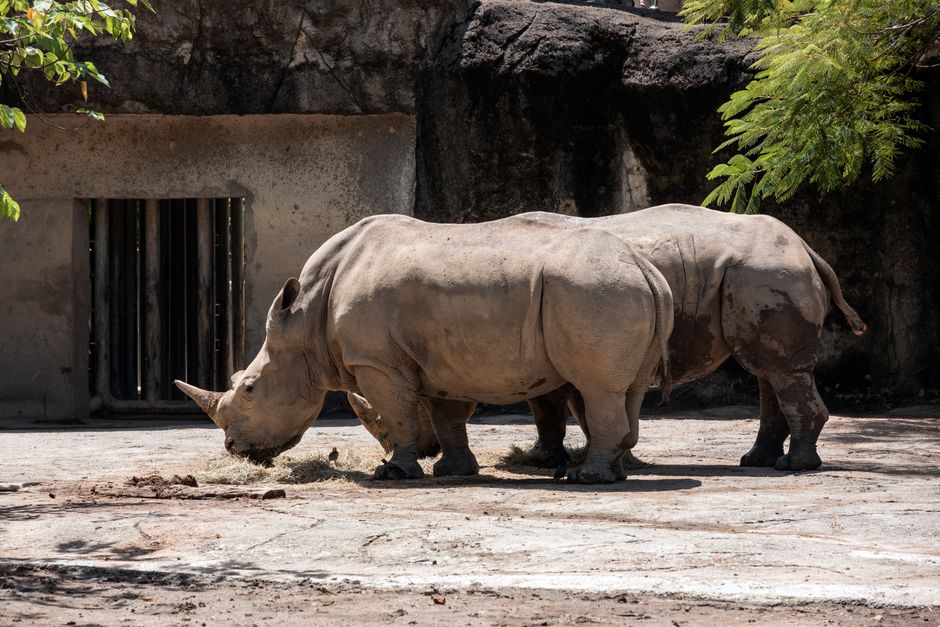
Adult black rhinos have almost no natural predators. A healthy grown rhino is simply too large, too heavily armored, and too dangerous for any African carnivore to take down. The animals that occasionally prey on black rhinos are lions, spotted hyenas, and Nile crocodiles — and even they almost never succeed against a full-grown adult. Their real targets are calves, sick animals, and rhinos already weakened by injury or drought.
That is the short answer. The longer answer is more interesting, because it explains why the deadliest threat to a black rhino has never been another animal at all. It has been humans.
What Animals Are Natural Predators of Black Rhinos?
Only a handful of species are large and bold enough to even attempt a rhino attack. Lions are the most common predator of black rhino calves. Spotted hyenas will target calves and weakened adults in some regions. Nile crocodiles occasionally drown rhinos at water crossings.
That is the full list of animals with any documented record of killing a black rhino. Even among these three, successful attacks on healthy adults are rare. A black rhino can weigh between roughly 1,800 and 3,100 pounds (800 to 1,400 kg) depending on sex and age. It stands about 4.5 to 5.5 feet tall at the shoulder. It can run at speeds up to around 34 miles per hour in short bursts. It has two horns and a temperament that ranges from wary to outright aggressive.
A rhino is not a passive animal waiting to be eaten. It is a tank with a bad attitude and excellent hearing and smell. Predators know this.
Why Adult Black Rhinos Are Almost Never Preyed Upon
Size is the first line of defense. A full-grown black rhino outweighs a male lion by roughly five to seven times. Lions can bring down large prey like buffalo, but a buffalo does not have a horn that can pierce a lion’s chest. A black rhino does.
Behavior is the second line of defense. Black rhinos are not the placid grazers people often picture. They are browsers — they eat leaves, shoots, and branches — and they are famously aggressive when they feel threatened. They will charge rather than flee. A charging rhino at full speed can flip a vehicle. A lion has no realistic way to survive that.
Armor is the third. The rhino’s hide is thick and tough, especially around the shoulders and flanks. It is not literally armor plate, but it resists bites and clawing far better than the skin of most prey animals.
Taken together, these traits mean that a healthy adult black rhino has essentially no predators. The animals that occasionally kill rhinos are almost always killing calves or animals already in trouble.
Which Predators Target Black Rhino Calves?
Calves are a different story. A newborn black rhino weighs roughly 50 to 90 pounds (about 25 to 40 kg) and cannot defend itself. For the first weeks of life, it depends entirely on its mother.
Lions are the primary threat to calves. A lion pride that encounters a mother and calf may try to separate them. Spotted hyenas will also take calves when they get the chance, particularly at night or when the mother is distracted. Crocodiles have been recorded attacking calves that come to drink at rivers and waterholes.
The mother’s defense is the calf’s main protection. A black rhino cow with a calf is one of the most dangerous animals in Africa. She will charge anything that approaches, including lions, hyenas, and people. Most predation attempts on calves fail because of her.
This is why calf survival is closely tied to the mother’s condition. A cow that is sick, injured, or starving cannot defend her calf as effectively. In drought years, calf mortality rises — not because predators suddenly become more numerous, but because mothers become weaker.





Do Lions Actually Hunt Black Rhinos?
Lions do attack rhinos, but it is not a routine part of their diet. Lions prefer prey they can catch without a high risk of injury. A rhino represents a very high risk for a very large meal that the pride may not even be able to finish before it spoils.
When lions do kill a rhino, the circumstances usually fit one of a few patterns. The rhino is a calf. The rhino is old, sick, or injured. The rhino is stuck in mud or otherwise immobilized. Or the pride is unusually large and the rhino is unusually vulnerable.
Some research suggests that lions in certain areas — particularly where other prey has been depleted — may attempt rhino predation more often. But this is opportunistic behavior, not a stable predator-prey relationship. Lions are not a meaningful population-level threat to healthy black rhinos.
What About Hyenas and Crocodiles?
Spotted hyenas are capable predators that hunt in groups and can take down prey larger than themselves. They will attack rhino calves and have been documented killing weakened or very old rhinos. Healthy adult rhinos are generally not at risk from hyenas.
Nile crocodiles are ambush predators that attack at water’s edge. A rhino coming to drink or cross a river may be grabbed by a large crocodile. Crocodiles have been recorded drowning rhinos, though this appears to be uncommon. A crocodile cannot chew through a rhino’s hide easily, so drowning is usually the mechanism.
Neither hyenas nor crocodiles represent a significant threat to the black rhino population as a whole. Their impact is limited to individual vulnerable animals.
The Real Threat to Black Rhinos Is Not a Predator
The animal that kills the most black rhinos is a human with a rifle and a demand for horn. Poaching has driven black rhino numbers to critically low levels over the past century. The black rhino is listed as critically endangered, and poaching remains the primary cause of decline.
This is the part that matters most. When people ask what eats black rhinos, they are usually thinking about lions. The honest answer is that lions barely register as a threat compared to poachers. A rhino that survives lions, hyenas, and crocodiles still faces a far greater danger from the illegal wildlife trade.
Habitat loss is a secondary pressure. Black rhinos need large territories with adequate browse. As human settlement and agriculture expand, suitable habitat shrinks. This does not directly kill rhinos the way poaching does, but it limits how much the population can recover.
How Do Black Rhinos Defend Themselves?
Black rhinos rely on a combination of senses, speed, and aggression. They have poor eyesight but excellent hearing and a strong sense of smell. They often detect threats before they see them.
When threatened, a black rhino typically charges rather than retreats. This is different from white rhinos, which are generally more placid. The charge is fast and can be redirected. Rhinos can also use their horns to hook and toss, and their size alone is enough to deter most predators.
Mothers with calves are especially aggressive. This is the single most important defense mechanism for the species’ next generation. Without it, calf survival would be far lower.
What rhinos cannot defend against is a bullet from a distance. That is the asymmetry that has nearly wiped them out.
Frequently Asked Questions
What eats black rhinos?
Lions, spotted hyenas, and Nile crocodiles occasionally prey on black rhinos, but almost always only on calves or weakened adults. Healthy adult black rhinos have no natural predators.
Humans are the leading cause of black rhino death through poaching, far exceeding any natural predator.
Do lions eat adult black rhinos?
Lions rarely kill adult black rhinos because the risk of injury is too high. When lions do kill a rhino, it is usually a calf or an animal already sick, injured, or stuck.
Lions are not a significant threat to the black rhino population.
What is the biggest threat to black rhinos?
Poaching for their horns is the biggest threat to black rhinos, not natural predators. Habitat loss is a secondary pressure.
Black rhinos are listed as critically endangered, and poaching remains the primary cause of their decline.
Can a black rhino fight off a lion?
A healthy adult black rhino can usually fight off or deter lions. Its size, horns, thick hide, and willingness to charge make it a dangerous target.
Calves and weakened adults are far more vulnerable and depend on the mother’s defense for survival.
