
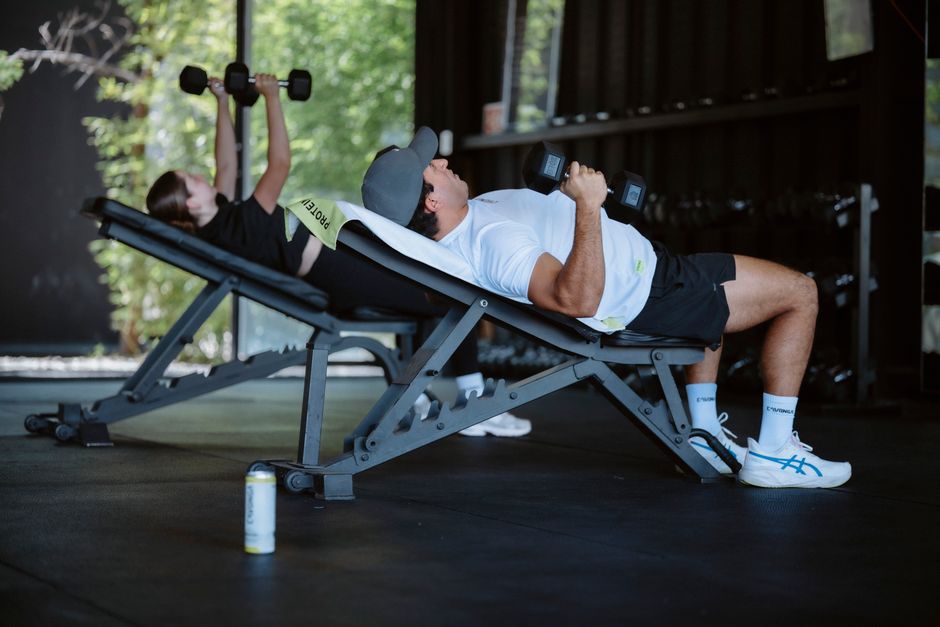
The incline bench press is a chest exercise performed on a bench set to an upward angle, typically between 30 and 45 degrees. It primarily targets the upper portion of the pectoralis major muscle, along with the anterior deltoids and triceps. Unlike a flat bench press, which emphasizes the middle chest, the incline angle shifts the workload toward the clavicular head of the chest muscle.
What Muscles Does the Incline Bench Press Target?
The incline bench press works several muscles in the upper body. The primary mover is the upper chest, specifically the clavicular head of the pectoralis major. This muscle fiber runs from the collarbone down to the upper arm bone.
The front shoulders, or anterior deltoids, assist significantly during the movement. The triceps act as secondary movers, helping to extend the elbow as you push the bar upward. Your upper back muscles, including the traps and rhomboids, stabilize your shoulder blades during the press.
Research using electromyography, or EMG, consistently shows higher activation in the upper chest during incline presses compared to flat presses. The exact degree of muscle activation varies based on bench angle and grip width, but the upper chest is always the primary target.
What Angle Should You Use for the Incline Bench Press?
Most strength training research suggests an incline angle between 30 and 45 degrees is most effective for targeting the upper chest. At angles below 30 degrees, the movement closely resembles a flat bench press and shifts emphasis to the middle chest. At angles above 45 degrees, the front shoulders take over much of the workload.
A 45-degree angle maximizes upper chest activation in many studies, but it also increases anterior deltoid involvement. A 30-degree angle offers a good balance between upper chest engagement and shoulder comfort. Many lifters find that angles above 45 degrees feel awkward on the shoulders and reduce the range of motion.
Adjustable benches allow you to experiment with different angles. Start around 30 degrees and gradually increase if you feel the upper chest working without shoulder discomfort. If you feel the movement primarily in your front shoulders, lower the angle.
Incline Bench vs. Flat Bench: What Is the Difference?
The flat bench press targets the middle and lower portions of the chest more directly. The incline bench press shifts emphasis to the upper chest. Both exercises involve the same primary muscle groups, but the angle changes which fibers bear the most load.
Your upper chest is often underdeveloped compared to the middle chest because most pressing movements are performed on a flat bench. Adding incline work helps balance chest development and creates a fuller appearance at the top of the chest near the collarbone.
Many lifters include both exercises in their routine. A common approach is to perform the incline press as a primary lift on one chest day and the flat press on another. Alternatively, you can perform the incline press after the flat press to pre-fatigue the upper chest.





What Are the Benefits of the Incline Bench Press?
The main benefit is balanced chest development. The upper chest is visually important for a complete chest appearance, and incline pressing is the most direct way to train it.
Incline pressing also places less stress on the shoulder joint compared to decline pressing. The angle is generally more comfortable for lifters with a history of shoulder issues, though individual variation exists.
The exercise carries over to other pressing movements. A stronger upper chest contributes to improved performance in overhead presses, dips, and even flat bench pressing. The front deltoid involvement also strengthens the shoulder complex for pushing movements in daily life.
Some research suggests incline pressing may reduce the risk of shoulder impingement compared to flat pressing at extreme angles. However, any pressing movement can cause shoulder problems if performed with poor form or excessive weight.
How Do You Perform the Incline Bench Press with Proper Form?
Set the bench to a 30 to 45-degree angle. Lie back with your feet flat on the floor and your shoulder blades pinched together. Grip the bar slightly wider than shoulder-width apart.
Unrack the bar and lower it slowly to your upper chest, just below the collarbone. Keep your elbows at roughly a 45-degree angle to your torso. Press the bar upward until your arms are fully extended without locking your elbows.
Lower the bar under control for about two seconds, then press explosively upward. Keep your shoulder blades retracted throughout the movement. Do not let your lower back arch excessively off the bench.
Common mistakes include using too much weight, bouncing the bar off the chest, and flaring the elbows out to the sides. All of these increase injury risk and reduce upper chest activation. Start with a weight you can control for 8 to 12 repetitions with perfect form.
Dumbbells vs. Barbell for Incline Pressing
Both dumbbells and barbells effectively train the upper chest, but they differ in important ways. The barbell allows you to lift heavier weights because the movement is more stable. Dumbbells require more stabilization from the shoulder muscles and allow a greater range of motion.
Dumbbells also allow your hands to move independently, which can help correct muscle imbalances between your left and right sides. Many lifters find dumbbells more comfortable on the shoulders because you can rotate your wrists slightly during the press.
Research shows similar muscle activation between barbell and dumbbell incline presses when using equivalent loads. The choice comes down to personal preference, equipment availability, and your specific goals. Many lifters alternate between the two to provide variety and address different aspects of strength.
How Often Should You Include Incline Pressing in Your Routine?
Most strength training guidelines recommend training each muscle group two to three times per week for optimal growth. The incline bench press can be included once or twice per week depending on your overall program.
If you are training chest once per week, include incline pressing as one of your main exercises. If you are training chest twice per week, you can perform incline pressing on one day and flat pressing on the other. Allow at least 48 hours between sessions that heavily stress the same muscle groups.
Beginners often see good results from one chest session per week that includes incline pressing. More advanced lifters may need additional volume and frequency to continue making progress. Listen to your body and adjust based on recovery and progress.
Who Should Avoid the Incline Bench Press?
Most people can perform incline pressing safely with proper form. However, individuals with certain shoulder conditions may find the movement uncomfortable. If you have a history of shoulder impingement or rotator cuff issues, consult a physical therapist or sports medicine professional before adding incline pressing to your routine.
Some lifters experience discomfort at higher incline angles. Reducing the angle to 30 degrees or using dumbbells instead of a barbell often resolves this. If pain persists, stop the exercise and seek professional guidance.
Pregnant women should avoid heavy pressing exercises, especially in the later stages of pregnancy. Always consult your healthcare provider before starting or continuing a strength training program during pregnancy.
Frequently Asked Questions
Does the incline bench press work the lower chest?
No, the incline bench press primarily targets the upper chest. The lower chest is better trained with flat or decline pressing movements.
What is the best angle for incline bench press?
Most research supports a 30 to 45-degree angle for upper chest activation. Angles above 45 degrees shift too much work to the front shoulders.
Is incline bench press harder than flat bench press?
Yes, most lifters can press less weight on an incline bench than on a flat bench. The angle places more demand on the smaller upper chest and front shoulder muscles.
Can I build a bigger chest with only incline presses?
You can build chest size with incline presses alone, but including flat and decline movements provides more complete development of all chest regions.
